A1 level - Pronouns and Determiners
Learn essential German pronouns and determiners needed to build simple A1 sentences. Practice common words for people, possession, quantity, and reference to improve your basic grammar and understanding of everyday German.
Review
Flashcards
Spelling
Quiz

Das persönliche Pronomen für die erste Person Singular

I (personal pronoun)
I love music.

Das persönliche Pronomen für die zweite Person Singular
you (personal pronoun)
Do you have time today?

Das persönliche Pronomen für die dritte Person Singular (männlich)
he (personal pronoun)
He is very friendly.

Das persönliche Pronomen für die dritte Person Singular (weiblich)
she (personal pronoun)
She plays the piano.
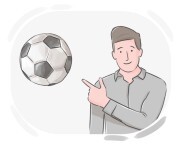
Das persönliche Pronomen für die dritte Person Singular (neutral)
it (personal pronoun)
He bought it.
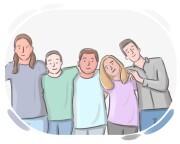
Das persönliche Pronomen für die erste Person Plural
we (personal pronoun)
We are learning German together.
Das persönliche Pronomen für die zweite Person Plural
you (plural)
You are hungry.
Das persönliche Pronomen für die höfliche Ansprache einer oder mehrerer Personen
you (formal singular and plural)
Where do you come from?

Ein bestimmter Artikel für männliche Nomen
the (for masculine nouns)
The dog barks loudly.
Ein bestimmter Artikel für feminine Nomen im Singular und alle Nomen im Plural
the (for feminine singular and all plural nouns)
The flower is beautiful.
Ein bestimmter Artikel für neutrale Nomen im Singular
the (for neuter nouns)
The car is blue.
Ein unbestimmter Artikel für alle Geschlechter
a / an
I read a book.
Ein Wort, das verneint, dass etwas existiert oder zutrifft
no, any
She doesn't drink coffee.
Ein Wort, das auf etwas Nahes oder bereits Bekanntes hinweist
this, these
This problem is not easy to solve.
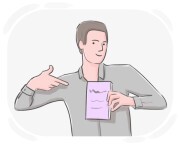
Ein Possessivpronomen der ersten Person Singular, das Besitz oder Zugehörigkeit ausdrückt
my
My car is in front of the house.

Ein Possessivartikel der zweiten Person Singular, der Besitz oder Zugehörigkeit ausdrückt
your
I like your new car.
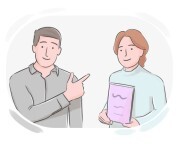
Ein Wort, das zeigt, dass etwas einer weiblichen Person gehört
her (Possessive determiner)
She dyed her hair brown.

Ein Possessivartikel der ersten Person Plural, der Besitz oder Zugehörigkeit ausdrückt
our
Our car is in front of the door.
Ein Possessivartikel der zweiten Person Plural, der Besitz oder Zugehörigkeit ausdrückt
your (plural)
I found your books.
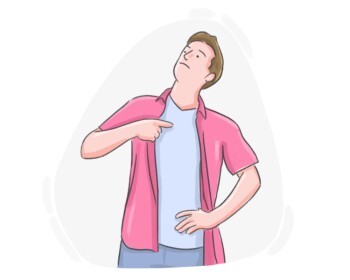
Ein Reflexivpronomen der ersten Person Singular, das sich auf das Subjekt zurückbezieht
myself
I'm looking forward to Christmas.
Ein Akkusativpronomen der zweiten Person Singular, das als direktes Objekt im Satz verwendet wird
you
He sees you.
Ein Personalpronomen der ersten Person Plural, das im Akkusativ und Dativ als Objekt verwendet wird
us
The teacher asks us.
Ein Personalpronomen im Dativ, das sich auf eine männliche oder neutrale Person oder Sache bezieht
him
That belongs to him.

Ein Personalpronomen der dritten Person Plural im Dativ, das auf eine Gruppe von Personen oder Dingen verweist
them
That belongs to them.
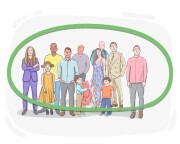
Ein Indefinitartikel, der eine Gesamtheit oder eine vollständige Gruppe bezeichnet
all
I've read all the books.