Food Industry
Chef - Jobs
 intermediate
Boost your English while exploring how the food industry grows, prepares, and innovates to feed people around the world.
1
chapitre

The Role of a Chef
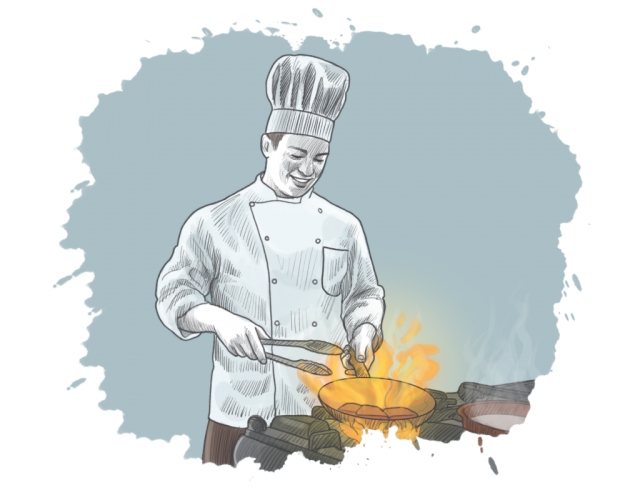
Un chef est un professionnel qualifié qui travaille dans la cuisine pour créer des repas délicieux. Ce travail ne consiste pas seulement à cuisiner; il s'agit également de gérer la cuisine, de planifier les menus et de s'assurer que chaque plat est parfait. Les chefs travaillent dans des restaurants, des hôtels, des entreprises de restauration et même des maisons privées. Leur travail nécessite de la créativité, de l'organisation et un amour pour la nourriture.
Être chef est souvent décrit comme travailler au cœur du restaurant. La cuisine peut être un endroit animé, et un chef doit rester calme sous pression. Le timing est crucial car les repas doivent être servis chauds et frais. Les chefs doivent également bien travailler avec leur équipe, y compris les cuisiniers et les assistants. Chacun dans la cuisine joue un rôle important dans la livraison d'excellents repas aux clients.
The Journey to Becoming a Chef
Devenir chef prend du temps, des efforts et du dévouement. La plupart des chefs commencent leur parcours en apprenant les compétences de base en cuisine. Certains vont dans des écoles culinaires où ils étudient les techniques de cuisine, la sécurité alimentaire et la nutrition. D'autres commencent comme assistants de cuisine et apprennent sur le tas. Dans tous les cas, la pratique est essentielle pour maîtriser l'art de la cuisine.
L'expérience est l'un des meilleurs professeurs pour un chef. De nombreux chefs travaillent dans différentes cuisines pour acquérir des connaissances sur divers types de nourriture. Par exemple, un chef pourrait travailler dans un restaurant italien pour apprendre à faire des pâtes ou dans un restaurant japonais pour apprendre à faire des sushis. Cette expérience aide les chefs à développer leur propre style de cuisine unique.
Types of Chefs
Il existe de nombreux types de chefs dans une cuisine professionnelle, chacun avec des tâches spécifiques qui aident la cuisine à fonctionner sans heurts. Le Chef Exécutif est le leader, planifiant les menus, supervisant l'équipe et veillant à ce que les aliments répondent à des normes élevées. Ils cuisinent rarement, se concentrant plutôt sur la gestion et la créativité. Le Sous-Chef, ou second en commande, travaille en étroite collaboration avec le Chef Exécutif, aidant à gérer la cuisine et prenant les rênes en cas de besoin. Le Chef Pâtissier se spécialise dans les desserts, le pain et les pâtisseries, nécessitant précision et talent pour la décoration.
Un autre rôle essentiel est celui du chef de ligne, également appelé cuisinier de ligne, qui prépare des plats spécifiques pendant le service des repas. Par exemple, un chef de grill s'occupe de tous les plats grillés, tandis qu'un chef de sauté prépare les aliments cuits dans une poêle. Chaque type de chef joue un rôle vital, et ensemble ils forment une équipe qui assure le succès de chaque repas.
The Daily Life of a Chef
La journée d'un chef commence tôt et se termine souvent tard. Ils commencent par vérifier les ingrédients pour s'assurer que tout est frais et de haute qualité. Planifier le menu est une autre tâche importante. Un chef décide quels plats seront servis en fonction de la saison, des ingrédients disponibles et des préférences des clients.
Pendant la préparation des repas, la cuisine devient une ruche d'activité. Les chefs supervisent leur équipe, goûtent la nourriture et apportent des ajustements si nécessaire. Ils prêtent également attention à la présentation car l'apparence d'un plat est tout aussi importante que son goût. Après le service, les chefs passent souvent en revue le travail de la journée et planifient pour le lendemain.
Skills Every Chef Needs
La cuisine est au cœur du travail d'un chef, mais le rôle va au-delà de la simple cuisine. Les chefs ont besoin d'excellentes compétences en communication pour travailler avec leur équipe et gérer la cuisine. Ils doivent également résoudre rapidement les problèmes. Si un ingrédient manque ou qu'un plat ne se présente pas comme prévu, le chef doit trouver une solution sur-le-champ.
L'attention aux détails est une autre compétence importante. Une petite erreur, comme oublier d'ajouter du sel, peut changer complètement le goût d'un plat. Les chefs doivent également être créatifs. Ils inventent souvent de nouvelles recettes ou trouvent des moyens d'améliorer les plats traditionnels.


Famous Types of Cuisine
Les chefs se spécialisent souvent dans un type particulier de cuisine, comme la française, la chinoise ou l'indienne. La cuisine française est connue pour ses sauces et ses pâtisseries. La cuisine chinoise utilise souvent des légumes frais, du riz et des saveurs audacieuses. La cuisine indienne est célèbre pour ses épices et ses currys. Chaque cuisine a ses propres techniques et traditions, et les chefs doivent les apprendre pour exceller dans leur domaine.
La cuisine fusion est un autre domaine passionnant. C'est lorsque les chefs combinent des éléments de différentes cuisines pour créer quelque chose de nouveau. Par exemple, un chef pourrait mélanger des saveurs japonaises et mexicaines pour faire des tacos sushi. Cette créativité permet aux chefs d'explorer des possibilités infinies en cuisine.
Great Chefs in History
Tout au long de l'histoire, de nombreux chefs ont marqué le monde culinaire. Un exemple célèbre est 'Auguste Escoffier', souvent appelé le 'Roi des Chefs' et le 'Chef des Rois'. Il a modernisé la cuisine française et introduit des méthodes encore utilisées dans les cuisines aujourd'hui. Un autre chef légendaire est 'Julia Child', qui a fait découvrir la cuisine française au public anglophone grâce à ses livres et émissions de télévision. Ces chefs et d'autres comme eux ont inspiré des générations de cuisiniers à rechercher l'excellence en cuisine.
The Challenges of Being a Chef
La vie d'un chef n'est pas tout glamour. La cuisine peut être un environnement chaud et stressant. Les chefs travaillent souvent de longues heures, y compris les soirs, les week-ends et les jours fériés. Ce travail nécessite également une endurance physique car les chefs passent la plupart de leur temps debout.
Malgré ces défis, de nombreux chefs trouvent leur travail gratifiant. Il y a un sentiment de fierté à créer des plats qui apportent de la joie aux autres. Le travail d'un chef ne consiste pas seulement à nourrir les gens; il s'agit de créer des expériences et des souvenirs.
Fun Fact: The Story Behind the Chef's Hat
Saviez-vous que le chapeau du chef, appelé "toque", a 100 plis ? Chaque pli représenterait une manière différente de cuire un œuf. Cette tradition a commencé en France, où les chefs valorisaient la précision et la maîtrise. La toque est plus qu'un simple chapeau — c'est un symbole du savoir et de l'expérience d'un chef. Encore aujourd'hui, de nombreux chefs portent ce chapeau comme partie de leur uniforme, honorant l'histoire et la fierté de leur profession.

1. Chef
Food Industry
100%
What is the main responsibility of an Executive Chef?
Baking cakes and bread
Serving food to customers
Supervising the team and planning menus
Washing dishes and cleaning the kitchen
Sort the following steps to becoming a chef in the correct order.
Which of the following are roles found in a professional kitchen? (Choose all that apply)
Executive Chef
Grill Chef
Dish Designer
Pastry Chef
Nutrition Inspector
Frying Supervisor
Sous Chef
Complete the table about types of chefs and their roles based on the provided information.
| Role | Chef |
|---|---|
Plans the menu and supervises the team | |
Specializes in desserts and baked goods | |
Second-in-command in the kitchen | |
Prepares assigned items during meal service |
Match the type of chef with their role.
Which of the following cuisines is especially known for spices and curries?
French cuisine
Chinese cuisine
American cuisine
Indian cuisine
Fill in the blanks with the correct words from the text (There are four extra options).
The
is often described as the heart of the restaurant.
The
Chef is the second-in-command and helps manage the kitchen.
Chefs check that
are fresh and of high quality before starting their day.
Chefs specializing in
cuisine often use rich sauces and pastries.
The traditional chef's hat is called a
and has 100 folds.
Match the cuisine with what it is known for.
Which of the following statements are true according to the passage? (Choose all that apply)
Culinary school is one way to begin a chef's career.
Chefs need to work alone to stay focused.
French cuisine is famous for sauces and pastries.
The kitchen is often a fast-paced and stressful place.
Chefs usually wear white gloves while cooking.
Some chefs develop fusion dishes using different cuisines.
Julia Child helped popularize Italian cuisine worldwide.
What does each fold in a chef's hat (toque) traditionally represent?
One recipe the chef has memorized
A different way to cook an egg
A type of pastry
A famous chef from history