Imperative Mood For Intermediate learners
What is the Imperative Mood?
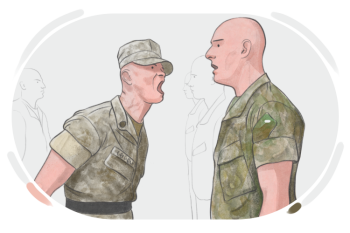
The imperative mood (el modo imperativo) is used to give commands, instructions, requests, or advice, telling someone to do or not do something. Imperatives mainly work with second-person pronouns and have different forms for affirmative and negative as well as formal and informal commands.
Affirmative Imperative
Based on the level of formality and the number of people addressed, the affirmative imperative is either formed from the present indicative or present subjunctive form of the verb:
For the informal "tú", the affirmative imperative uses the 3rd person singular form of present indicative; for example, habla, come, vive
For the formal "usted", the affirmative imperative is formed from the 3rd person singular of present subjunctive; for example, hable, coma, viva
For the informal plural "vosotros" (only used in Spain), the affirmative imperative takes the infinitive form and replaces the final "-r" with "-d"; for example, hablad, comed, vivid
For the plural "ustedes" (formal in Spain and general in Latin America), the affirmative imperative uses the 3rd person plural form of present subjunctive; for example, hablen, coman, vivan
Here are some example sentences:
Habla más despacio.
Speak slower.
informal singular "tú" imperative
Haga su trabajo.
Do your work.
formal singular "usted" imperative
Coman sus verduras.
Eat your vegetables.
plural "ustedes"
Irregular Verbs
Eight verbs have irregular forms for "tú" in affirmative imperative:
decir → di
hacer → haz
ir → ve
poner → pon
salir → sal
ser → sé
tener → ten
venir→ ven
Here are some example sentences:
Di la verdad.
Tell the truth.
Haz tu tarea.
Do your homework.
Sé amable.
Be kind.
Negative Imperative
The negative imperative uses the corresponding present subjunctive form in all cases and adds the negative marker "no" before it. This means that the negative commands have the same form as their affirmative counterparts in case of "usted" and "ustedes" commands but are different in case of "tú" and "vosotros":
tú | No hables. |
|---|---|
usted | No hable. |
vosotros | No habléis. |
ustedes | No hablen. |
Here are some example sentences:
No comas eso.
Don't eat that.
No digan mentiras.
Don't tell lies.
Adding Pronouns
In affirmative imperative, object pronouns and reflexive pronouns attach to the end of the verb. If we have both direct and indirect object pronouns, the indirect object pronoun comes before the direct object pronoun. If we have reflexive as well as direct object pronouns, the reflexive pronoun comes before the direct object pronoun. For example:
Dímelo.
Tell me it.
Siéntate.
Sit (yourself) down.
In negative commands, the object or reflexive pronoun comes between the negative marker "no" and the verb. If there are multiple pronouns, the order of appearance is the same as in the case of affirmative commands. For example:
No me lo digas.
Don't tell me it.
No te sientes.
Don't sit down.
Tip!
Infinitives are sometimes used in general commands or instructions which are not directed at a specific person but at everyone, for example in signs or recipes.
No fumar.
No smoking.
Empujar.
Push (to open).
Mezclar los ingredientes.
Mix the ingredients.
Quiz:
Elige la oración correcta para dar una orden afirmativa a tú.
Miras el mapa antes de salir.
Mira el mapa antes de salir.
Mire el mapa antes de salir.
Mirad el mapa antes de salir.
Completa las oraciones con el imperativo afirmativo correcto.
Señor García,
aquí, por favor. (firmar)
Ustedes,
la página veinte. (abrir)
Ana,
la puerta, por favor. (cerrar)
la respuesta en voz alta. (decir)
Completa las oraciones con el imperativo negativo correcto.
el texto. (leer)
tu nombre. (escribir)
la mochila aquí. (poner)
Elige la oración correcta con imperativo negativo y pronombres.
No lo me envíes hoy.
No me lo envíes hoy.
Ni me envíeslo hoy.
No envíesmelo hoy.
Empareja cada oración con el tipo de instrucción.
Comments
(0)Recommended

