Imperative For Intermediate learners
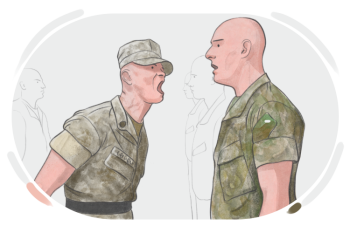
What Is the Imperative Mood (L'impératif) in French?
The imperative mood (L'impératif) is used to give orders, instructions, advice, or suggestions.
It only exists in three grammatical persons:
1. tu (informal singular)
2. nous (let's / inclusive "we")
3. vous (formal singular or plural)
Look at the examples below:
Parle !
Speak!
Finissons nos devoirs.
Let's finish our homework.
Ne touchez pas !
Don't touch!
When to Use the Imperative
The imperative is used to tell someone to do something or not to do something. It expresses direct commands, advice, suggestions, invitations (with nous meaning "let's"), instructions, as well as warnings and prohibitions.
to give direct commands or orders
Ferme la porte !
Close the door!
to give advice or suggestions
Prends un parapluie !
Take an umbrella!
to make invitations or proposals with nous ("let's")
Allons au cinéma !
Let's go to the movies!
to give instructions (recipes, manuals, directions)
Mélangez les ingrédients !
Mix the ingredients.
to express warnings or prohibitions
Ne touche pas ça !
Don't touch that!
How to Form the Imperative in French
The imperative is formed using the present tense of the verb, but without the subject pronoun.
a) Regular Verbs
-ER verbs: For tu, drop the final -s.
Infinitive | tu | nous | vous |
|---|---|---|---|
parler | Parle ! | Parlons ! | Parlez ! |
regarder | Regarde ! | Regardons ! | Regardez ! |
Exception
The -s comes back when tu is followed by y or en. For example:
Parles-en !
Talk about it!
Vas-y !
Go ahead!
(aller is irregular, but same rule)
-IR and -RE verbs: No letter is dropped.
Infinitive | tu | nous | vous |
|---|---|---|---|
finir | Finis ! | Finissons ! | Finissez ! |
vendre | Vends ! | Vendons ! | Vendez ! |
Here are some examples of regular verbs:
Parle plus fort !
Speak louder!
Parlons français !
Let's speak French!
Finissez avant midi !
Finish before noon!
b) Irregular Verbs
Same as the present tense, but watch stem changes.
Infinitive | tu | nous | vous |
|---|---|---|---|
être | Sois ! | Soyons ! | Soyez ! |
avoir | Aie ! | Ayons ! | Ayez ! |
savoir | Sache ! | Sachons ! | Sachez ! |
vouloir | Veuille ! | Veuillons ! | Veuillez ! |
aller | Va ! | Allons ! | Allez ! |
Tip!
Veuillez is commonly used for polite requests:
Veuillez patienter.
Please wait.
Veuillez remplir ce formulaire.
Please fill out this form.
Here are some examples for irregular verbs:
Sois patient !
Be patient!
Ayons confiance !
Let's have confidence!
Sache la vérité !
Know the truth!
Va à l'école !
Go to school!
Negative Imperative
To form the negative, place ne … pas (or another negation) around the verb, just like in normal sentences.
Structure:
Ne + verb + pas
Ne parle pas !
Don't talk!
N'oubliez pas le document !
Don't forget the document!
Ne faisons pas de bruit !
Let's not make any noise!
Pronouns with the Imperative
In affirmative imperative, direct / indirect object pronouns come after the verb, connected with a hyphen. Reflexive pronouns are also placed after the verb.
Donne-moi le livre !
Give me the book!
Lève-toi !
Get up!
Écrivez-lui une lettre !
Write him a letter!
Dépêchez-vous !
Hurry up!
Warning!
Some pronouns change in the affirmative imperative:
me → moi
te → toi
se → soi
In negative imperative, pronouns go before the verb, and keep their normal form.
Ne me parle pas !
Ne me parle pas!
Ne t'en va pas !
Don't go away!
Ne vous levez pas trop tôt !
Don't get up too early!
Comments
(0)
