
Ciencia Aplicada e Investigación - Ingeniería aeroespacial
Estudia términos relacionados con aeronaves y naves espaciales, vuelo, propulsión, misiones espaciales, operaciones orbitales, cargas útiles y personal aeroespacial.
Revisión
Tarjetas de memoria
Ortografía
Cuestionario


the study of the behavior of air as it interacts with solid objects, particularly the flow of air around and through objects, and the effects of this interaction on the objects

aerodinámica
Los fabricantes de automóviles utilizan la aerodinámica para diseñar vehículos que tienen una mayor eficiencia de combustible al minimizar la resistencia y maximizar la estabilidad.
the sector of technology and industry focused on aircraft, spacecraft, and their associated systems
aeroespacial, espacial
La universidad ofrece un título en ingeniería aeroespacial.
the science and technology of electronic systems and devices used in aeronautics and astronautics
aviónica
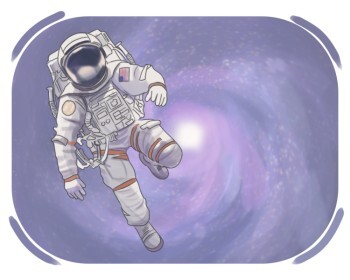
someone who is trained to travel and work in space
astronauta
Se sometió a un riguroso entrenamiento físico y mental para calificar como astronauta.
an astronaut from Russia or the former Soviet Union
cosmonauta
Valentina Tereshkova fue la primera mujer cosmonauta en viajar al espacio en 1963.
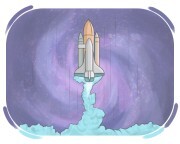
a vehicle designed to travel in space
nave espacial
El documental mostró el desarrollo y lanzamiento de una nueva nave espacial diseñada para la exploración del espacio profundo.
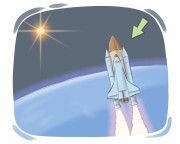
a kind of spacecraft used by astronauts to explore in space
nave espacial, astronave
Los ingenieros diseñaron una nueva nave espacial con sistemas de propulsión avanzados para viajes interplanetarios.
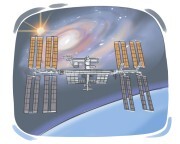
a large structure used as a long-term base for people to stay in space and conduct research
estación espacial
Las próximas misiones planean expandir la estación espacial con módulos adicionales y nuevos equipos científicos.

clothing used by astronauts while traveling in space
traje espacial
La exhibición del museo presentaba una réplica del traje espacial usado durante los alunizajes de Apollo.

a period during which an astronaut moves outside an spacecraft in space, typically to perform repairs or experiments
paseo por el espacio
El paseo espacial duró varias horas, durante las cuales los astronautas estuvieron atados a la nave espacial por seguridad.
a vehicle designed and used to go to space and return multiple times
transbordador espacial
El desastre del Challenger en 1986 fue un evento trágico que destacó los riesgos asociados con las misiones del transbordador espacial.
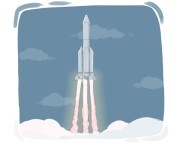
to send an object, such as a satellite, missile, etc., into space
lanzar
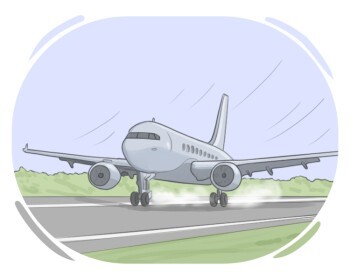
the act of bringing an aircraft or spacecraft down onto a surface
aterrizaje
to join one spacecraft to another spacecraft or space station while in space
acoplarse, atracar
to launch with great force, as a rocket or spacecraft from its launch pad
despegar
an unmanned spacecraft sent into space to collect scientific information and transmit it back
sonda espacial

a spacecraft that moves up by the force of the gases produced when the fuel burns
cohete
La agencia espacial celebró la prueba exitosa de un prototipo de cohete destinado a futuras misiones a Marte.
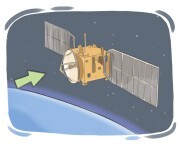
an artificial object sent into space to orbit Earth or another celestial body, usually to collect or transmit information
satélite
a detachable compartment or section of a spacecraft or boat that can be separated from the main structure
cápsula, módulo
the first stage of a multistage rocket that provides the initial thrust for liftoff
cohete propulsor
situated or occurring between stars or within the space that exists between stars
interestelar, intersideral
Las sondas espaciales interestelares, como la Voyager 1 y la Voyager 2, han viajado más allá de los límites de nuestro sistema solar.
existing or occurring between planets
interplanetario
La comunicación entre la Tierra y Marte depende de sistemas de comunicación interplanetarios.
existing or occurring between galaxies
intergaláctico
Algunos astrónomos estudian el espacio intergaláctico, las vastas regiones entre las galaxias.
the equipment, instruments, or cargo carried by a spacecraft or satellite
carga útil
having a speed greater than that of sound
supersónico, ultrasónico
El coche experimental alcanzó velocidades supersónicas en la pista de pruebas, llevando al límite la tecnología automotriz.
