Adjective Gender and Number Agreement For Intermediate learners
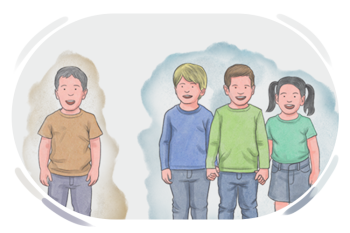
How do Adjectives Agree with Nouns?
Adjectives (adjetivos) are words that describe or qualify nouns. They describe the qualities, characteristics, or states of a person, thing, or idea. In Spanish, adjectives must agree with the noun they modify in both number and gender (concordancia de género y número).
Gender Agreement
Depending on whether they are used with masculine or feminine nouns, adjectives change their forms. Adjectives differ with each other in terms of how they reflect gender:
Most adjectives end in -o when used with masculine nouns and in -a when used with feminine nouns; for example, alto/alta, bonito/bonita, rojo/roja
el chico alto/la chica alta
the tall boy/the tall girl
Adjectives ending in vowels other that -o or a consonant usually don't change for gender; for example, inteligente, optimista, fácil, azul
un hombre inteligente/una mujer inteligente
an intelligent man/an intelligent woman
Adjectives ending in -or, -ón, -án, -ín keep the default form when used with masculine nouns and take -a when used with feminine nouns; for example, trabajador/trabajadora, charlatán/charlatana, juguetón/juguetona
un amigo trabajador/una amiga trabajadora
a hardworking friend (male)/a hardworking friend (female)
Exception
Nationality adjectives that end in a consonant keep the default form when used with masculine nouns and take -a when used with feminine nouns, for example: español/española, alemán/alemana, inglés/inglesa, etc.
un actor inglés/una actriz inglesa
and English actor/an English actress
Number Agreement
Adjectives also reflect the number of the noun they are used with. The singular form is always the default form of the adjective. Like nouns, pluralization of adjectives depends on their ending:
Adjectives that end in a vowel take "-s" at the end to form the plural:
un libro rojo → unos libros rojos
a red book → some red books
Adjectives that end in a consonant take "-es" at the end to form the plural:
una flor azul → unas flores azules
a blue flower → some blue flowers
Exception
Adjectives that end in "z," change it to "c" before adding "-es" to form the plural:
un chico feliz → unos chicos felices
a happy child → some happy children
The table below summarizes all the agreement rules for Spanish adjectives:
M singular | M plural | F singular | F plural | |
|---|---|---|---|---|
Regular adjectives | -o | -os | -a | -as |
Ending in vowels others than -o | no change | -s | no change | -s |
Ending in consonants | no change | -es | no change | -es |
Ending in -or/ ón/-án/-ín | no change | -es | -a | -as |
Here are some example sentences:
El perro negro corre rápido.
The black dog runs fast.
La casa blanca tiene un jardín grande.
The white house has a big garden.
Los estudiantes franceses son simpáticos.
The French students are nice.
Las niñas felices juegan en el parque.
The happy girls play in the park.
Un hombre grande bloqueaba la puerta.
A big guy was blocking the doorway.
Quiz:
Empareja cada sustantivo con el adjetivo correcto.
Completa cada oración con la forma correcta del adjetivo.
La mochila es
. (rojo)
Los pantalones son
. (negro)
Quiero ver una película
. (interesante)
Vi unas luces
. (azul)
Elige la oración correcta.
Las preguntas son fácil.
Las preguntas son fácilas.
Las preguntas son fácilos.
Las preguntas son fáciles.
Empareja cada sustantivo con la forma correcta del adjetivo.
Elige la forma correcta del adjetivo.
Los niños están muy feliz hoy.
Los niños están muy felizes hoy.
Los niños están muy felicos hoy.
Los niños están muy felices hoy.
Comments
(0)Recommended

