Gender of Nouns For Intermediate learners
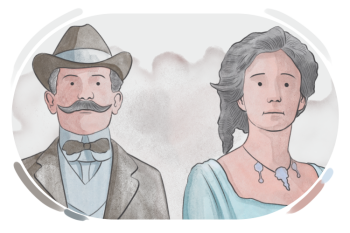
What is Gender of Nouns in Spanish?
In Spanish, every noun has a grammatical gender and is either masculine or feminine. The gender of the noun (género de sustantivo) affects how other words related to it (like articles, adjectives, and pronouns) behave. If a noun is feminine, it will take a feminine article and adjective and if it is masculine, it will need masculine articles and adjectives.
The General Rule
The rule of thumb for recognizing the gender of nouns in Spanish is to check their ending:
Nouns that end in -o are usually masculine: el libro, el perro, el zapato
Nouns that end in -a are usually feminine: la casa, la puerta, la silla
Nouns Referring to animate Beings
Most of the nouns that refer to humans or animals have both masculine and feminine forms that are used according to the biological sex of the person or animal. Sometimes these two forms only differ in their ending:
el chico / la chica → boy / girl
el hermano / la hermana → brother / sister
el esposo / la esposa → husband / wife
el amigo / la amiga → male/ female friend
el meastro / la maestra → male/ female teacher
el gato / la gata → male/ female cat
But sometimes the difference is more significant:
el actor / la actriz → actor / actress
el rey / la reina → king / queen
el emperador / la emperatriz → emperor / empress
el héroe / la heroína → hero / heroine
And there is yet another group where the two genders have two completely different words:
el hombre / la mujer → man / woman
el padre / la madre → father / mother
el yerno / la nuera → son-in-law / daughter-in-law
el toro / la vaca → bull / cow
el caballo / la yegua → horse / mare
In other cases, nouns have the same form for both genders and only the use of the article clarifies their gender. For example:
el estudiante / la estudiante → student
el artista / la artista → artist
el poeta / la poeta → poet
el cliente / la cliente → the client
el cantante / la cantante → the singer
el paciente / la paciente → the patient
el intérprete / la intérprete → the interpreter
Nouns Referring to Inanimate Objects
In case of inanimate and abstract nouns, the gender of the noun is only a grammatical consideration and has nothing to do with the inherent qualities of what the noun refers to. While many inanimate nouns follow the general rule for distinguishing between the genders (-o for masculine nouns and -a for feminine nouns), there are also other common endings that can signal the gender of the noun (although there might be exceptions):
Ending | Gender | Example |
|---|---|---|
-ma | M | el problema, el idioma, el sistema |
-aje | M | el viaje, el paisaje, el equipaje |
-ete | M | el billete, el paquete, el juguete |
-miento | M | el nacimiento, el movimiento, el sentimiento |
-or | M | el color, el sabor, el amor, el dolor |
-n | M | el pan, el corazón, el botón, el tren |
-y | M | el jersey, el convoy, el buey |
-l | M | el papel, el hotel, el nivel, el canal |
-ión | F | la canción, la televisión, la decisión |
-dad/-tad /-tud | F | la libertad, la amistad, la actitud |
-ie | F | la serie, la especie, la superficie |
-umbre | F | la costumbre, la legumbre, la cumbre |
-ez /-eza | F | la vejez, la rapidez, la belleza, la tristeza |
-ura | F | la altura, la locura, la lectura, la escritura |
-sis/-tis | F | la crisis, la tesis, la dosis, la hipótesis, la artritis |
Exceptions
Some nouns end in -o but are feminine while others end in -a and are masculine. For example:
el día (day)
el mapa (map)
el planeta (planet)
el clima (climate)
la mano (hand)
la foto (photo)
la radio (radio)
la imagen (image)
Tip!
Some categories of noun are always masculine, for example,
Days and Months: el lunes, el martes, el sábado, el enero, el julio,
Colors: el azul, el rojo, el negro, el verde, el gris
Numbers: el uno, el dos, el cien
Languages: el español, el inglés, el francés, el alemán, el chino, el árabe
Rivers and oceans: el Amazonas, el Atlántico, el Nilo
Mountains and volcanoes: el monte Everest, el monte Fuji, el Pico Alcazaba,
Compound nouns made of a verb + noun: el lavaplatos, el abrelatas, el sacapuntas, el rascacielos,
There are also classes of nouns that are always feminine. For example:
Sciences and Academic Disciplines: la química, la física, la biología, la historia, la ingeniería
Islands and Provinces: la Isla de Pascua, las Islas Canarias, la Patagonia, la Habana
Feminine Nouns with Masculine Articles
Feminine words that begin with a stressed "a" or "ha" sound take the masculine definite article ("el") instead of the feminine article in order to avoid pronunciation difficulties. However, when used in the plural, they take the original feminine plural article ("las") since there is no longer any pronunciation conflict. Look at the examples:
el agua (water) → las aguas
el alma (soul) → las almas
el hacha (ax) → las hachas
el hambre (hunger) → las hambres
Nouns that Change Meaning Based on Gender
Some nouns have the same form for both genders, but express completely different meanings depending on the gender as signaled by the article:
el cura (priest) / la cura (cure)
el cometa (comet) / la cometa (kite)
el orden (arrangement) / la orden (command)
el mañana (tomorrow) / la mañana (morning)
el papa (pope) / la papa (potato)
Quiz:
¿Cuál sustantivo tiene la misma forma en masculino y femenino?
maestro
actor
estudiante
hermano
Completa la tabla con la forma opuesta de género de cada sustantivo.
| Masculino | Femenino |
|---|---|
reina | |
amigo | |
toro | |
cantante |
Completa la tabla indicando el género correcto (masculino / femenino) de cada sustantivo.
| Sustantivo | Género |
|---|---|
camino | |
hospital | |
estación | |
ventana | |
mensaje |
¿Cuál sustantivo es masculino?
casa
mapa
puerta
hacha
¿Cuál frase es correcta?
la agua fría
el agua frío
el agua fría
una agua fría
Comments
(0)Recommended

