
Ciencias Básicas - Zoología y Botánica
Estudia términos relacionados con la clasificación animal, la reproducción, el comportamiento, la evolución, las estructuras vegetales y los procesos reproductivos.
Revisión
Tarjetas de memoria
Ortografía
Cuestionario
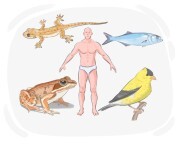
(zoology) an animal with a backbone and a skull enclosing a brain

vertebrado
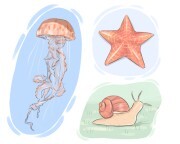
species that do not possess or cannot develop a spinal column, such as an arthropod, mollusk, etc.
invertebrado
El estanque estaba lleno de pequeños invertebrados que servían de alimento para los peces más grandes.
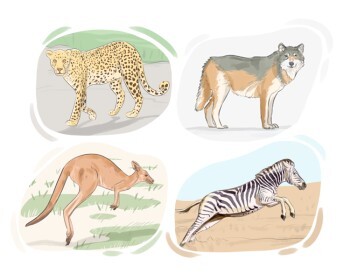
a warm-blooded vertebrate animal whose females produce milk to feed their young and that typically has hair or fur
mamífero
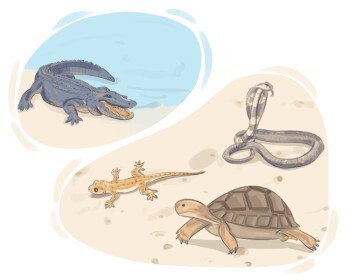
a class of animals to which crocodiles, lizards, etc. belong, characterized by having cold blood and scaly skin
reptil
El zoológico tiene una variedad de reptiles, incluyendo lagartos, tortugas y serpientes.
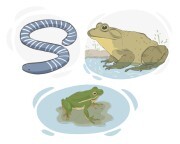
any cold-blooded animal with the ability to live both on land and in water, such as toads, frogs, etc.
anfibio
Los sapos son anfibios similares a las ranas pero con piel seca y verrugosa y patas traseras más cortas, adaptadas para saltar en lugar de brincar.
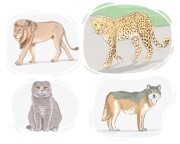
an animal that feeds on the flesh of other animals
carnívoro
Los gatos domésticos son carnívoros obligados, necesitando carne para prosperar.
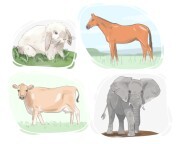
any animal that only feeds on plants
herbívoro
Las vacas, herbívoros esenciales en la agricultura, rumian para digerir material vegetal fibroso.

producing eggs that develop and hatch outside the body
ovíparo, que pone huevos
Los peces exhiben una variedad de estrategias reproductivas, algunos siendo ovíparos, liberando huevos al agua para la fertilización externa.
(of an animal) giving birth to live offspring that have developed from eggs inside the mother's body
ovovivíparo, ovovivíparo
Las especies ovovivíparas mantienen los huevos dentro de la madre hasta que eclosionan.
(of animals) giving birth to developed babies instead of laying eggs
vivíparo
La naturaleza vivípara de ciertos reptiles, como la boa constrictor, les permite dar a luz crías vivas en entornos donde la puesta de huevos sería arriesgada.
the controlled maintenance of a specific temperature; fostering optimal conditions for the development of organisms, processes, or materials
incubación
En el invernadero, las plantas se benefician de condiciones de incubación controladas.

a natural tendency or ability to behave or react in a particular way without conscious thought or learning
instinto, intuición
(physiology) to produce milk from the mammary glands to feed offspring
lactar
to bring up partially digested food from the stomach back into the mouth, often to feed young or as part of the digestive process
regurgitar, devolver
Algunos animales marinos, como los pingüinos, regurgitan comida para alimentar a sus crías.
(ecology) found or living in most parts of the world
cosmopolita
(ecology) a group of different species living in the same area and interacting with one another
comunidad, biocenosis
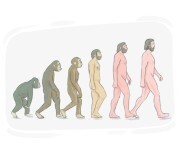
the process by which populations of living organisms change genetically across successive generations
evolución
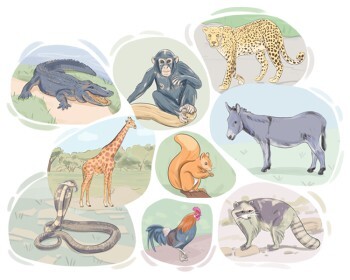
a group that animals, plants, etc. of the same type which are capable of producing healthy offspring with each other are divided into
especie
El lobo rojo es una especie de lobo nativa del sureste de los Estados Unidos.
(biology) a distinct group within a species, often formed by geographic separation and showing slight physical or genetic differences
subespecie
a small, membrane-bound sac within a cell, involved in the transport, storage, or release of substances
vesícula, vacuola
Las vesículas, que se encuentran en las células vegetales, son grandes vesículas involucradas en el almacenamiento de nutrientes, productos de desecho y en el mantenimiento de la presión de turgencia.
a green pigment found in all green plants and cyanobacteria that is responsible for the absorption of the sunlight needed for the photosynthesis process
clorofila
Durante el otoño, la clorofila se descompone en las plantas caducifolias, revelando otros pigmentos y haciendo que las hojas cambien de color.
a plant cell organelle that uses sunlight to produce energy and make glucose through photosynthesis
cloroplasto, orgánulo fotosintético
Además de la clorofila, los cloroplastos albergan otros pigmentos que ayudan a capturar diferentes longitudes de onda de la luz durante la fotosíntesis.
a process in green plants during which the plant synthesizes using water and carbon dioxide
fotosíntesis
La eficiencia de la fotosíntesis disminuye en condiciones de calor o sequía extremos.
to reproduce and produce offspring through natural methods
propagar, reproducirse
Algunos peces pueden propagarse tanto en ambientes de agua dulce como salada.
(botany) the process by which a seed or spore begins to grow and develop into a new plant
germinación
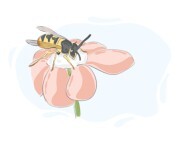
(biology) the process of producing plant seeds by transferring a powdery substance from one plant to the other
polinización, fecundación de las plantas
Algunas plantas, como las orquídeas, han desarrollado adaptaciones específicas para la polinización atrayendo insectos particulares con sus formas y aromas únicos.
