
Științe Fundamentale - Zoologie și Botanică
Studiați termeni legați de clasificarea animalelor, reproducere, comportament, evoluție, structuri vegetale și procese reproductive.
Revizuire
Fișe de studiu
Ortografie
Chestionar
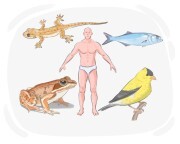
a large group of animals characterized by the possession of a backbone or spinal column, including mammals, birds, reptiles, amphibians, and fishes

vertebrat, animal vertebrat
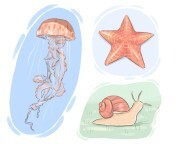
species that do not possess or cannot develop a spinal column, such as an arthropod, mollusk, etc.
nevertebrat, animal nevertebrat
Nevertebratele precum fluturii și furnicile sunt vitale pentru ecosistemele grădinii.
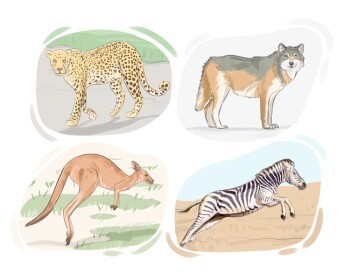
a class of animals to which humans, cows, lions, etc. belong, have warm blood, fur or hair and typically produce milk to feed their young
mamifer, animal mamifer
Liliacul este singurul mamifer capabil de zbor susținut.
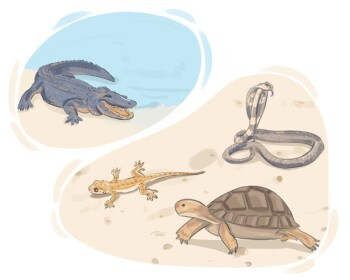
a class of animals to which crocodiles, lizards, etc. belong, characterized by having cold blood and scaly skin
reptilă, animal cu sânge rece
Un reptilă ca un șarpe poate supraviețui într-o gamă largă de medii.
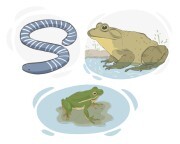
any cold-blooded animal with the ability to live both on land and in water, such as toads, frogs, etc.
amfibian, amphibian
Broasca este un amfibian bine cunoscut care își depune ouăle în apă și suferă o metamorfoză de la mormoloc la adult.
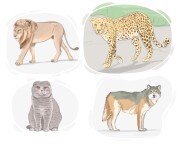
an animal that feeds on the flesh of other animals
carnivor, animal carnivor
Leii sunt puternici carnivori care vânează în haite.
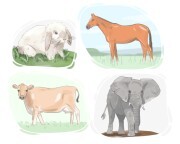
any animal that only feeds on plants
erbivor
Cerbul și iepurii sunt erbivore care pasc iarbă și frunze.

producing eggs that develop and hatch outside the body
ovipar, care ouăle
Păsările sunt ovipare, depun ouă care sunt incubate extern până la eclozare.
(of an animal) giving birth to live offspring that have developed from eggs inside the mother's body
ovovivipar, ovovivipar
Omul de știință a studiat obiceiurile reproductive ale animalelor ovovivipare.
(of animals) giving birth to developed babies instead of laying eggs
vivipar
Spre deosebire de majoritatea peștilor, guppy-ul este vivipar, nașterea pui vii în loc să depună ouă.
the controlled maintenance of a specific temperature; fostering optimal conditions for the development of organisms, processes, or materials
incubație
Omul de știință a ajustat temperatura de incubare pentru culturile bacteriene.
a natural reaction or behavior that occurs automatically, without conscious thought or reasoning
instinct, impuls
Pasărea mamă și-a urmat instinctul pentru a-și construi cuibul și a-și proteja ouăle.
to secrete or produce milk from the mammary glands, typically referring to the production of milk by a female mammal, especially a human mother
lacta, produce lapte
to bring up partially digested food from the stomach back into the mouth, often to feed young or as part of the digestive process
a regurgita, a vărsa
Multe specii de păsări regurgită hrană pentru a-și hrăni puii.
(of plants or animals) found in many different regions and climates throughout the world
cosmopolit, omniprezent
(ecology) a group of different species living in the same area and interacting with one another
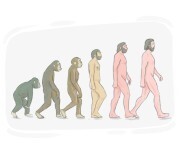
(biology) the slow and gradual development of living things throughout the history of the earth
evoluție
Evoluția este procesul prin care speciile se schimbă în timp ca răspuns la presiunile mediului.
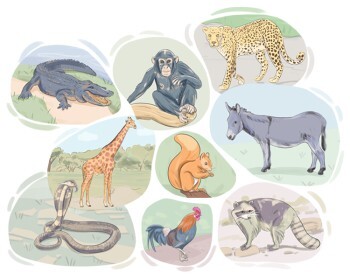
a group that animals, plants, etc. of the same type which are capable of producing healthy offspring with each other are divided into
specie, specii
Cinchezii Galapagos sunt un exemplu clasic al modului în care diferite specii pot evolua dintr-un strămoș comun.
a taxonomic rank below species that represents a distinct population within a species, exhibiting consistent differences from other populations
subspecie, rasă
a small, membrane-bound sac within a cell, involved in the transport, storage, or release of substances
veziculă, vacuolă
Peroxisomii sunt vezicule care conțin enzime care participă la diverse procese metabolice, inclusiv la descompunerea acizilor grași.
a green pigment found in all green plants and cyanobacteria that is responsible for the absorption of the sunlight needed for the photosynthesis process
clorofilă, pigment verde
Clorofila este responsabilă de culoarea verde a plantelor, reflectându-și rolul în fotosinteză.
a plant cell organelle that uses sunlight to produce energy and make glucose through photosynthesis
cloroplast, organit fotosintetic
Cloroplastele sunt structurile verzi din celulele plantelor unde are loc fotosinteza, procesul de transformare a luminii în energie.
a process in green plants during which the plant synthesizes using water and carbon dioxide
fotosinteză
Fotosinteza din frunze produce oxigenul pe care îl respirăm.
to reproduce and produce offspring through natural methods
propaga, se reproduce
Multe specii de flori se propagă prin semințe.
(botany) the process by which a seed or spore begins to grow and develop into a new plant
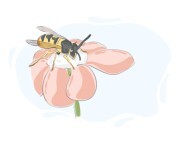
(biology) the process of producing plant seeds by transferring a powdery substance from one plant to the other
polenizare, fertilizarea plantelor
Albinele joacă un rol crucial în polenizare transferând polenul între flori în timp ce colectează nectar, asigurând reproducerea multor specii de plante.
