
Фундаментальные Науки - Астрономия
Изучите термины, связанные с небесными объектами, галактиками, космическими явлениями, фазами Луны, затмениями и астрономическими наблюдениями.
Обзор
Флэш-карточки
Правописание
Тест

a scientist who studies or observes planets, stars, and other happenings in the universe

астроном
Астроном обнаружил новую экзопланету, используя передовую технологию телескопов.
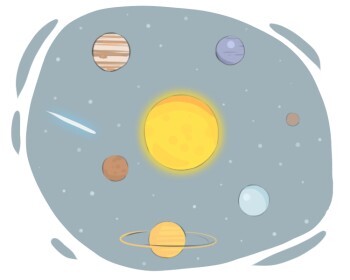
a huge round object that moves in an orbit, around the sun, or any other star
планета
Юпитер — самая большая планета в нашей солнечной системе.

a planet that is outside the solar system
экзопланета
Астрономы обнаружили тысячи экзопланет, вращающихся вокруг звезд за пределами нашей солнечной системы.
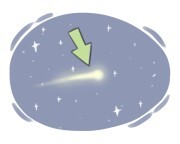
an object in space that is a mass of ice and dust and when it nears the sun it starts illuminating in the shape of a tail
комета
Комета Галлея — одна из самых известных комет, видимая с Земли примерно каждые 76 лет.
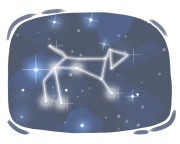
a specific group of stars that form a pattern and have a name related to their shape
созвездие
Орион — это хорошо известное созвездие, видимое в зимнем небе.
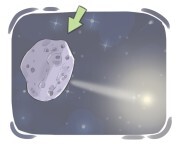
any of the rocky bodies orbiting the sun, ranging greatly in diameter, also found in large numbers between Jupiter and Mars
астероид
Ученые изучают астероиды, чтобы узнать о ранней солнечной системе и потенциальных угрозах для Земли.
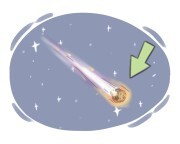
a usually small meteor that burns with a bright light when entering the earth's atmosphere
падающая звезда
Мы видели падающую звезду, когда вчера вечером разбили лагерь в горах.
an exploding star that as a result is emitting a very large amount of light, more than the sun
сверхновая
Сверхновая — это мощный взрыв, который происходит в конце жизненного цикла массивной звезды.
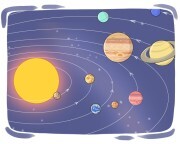
a natural body in space that moves around the earth or other planets
спутник
Кольцевая система Сатурна состоит из бесчисленных частиц и небольших естественных спутников.
(astronomy) a small, cool, faint star that is much less massive than the Sun and burns its fuel very slowly
a small, dense, and faint stellar remnant that is left after a medium-sized star exhausts the nuclear fuel in its core and undergoes gravitational collapse
белый карлик, звезда белый карлик
Белый карлик — это заключительная стадия жизненного цикла звезды, подобной Солнцу, после того как она исчерпала свое ядерное топливо.
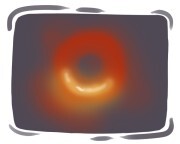
a place in the space with such high gravity that pulls in everything, even light
чёрная дыра
Чёрные дыры образуются из остатков массивных звёзд, которые завершили свои жизненные циклы и коллапсировали под действием собственной гравитации.
(physics) a theoretical tunnel through space-time that could connect two distant points in the universe
very small particles originally derived from stars, serving as raw material for forming planets, and existing between galaxies, stars, and other celestial bodies
космическая пыль
Космическая пыль состоит из крошечных частиц материи, плавающих в пространстве, в основном состоящих из таких элементов, как углерод, кремний и железо.
(physics) an invisible substance that makes up most of the universe's mass, detectable only through its gravitational effects
темная материя
Тёмная материя — это форма материи, которая не излучает, не поглощает и не отражает свет, что делает её невидимой и обнаруживаемой только по её гравитационным эффектам.

a large number of star systems bound together by gravitational force
галактика
Галактики могут различаться по форме и размеру, включая такие типы, как спиральные, эллиптические и неправильные галактики, каждая из которых имеет отличные структуры и характеристики.
a pale band of light seen in the sky at night that contains the solar system and billions of other stars
Млечный Путь
Млечный Путь — это спиральная галактика с перемычкой, содержащая нашу Солнечную систему.
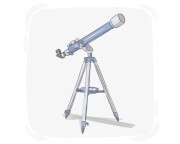
a piece of equipment by which the far objects, particularly those in space, are made clearly visible
телескоп
Он использовал телескоп для наблюдения за звёздами.
the outer layer of the Sun's atmosphere, observable as a plasma halo during a solar eclipse
корона
Во время полного солнечного затмения корона Солнца становится видимой в виде сияющего ореола вокруг Луны.
related to the sun
солнечный
Солнечные затмения происходят, когда луна блокирует свет солнца.
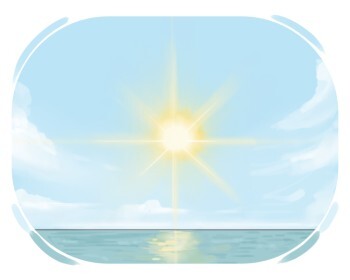
a single ray or beam of sunlight
the highest point that a certain celestial body reaches, directly above an observer
зенит
В полдень солнце достигло своего зенита, прямо над головой.
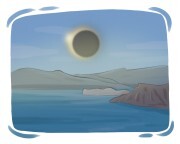
a period during which the sun or moon is temporarily obscured by the shadow of another celestial body
затмение
Мы наблюдали солнечное затмение через специальные защитные очки.

a curved shape with narrow points at the ends that appears wider in the middle, like the shape of the moon in its first and last quarters
полумесяц
Луна висела низко в небе, ее тонкий полумесяц отбрасывал мягкий свет.
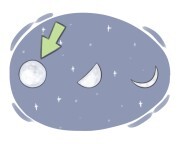
the complete and round-shaped moon as seen from the earth
полная луна
Пара решила прогуляться по парку под полной луной, наслаждаясь романтическим вечером.
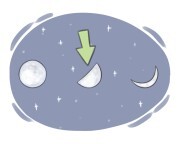
the moon when only half of its bright surface can be seen from the earth
полумесяц
Во время вечернего неба завораживающая полумесяц висела прямо над горизонтом.
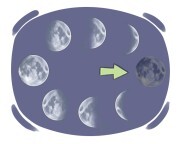
the moon when only a small portion of its bright side is visible from the earth
новая луна
Наблюдатели за небом с нетерпением ждали появления новой луны.

relating to the moon
лунный
Она купила лунный календарь, чтобы отслеживать фазы луны.
(of the moon) to gradually decrease in its visible illuminated surface as it progresses from full to new moon
убывать
Луна начала убывать после полнолуния.
(of the moon) to progressively display a larger illuminated section until it turns into a full moon
прибывать
По мере того как месяц прогрессировал, луна начала расти, превращаясь из тонкого серпа в полную луну.
the distance that light travels in a year (about 9.46 trillion kilometers)
световой год, св. г.
Проксима Центавра, ближайшая звезда к Земле, находится на расстоянии 4,24 световых года.
