


 Login
LoginDemonstrative Pronouns For Intermediate learners
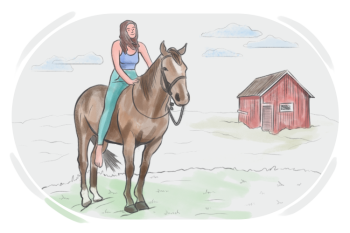
What Are Demonstrative Pronouns?
Demonstrative pronouns (pronombres demostrativos) replace a noun to avoid repetition, and indicate distance in space and time. They are used on their own, without a noun.
In Spanish, demonstrative pronoun agree with the noun they refer to in terms of gender and number and specify three different levels of distance:
M singular | F singular | M plural | F plural | |
|---|---|---|---|---|
Near | éste | ésta | éstos | éstas |
Middle | ése | ésa | ésos | ésas |
Far | aquél | aquélla | aquéllos | aquéllas |
Accents
In the past, the demonstrative pronouns were always used with the accents to distinguish them from demonstrative adjectives. However, today use of these accents is optional and mostly limited to cases where their absence might lead to ambiguity.
Este
"Este" and its different forms (esta, estos, estas) are used when the speaker is talking about something close to themselves. For example:
¿Quieres este?
Do you want this?
masculine singular
Voy a comprar esta.
I'm going to buy this.
feminine singular
Prefiero estos.
I prefer these.
masculine plural
¿Vas a llevar estas flores o estas?
Are you going to take these flowers or those?
feminine plural
Ese
"Ese" and its different forms (esa, esos, esas) are used to refer to something that is not near the speaker, but is close to the listener. For example:
¿Te gusta este sombrero o ese?
Do you like this hat or that one?
No me gusta esa; está sucia.
I don't like that, it's dirty.
No me gustan estos libros; prefiero esos.
I don't like these books; I prefer those.
No toques esas; son frágiles.
Don't touch those; they're fragile.
Aquel
"Aquel" and its different forms (aquella, aquellos, aquallas) are used to talk about something far from both the speaker and listener. For example:
Mira aquel edificio; viví en aquel.
Look at that building, I lived in that.
Esa montaña no es alta, pero aquella sí lo es.
That mountain is not high, but that one is.
Los libros de aquí son nuevos, pero aquellos son antiguos.
The books here are new, but those are old.
Estas casas son modernas, pero aquellas son coloniales.
These houses are modern, but those are colonial.
Neuter Demonstratives
Spanish also has three neutral demonstrative pronouns that are used when referring to a general situation or an unknown object. The pronouns in this group do not have plural forms because they do not refer to concrete, countable things.
esto → near
¿Qué es esto?
What is this?
eso → middle
No entiendo eso.
I don't understand that.
aquello → far
Nunca olvidaré aquello.
I will never forget that.
Comments
(0)
Recommended

