
Základní vědy - Aritmetika
Studujte termíny týkající se průměrů, zlomků, základních operací, procent, mocnin, odmocnin a klasifikací čísel.
Revize
Kartičky
Pravopis
Kvíz

(mathematics) a number less than one, called a fraction, that is represented as a period followed by the number of tenths, hundredths, etc.

desetinné číslo, desetinný zlomek
Pochopení desetinných míst je nezbytné při práci s procenty a finančními údaji v obchodních souvislostech.
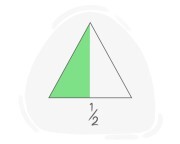
a number obtained by dividing one integer or rational number by another, typically written in the form a/b
zlomek, obyčejný zlomek
V receptu použijte zlomek tří čtvrtin (3/4) šálku cukru.
Fractional number above the line
čitatel, číslo nad čarou
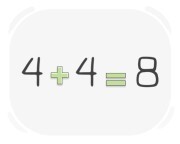
the calculation of the total of two or more numbers added together
sčítání, součet
Sčítání je proces kombinování dvou nebo více čísel, aby se získal celkový součet.
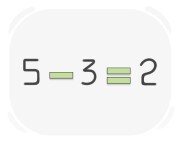
the mathematical process of finding the difference between two numbers, quantities, or expressions
odčítání, subtrahování
Při odčítání je 15 minus 7 rovno 8.
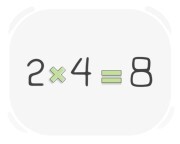
the process or action of adding a number to itself a specific number of times
násobení
Učitel vysvětlil, že násobení lze reprezentovat pomocí symbolu «×».
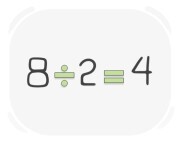
the process of calculating how many times a number can contain another number
dělení, rozdělení
Při dělení se číslo, které se dělí, nazývá dělenec.
(mathematics) the number that divides another number in a division problem
dělitel, číslo dělitele
Nalezení všech dělitelů čísla zahrnuje identifikaci všech celých čísel, která ho dělí rovnoměrně.
the number below the line in a fraction that shows how many parts the numerator divides into
jmenovatel, dělitel
(mathematics) a number divisible by all the numbers that are below the line in a set of fractions
společný jmenovatel, jmenovatel společný
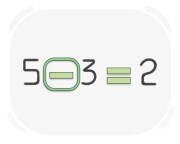
the sign - in mathematics, used to indicate subtraction or a negative number
mínus, znaménko mínus
V algebře se mínus používá k označení opaku nebo záporné hodnoty čísla nebo proměnné.
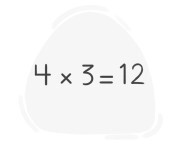
used to multiply a number by another
krát, násobeno
Tři krát čtyři se rovná dvanáct.
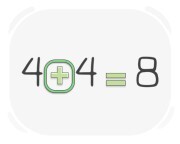
the sign + in mathematics, used to indicate addition or a positive number
plus, znaménko plus
V aritmetice se plus používá ke kombinování čísel nebo množství.
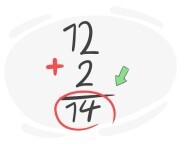
the whole amount of numbers added together
součet, celkem
Součet prvních deseti prvočísel je 129.
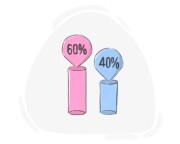
a number or amount expressed as a fraction of 100
procento
Společnost si klade za cíl snížit své emise uhlíku o významné procento v příštích pěti letech.
the product of all positive whole numbers from 1 to a given number
faktoriál, faktoriál
Faktoriály jsou nezbytné v binomické větě pro rozšiřování výrazů.
(mathematics) the exponent in an expression, indicating how many times a base is multiplied by itself
mocnina
Ve výrazu 3^4 je mocnina 4.
a value that, when multiplied by itself a specified number of times, results in the given number
kořen, radikál
Nalezení krychlového kořene z 27 zahrnuje určení čísla, které, když je vynásobeno samo sebou třikrát, se rovná 27.
the second exponent of any given number produced when multiplied by itself
čtverec, druhá mocnina
the result of multiplying a number by itself three times
krychle, třetí mocnina
Vzorec vyžadoval odečtení jedné krychle od druhé.
a number greater than 1 with only two devisors which can be itself or 1
prvočíslo
Největší známé prvočíslo (k roku 2023) má přes 24 milionů číslic.
a number that can be written as a fraction, where both the top and bottom are whole numbers, and the bottom is not zero
racionální číslo, racionální zlomek
3/4 je racionální číslo, protože může být zapsáno jako zlomek dvou celých čísel.
a number incapable of being expressed as a ratio of two integers
iracionální číslo, nesouměřitelné číslo
Druhá odmocnina ze 2 je iracionální číslo.
(mathematics) any positive whole number starting from 1 and counting upward, like 1, 2, 3, 4, and so on
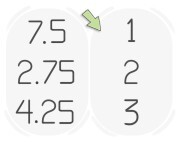
any positive number without fractions or decimals, including zero
celé číslo, přirozené číslo
Čísla 0, 1, 2, 3 a tak dále jsou všechna celá čísla.
any number without fractions or decimals, including positive numbers, negative numbers, and zero
celé číslo
Násobení dvou celých čísel vždy dá celé číslo.
any number that can be found on the number line, including both positive and negative numbers, zero, and fractions
reálné číslo, reálné
Každý bod na číselné ose odpovídá reálnému číslu.
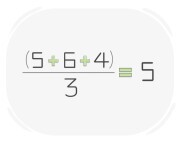
to find the sum of a set of numbers and then divide by the total number of values in the set
průměrovat, vypočítat průměr
Učitel průměroval výsledky testů studentů, aby určil jejich celkový výkon ve třídě.
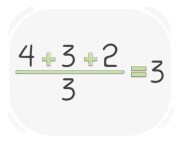
(mathematics) the average value of a set of quantities calculated by adding them, and dividing them by the total number of the quantities
průměr, aritmetický průměr
Chcete-li najít průměr 4, 6 a 8, sečtěte je a vydělte 3.
(mathematics) any integer that can be divided by 2 without leaving a remainder
(mathematics) any integer that cannot be divided by 2 without leaving a remainder of 1
