Adverbios relativos Para Estudiantes Intermedios
Aprende qué son los adverbios relativos en inglés, cómo usar where, when y why para introducir oraciones subordinadas, y la diferencia con los pronombres relativos, con muchos ejemplos. Pon a prueba tu conocimiento con el quiz al final.
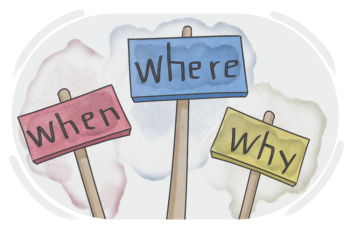
Funciones de los adverbios relativos
Los adverbios relativos pueden desempeñar varias funciones:
introducir oraciones adjetivas
unir sustantivos y pronombres personales con oraciones de relativo
Adverbios relativos y oraciones adjetivas
Los adverbios relativos pueden introducir oraciones adjetivas que aportan información adicional sobre un sustantivo.
Clause 1: This is the school.
Esta es la escuela.
Clause 2: I studied philosophy.
Estudié filosofía.
The is the school where I studied philosophy.
Esta es la escuela donde estudié filosofía.
Adverbio relativo where
Where es un adverbio relativo de lugar que se utiliza para indicar una ubicación dentro de una oración subordinada.
That was the hospital where my mother gave birth to me.
Ese fue el hospital donde mi madre me dio a luz.
Is this the café where she met her fiancé for the first time?
¿Es este el café donde conoció a su prometido por primera vez?
Advertencia
Los adverbios relativos aparecen después de un sustantivo y lo modifican. Si no cumplen esta función, no se consideran adverbios relativos, sino pronombres relativos sustantivos.
This is where I was born.
Aquí es donde nací.
Aquí, where es un pronombre relativo sustantivo.
That was the day when he cut me off from his life.
Ese fue el día cuando me apartó de su vida.
Aquí, when modifica al sustantivo, por lo que es un adverbio relativo.
Adverbio relativo when
When es un adverbio relativo de tiempo, que se utiliza para especificar el momento de una acción.
I remember the time when I dreamed of flying.
Recuerdo el momento cuando soñaba con volar.
She cannot believe there were days when she beat her children for no reason.
No puede creer que hubo días cuando golpeaba a sus hijos sin motivo.
Adverbio relativo why
Why es otro adverbio relativo, que se utiliza para introducir oraciones subordinadas de causa.
The reason why she suddenly left is unknown.
La razón por la que se fue de repente es desconocida.
The reason why I don't like to have children is that bringing them up is difficult.
La razón por la que no me gusta tener hijos es que criarlos es difícil.
Comentarios
(0)
Recomendado

