
Ciencias Básicas - Biología celular
Estudia los términos relacionados con las estructuras celulares, los orgánulos, la división, los procesos celulares, los tejidos y la organización de las células nerviosas.
Revisión
Tarjetas de memoria
Ortografía
Cuestionario
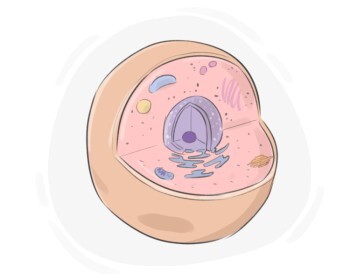
an organism's smallest unit, capable of functioning on its own

célula

the gel-like, semifluid substance within a cell that surrounds the organelles, providing a medium for cellular activities, including metabolism, transport of substances, and support for cellular structures
citoplasma, sustancia citoplasmática
El metabolismo celular, incluidas las reacciones bioquímicas, tiene lugar en el citoplasma.
a pair of small cylinders near the nucleus in animal cells, organizing cell division by forming the mitotic spindle
centriolo, par de centriolos
Durante la división celular, los centriolos se replican y los pares se mueven a los polos opuestos de la célula.
(biology) the process where a single cell splits itself into two or more daughter cells
fisión
Bajo el microscopio, los científicos observaron la fisión bacteriana donde una célula se divide en dos células idénticas.
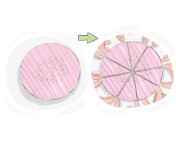
to be separated into parts, groups, etc.
dividirse
(biology) a CD8+ T lymphocyte that recognizes and destroys virus-infected cells by triggering cell death
célula asesina, linfocito T citotóxico
a type of cell division that creates reproductive cells with half the usual number of chromosomes
meiosis, división celular reduccional
En los humanos, la meiosis ocurre en las células que dan lugar a los óvulos y los espermatozoides, lo que lleva a la producción de descendencia genéticamente diversa.
a type of cell division that results in the formation of two daughter cells, each having the same number of chromosomes as the parent cell
mitosis, división celular ecuacional
La mitosis es un proceso fundamental en la reparación de tejidos, que permite que las células dañadas sean reemplazadas por copias idénticas a través de la división celular.
a thin layer of living tissue that covers, lines, connects, or separates parts of an organism
membrana
an organelle that is abundantly present in most cells and is responsible for energy production
mitocondria
La disfunción de la mitocondria puede conducir a una variedad de enfermedades y trastornos, incluyendo la miopatía mitocondrial y el síndrome de Leigh.
a molecule that forms the basic building block of DNA and RNA, consisting of a sugar, a phosphate group, and a nitrogenous base
nucleótido
Una cadena de nucleótidos en el ADN o ARN a menudo se denomina hebra o secuencia.
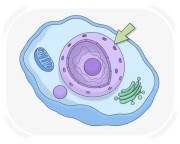
(biology) the part of a cell that contains most of the genetic information
núcleo
the substance inside the living cells of animals or plants
protoplasma
Bajo el microscopio, el protoplasma apareció como una sustancia similar a un gel dentro de la membrana celular.
(biology) a basic cell that can divide and turn into many different specialized cell types
célula madre
(biology) a natural cellular process in which a cell degrades and recycles its own damaged components or organelles
autofagia, autofagocitosis
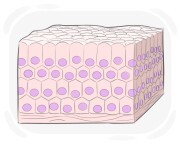
a group of similar cells that work together to form a particular part of a human, animal, or plant
tejido
(biology) a body tissue that supports, binds, or fills spaces between organs and includes collagen, fat cells, and fibers forming tendons and ligaments
tejido conectivo
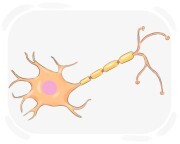
a bundle of fibers that carries signals between the brain or spinal cord and other parts of the body
nervio
a cell that is responsible for transmitting nerve impulses between the brain and the rest of the body
neurona
Una sola neurona puede conectarse a miles de otras células nerviosas.
(neuroanatomy) the long, single fiber of a nerve cell that carries electrical signals away from the cell body
axón, cilindroeje
(biology) a branched projection on a neuron that receives electrochemical signals from neighboring cells
dendrita
(biology) a nerve ending or cell that detects changes in the environment and sends signals to the nervous system
receptor
a specialized, membrane-bound structure within a cell that performs specific functions, contributing to the cell's overall structure and function
orgánulo, organelo
El aparato de Golgi, un orgánulo con membranas apiladas, modifica y empaqueta proteínas.
a tiny structure within cells that assembles proteins by reading the genetic instructions carried by messenger RNA
ribosoma
El movimiento coordinado de los ribosomas a lo largo del ARNm garantiza la lectura precisa de la información genética.
a small, enzyme-filled sac in a cell that breaks down waste materials and unwanted substances
lisosoma, vesícula enzimática
Los lisosomas desempeñan un papel vital en el mantenimiento celular al degradar componentes celulares dañados o que funcionan mal.
a cell organelle in plants, fungi, and some protists that stores nutrients, manages waste, and helps maintain cell pressure
vacuola, vesícula
Las vacuolas en las células de levadura almacenan nutrientes, ayudando en la supervivencia durante la escasez de nutrientes.
a cellular organelle involved in the processing, packaging, and distribution of proteins and lipids within the cell, consisting of a stack of flattened membrane sacs called cisternae
Aparato de Golgi, Complejo de Golgi
En las células nerviosas, el aparato de Golgi contribuye a la formación de mielina, una sustancia grasa que protege las fibras nerviosas.
(biology) the ordered series of stages a cell undergoes to duplicate and divide into two identical daughter cells
ciclo celular
(biology) programmed cell death in which a cell deliberately destroys itself to control tissue growth or remove damaged cells
apoptosis
a network of protein fibers in a cell that gives it shape, supports its structure, and aids in movement
citoesqueleto, esqueleto celular
El citoesqueleto está involucrado en el transporte intracelular, guiando vesículas y orgánulos a sus destinos.
