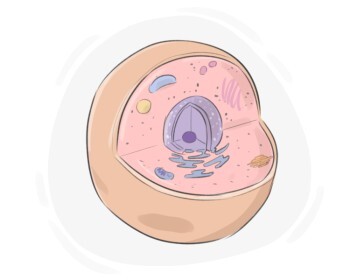
pattern

Basic Sciences - Cellular Biology

Study terms related to cell structures, organelles, division, cellular processes, tissues, and the organization of nerve cells.

Revizuire

Fișe de studiu

Ortografie

Chestionar
Începe să înveți
Words Related to Basic Sciences
cell
cell
[substantiv]

an organism's smallest unit, capable of functioning on its own

celulă

celulă

Ex: The study of cells, known as cell biology or cytology, delves into their structure, function, and interactions. 
Închide
Conectare
cytoplasm
cytoplasm
[substantiv]

the gel-like, semifluid substance within a cell that surrounds the organelles, providing a medium for cellular activities, including metabolism, transport of substances, and support for cellular structures

citoplasmă, substanță citoplasmică

citoplasmă, substanță citoplasmică

Ex: Cytoplasm fills the interior of a cell, serving as a supportive medium for cellular structures and activities. 
Închide
Conectare
centriole
centriole
[substantiv]

a pair of small cylinders near the nucleus in animal cells, organizing cell division by forming the mitotic spindle

centriol, pereche de centrioli

centriol, pereche de centrioli

Ex: Centrioles play a crucial role in animal cell division, forming the mitotic spindle. 
Închide
Conectare
fission
fission
[substantiv]

(biology) the process where a single cell splits itself into two or more daughter cells

fisiune, diviziune celulară
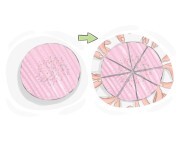
fisiune, diviziune celulară

Ex: Yeast cells undergo fission to multiply rapidly through asexual budding and pinching division. 
Închide
Conectare
to divide
to divide
[verb]

to be separated into parts, groups, etc.

diviza, separa

diviza, separa

Ex: The river divides at this point, forming two distinct channels. 
Închide
Conectare
killer cell
killer cell
[substantiv]

(biology) a CD8+ T lymphocyte that recognizes and destroys virus-infected cells by triggering cell death

Ex: The killer cell locked onto the virus-infected hepatocyte and released cytotoxic granules. 
Închide
Conectare
meiosis
meiosis
[substantiv]

a type of cell division that creates reproductive cells with half the usual number of chromosomes

meioză, diviziune celulară reducțională

meioză, diviziune celulară reducțională

Ex: Meiosis ensures genetic diversity by creating haploid cells with unique combinations of chromosomes. 
Închide
Conectare
mitosis
mitosis
[substantiv]

a type of cell division that results in the formation of two daughter cells, each having the same number of chromosomes as the parent cell

mitoză, diviziune celulară ecuațională

mitoză, diviziune celulară ecuațională

Ex: Mitosis is essential for the growth and development of multicellular organisms, as it results in the production of new cells. 
Închide
Conectare
membrane
membrane
[substantiv]

a thin sheet of tissue that separates or covers the inner parts of an organism

membrană, peliculă

membrană, peliculă

Ex: The cell membrane protects the interior of the cell. 
Închide
Conectare
mitochondrion
mitochondrion
[substantiv]

an organelle that is abundantly present in most cells and is responsible for energy production

mitocondrie, organelă producătoare de energie

mitocondrie, organelă producătoare de energie

Ex: The mitochondrion is a membrane-bound organelle found in most eukaryotic cells. 
Închide
Conectare
nucleotide
nucleotide
[substantiv]

a molecule that forms the basic building block of DNA and RNA, consisting of a sugar, a phosphate group, and a nitrogenous base

nucleotidă

nucleotidă

Ex: The sequence of nucleotides in DNA determines genetic information. 
Închide
Conectare
nucleus
nucleus
[substantiv]

(biology) the part of a cell that contains most of the genetic information

nucleu, nucleus

nucleu, nucleus

Ex: The nucleus of a cell contains genetic material in the form of DNA, which regulates cellular activities. 
Închide
Conectare
protoplasm
protoplasm
[substantiv]

the substance inside the living cells of animals or plants

protoplazmă, substanța vie a celulelor

protoplazmă, substanța vie a celulelor

Ex: Protoplasm is crucial for cellular activities, such as metabolism and growth. 
Închide
Conectare
stem cell
stem cell
[substantiv]

(biology) a basic type of cell in a multicellular organism, which develops into different kinds of cells with different functions

celulă stem, celulă nediferențiată

celulă stem, celulă nediferențiată

Închide
Conectare
autophagy
autophagy
[substantiv]

(biology) a natural cellular process in which a cell degrades and recycles its own damaged components or organelles
Ex: Autophagy helps clear misfolded proteins that would otherwise accumulate and harm the cell. 
Închide
Conectare
tissue
tissue
[substantiv]

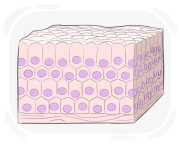
a group of cells in the body of living things, forming their different parts

țesut, țesut celular

țesut, țesut celular

Ex: Muscle tissue enables movement and supports the body's structure. 
Închide
Conectare
connective tissue
connective tissue
[substantiv]

(biology) a body tissue that supports, binds, or fills spaces between organs and includes collagen, fat cells, and fibers forming tendons and ligaments
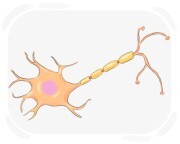
Ex: Connective tissue wraps around every muscle and organ to keep them in place. 
Închide
Conectare
nerve
nerve
[substantiv]

each of a group of long thread-like structures in the body that carry messages between the brain and other parts of the body, sensing things is a result of this process

nerv, fibră nervoasă

nerv, fibră nervoasă

Închide
Conectare
neuron
neuron
[substantiv]

a cell that is responsible for transmitting nerve impulses between the brain and the rest of the body

neuron, celulă nervoasă

neuron, celulă nervoasă

Ex: Neurons transmit signals at speeds of up to 120 meters per second. 
Închide
Conectare
axon
axon
[substantiv]

a long, slender projection of a nerve cell that conducts electrical impulses away from the cell body towards other neurons or target cells

axon, neurit

axon, neurit

Închide
Conectare
dendrite
dendrite
[substantiv]

(biology) a branched projection on a neuron that receives electrochemical signals from neighboring cells

Ex: The dendrite extended outward like a tiny tree branch to catch incoming signals. 
Închide
Conectare
receptor
receptor
[substantiv]

a sense organ or nerve ending that can respond to external stimuli and is able to transmit data to the central nervous system

receptor, organ receptor

receptor, organ receptor

Închide
Conectare
organelle
organelle
[substantiv]

a specialized, membrane-bound structure within a cell that performs specific functions, contributing to the cell's overall structure and function

organită, organelă

organită, organelă

Ex: The nucleus, an organelle housing genetic material, regulates cell activities. 
Închide
Conectare
ribosome
ribosome
[substantiv]

a tiny structure within cells that assembles proteins by reading the genetic instructions carried by messenger RNA

ribozom

ribozom

Ex: Ribosomes are the cellular factories responsible for building proteins, essential for various biological functions. 
Închide
Conectare
lysosome
lysosome
[substantiv]

a small, enzyme-filled sac in a cell that breaks down waste materials and unwanted substances

lizozom, veziculă plină cu enzime

lizozom, veziculă plină cu enzime

Ex: Lysosomes act as the "recycling centers" of cells, breaking down and digesting cellular waste materials. 
Închide
Conectare
vacuole
vacuole
[substantiv]

a cell organelle in plants, fungi, and some protists that stores nutrients, manages waste, and helps maintain cell pressure

vacuolă, veziculă

vacuolă, veziculă

Ex: Vacuoles in plant cells may contain pigments, giving flowers and fruits their vibrant colors. 
Închide
Conectare
Golgi apparatus
Golgi apparatus
[substantiv]

a cellular organelle involved in the processing, packaging, and distribution of proteins and lipids within the cell, consisting of a stack of flattened membrane sacs called cisternae

Aparatul Golgi, Complexul Golgi

Aparatul Golgi, Complexul Golgi

Ex: The Golgi apparatus modifies and packages proteins, ensuring they are properly shaped and functional. 
Închide
Conectare
cell cycle
cell cycle
[substantiv]

(biology) the ordered series of stages a cell undergoes to duplicate and divide into two identical daughter cells

Ex: The cell cycle consists of interphase, mitosis, and cytokinesis in eukaryotic organisms. 
Închide
Conectare
apoptosis
apoptosis
[substantiv]

(biology) programmed cell death in which a cell deliberately destroys itself to control tissue growth or remove damaged cells

Ex: Apoptosis removes unneeded cells during embryonic development to shape fingers and toes. 
Închide
Conectare
cytoskeleton
cytoskeleton
[substantiv]

a network of protein fibers in a cell that gives it shape, supports its structure, and aids in movement

citoschelet, scheletul celular

citoschelet, scheletul celular

Ex: The cytoskeleton acts like a cell's internal scaffolding, maintaining its shape and structural integrity. 
Închide
Conectare
LanGeek
Descarcă aplicația LanGeek