
Le livre Summit 2B - Unité 10 - Leçon 1
Ici, vous trouverez le vocabulaire de l'Unité 10 - Leçon 1 du manuel Summit 2B, comme "licencier", "provoquer", "tomber malade de", etc.
Réviser
Flashcards
formes
Orthographe
Quiz

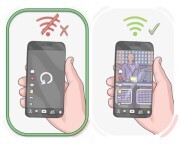
problems or difficulties that arise, especially in relation to a service or facility, which require resolution or attention

problème, objet de litige
Les clients ont signalé un problème avec l'application mobile qui plante fréquemment.
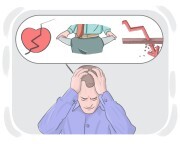
something that causes difficulties and is hard to overcome
problème
Jane essaie de résoudre un conflit avec son amie pour réparer leur problème de relation.
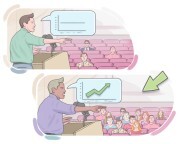
to be the reason for a specific incident or result
entraîner, provoquer
Un leadership positif a provoqué un changement culturel dans l'entreprise.
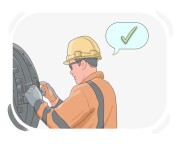
to complete or conduct a task, job, etc.
exécuter
Il est essentiel de effectuer une analyse approfondie des tendances du marché avant de lancer un nouveau produit.

to start experiencing symptoms of an illness
attraper, choper
Après avoir voyagé à l'étranger, il a contracté une maladie tropicale et a eu besoin d'un traitement médical.

to create something, usually an idea, a solution, or a plan, through one's own efforts or thinking
trouver, imaginer
Au moment où je suis arrivé, ils avaient déjà trouvé un plan.
![to [go|do] without {sb/sth}](https://cdn.langeek.co/photo/44354/thumb/350?type=jpeg "to [go|do] without {sb/sth}")
to manage or function without someone or something that is typically needed or desired
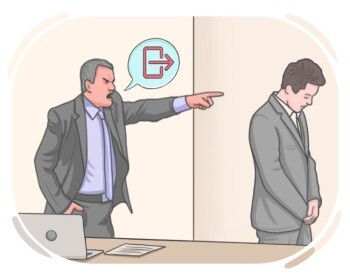
to dismiss employees due to financial difficulties or reduced workload
licencier, renvoyer
L'usine a licencié 50 travailleurs après l'installation de nouvelles machines automatisées.
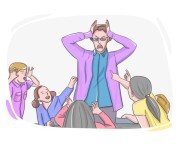
to tolerate something or someone unpleasant, often without complaining
supporter
Elle supporte les défis de son travail exigeant pour l'amour de la croissance professionnelle.

to use the available supply of something, leaving too little or none
être à court de, manquer de
La petite ville pourrait manquer de fournitures médicales si elle n'est pas réapprovisionnée.

to entirely remove something
anéantir, éliminer, éradiquer
Le chef a éliminé l'odeur de brûlé de la cuisine avec un désodorisant.
| Le livre Summit 2B | |||
|---|---|---|---|
| Unité 6 - Aperçu | Unité 6 - Leçon 4 | Unité 7 - Leçon 4 | Unité 8 - Leçon 1 |
| Unité 8 - Leçon 4 | Unité 9 - Leçon 2 | Unité 9 - Leçon 4 | Unité 10 - Leçon 1 |
