Common and Proper Nouns For Intermediate learners
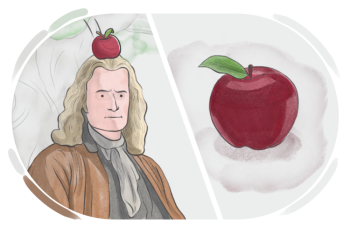
What Are Proper and Common Nouns?
Common nouns (sustantivos comunes) are general titles for people, animals, objects, places, or concepts. They do not refer to a specific individual or unique entity; for example, niño, ciudad, país, mesa, etc. Proper nouns (sustantivos propios), on the other hand, refer to specific, individual names of people, places, institutions, brands, or sometimes events. They identify one particular example of a common noun. For example:
People: María, Carlos, Isabel, Pablo Picasso
Geographical places: Madrid, México, los Andes, el Amazonas
Institutions/Companies: Google, la ONU, la Universidad de Salamanca
Works/Titles: Don Quijote, Cien años de soledad, El País, Biblia
Days/Holidays: Navidad, Viernes Santo, Día de los Muertos, Nochebuena
Warning!
Unlike English, days of the week (lunes, martes), months (enero, julio), languages (español, inglés), and religions (catolicismo, budismo) are not proper nouns in Spanish and never capitalized.
Features
Common nouns are always used with a lowercase initial letter, unless they appear at the beginning of the sentence. Also, they can be used with definite and indefinite articles. For example:
La niña juega en el parque.
The girl plays in the park.
El perro duerme mucho.
The dog sleeps a lot.
Las montañas son altas.
The mountains are high.
Proper nouns, on the other hand, are always written with a capital letter. They usually do not take articles unless it is part of the name itself or is limiting the scope of the statement to a specific instance or state of the proper noun. Additionally, they are not normally used in the plural, unless they are meant to refer to multiple people or things that share a proper name, or types/kinds of that name. For example:
María vive en Madrid.
Maria lives in Madrid.
Don Quijote es una obra muy conocida.
Don Quixote is a very famous literary work.
El Perú actual es muy diverso.
Today's Peru is very diverse
The use of the article limits the scope of the statement to a particular time span in Peru.
Tengo dos Toyotas.
I have two Toyotas.
Here, "Toyota" is a proper noun that stands for a product, i.e. two Toyota cars, and so used in plural form.
Tip!
In titles of books and movies, only the initial letter of the first word is capitalized (Cien años de soledad, El señor de los anillos), while in titles of magazines and newspapers, all words are capitalized (El País, Revista Semana).
Using Common Nouns as Proper Nouns
Sometimes, a common noun can become a proper noun in specific contexts. In such cases, it must be capitalized. For example:
Mi perro se llama Azul por sus ojos.
My dog is called Azul (Blue) because of his eyes.
Here, "Azul" is the name of a pet, so it is a proper noun.
El País es mi revista favorita.
"El País" is my favorite magazine.
Here, "País" is the title of a magazine and used as a proper noun.
Quiz:
Clasifica las palabras según su uso en español.
biblioteca | |
Sofía | |
Canadá | |
agosto | |
Amazonia |
Elige la oración con las mayúsculas correctas.
Ana visitó el museo nacional en Marzo.
ana visitó el Museo Nacional en marzo.
Ana visitó el Museo Nacional en marzo.
Ana visitó el museo Nacional en Marzo.
Elige la opción correcta.
Vi la película El Jardín De Las Sombras y compré Revista Cultura.
Vi la película El jardín de las sombras y compré Revista Cultura.
Vi la película el jardín de las sombras y compré revista cultura.
Vi la película El Jardín de las sombras y compré Revista cultura.
Completa con el artículo correcto (el/la) o elige no artículo (-).
Elena vive en Quito.
México moderno tiene muchas ciudades grandes.
Carlos llegó tarde.
Visitamos
Universidad del Norte.
Corrige las mayúsculas en la oración.
el lunes Teresa estudia Inglés y lee la revista mundo joven. →
.
Comments
(0)Recommended

