Full Stop For Intermediate learners
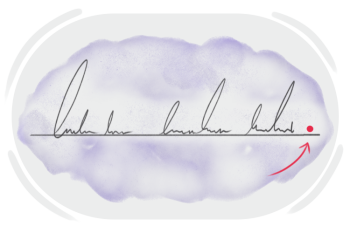
What is Full Stop?
In Spanish, the full stop or period (el punto) marks the end of a sentence or complete thought.
Characteristics
Spanish full stops have some characteristics that govern their use:
The sentence following a full stop always begins with a capital letter.
Juan llegó temprano. Se sentó a leer.
Juan arrived early. He sat down to read.
Full stops are never used at the end of titles and headings.
Capítulo 3 Introducción a la sintaxis
Chapter 3 Introduction to Syntax
(Not Chapter 3. Introducción a la sintaxis.)
They are never used together with questions marks, exclamation marks, or other punctuation marks at the same time.
¿Vienes mañana?
Are you coming tomorrow?
(Not "¿Vienes mañana?.")
When the sentence ends with a parenthesis () or quotation mark "", the full stop comes after it.
Dijo: "No tengo tiempo".
He said: "I don't have time."
Uses
The full stop is one of the most common punctuation marks in all languages. In Spanish, it is used:
To mark the end of a complete statement:
Ella llegó tarde.
She arrived late.
After abbreviations:
Sr., Dr., Avda., Dn., EE. UU., etc.
In writing the time:
14.30
In numbers, for separating thousands (although there are variations among countries and a comma might be used instead):
2.453
two thousand and four hundred fifty-three
Quiz:
Elige la opción correcta con comillas.
El archivo está guardado en la carpeta "Contratos."
El archivo está guardado en la carpeta "Contratos"
El archivo está guardado en la carpeta "Contratos".
El archivo está guardado en la carpeta Contratos .
Elige el título escrito correctamente.
Unidad 4. Los pronombres personales.
Unidad 4 Los pronombres personales.
Unidad 4 Los pronombres personales
Unidad 4. Los pronombres personales?
Elige el texto con puntuación correcta.
La reunión terminó a las 16.30. Después, la Sra. Gómez salió.
La reunión terminó a las 16.30 Después, la Sra Gómez salió.
La reunión terminó a las 16.30 después, la Sra Gómez salió.
La reunión terminó a las 16.30?. Después, la Sra. Gómez salió.
Añade el punto y la mayúscula donde sea necesario.
La clase fue interesante todos participaron mucho
→ La clase fue
La nota dice: "La oficina abre a las nueve"
→ La nota dice: "La
El tren salió tarde los pasajeros esperaron en silencio
→ El tren salió
Tiene una cita con Dr Salgado
→ Tiene una cita
Comments
(0)Recommended

