Exclamation Mark For Intermediate learners
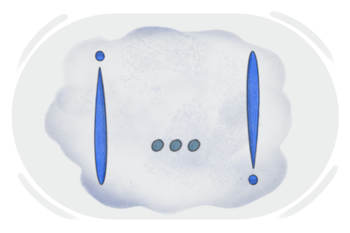
What Are Exclamation Marks?
In Spanish, exclamation marks (signos de exclamación) are used to indicate strong emotion such as surprise, joy, anger, or urgency, as well as in commands and emphatic expressions.
Form
Spanish always uses an opening (¡) and a closing (!) exclamation mark at the beginning and end of the exclamatory phrase:
¡Qué bonito día!
What a beautiful day!
¡Cuidado!
Careful!
¡No lo hagas!
Don't do it!
Characteristics
If the exclamation is part of a larger sentence, the exclamation marks come at the beginning and end of the part that is exclamatory:
Cuando lo vi, ¡no lo podía creer!
When I saw it, I couldn't believe it!
Que empieza la película, ¡ven rápido!
The movie is starting, come quickly!
Additionally, the first word after the opening question mark is not capitalized unless it is at the beginning of the sentence.
¡Qué sorpresa verte aquí!
What a surprise to see you here!
at the beginning of the sentence
Te dije que, ¡por favor, no tocaras eso!
I told you, please, don't touch that!
in the middle of the sentence, not capitalized
Usage with Other Punctuation Marks
Although exclamation marks and full stops cannot be used at the same time, exclamations marks can be freely combined with question marks. In this case, either mark can come at the beginning or end of the question, or they can both appear together in either order.
¡Cómo pudiste? Or ¿Cómo pudiste!
¿¡Cómo pudiste!? Or ¡¿Cómo pudiste?!
Uses
Exclamation marks are used with:
Interjections: ¡Ay!, ¡Uf!, ¡Hola!
Commands or warnings: ¡Corre!, ¡Cállate!
Emotional statements: ¡Te extrañé tanto!
Admiration or surprise: ¡Qué casa tan grande!
Quiz:
Elige la oración escrita correctamente.
Qué día tan bonito!
¡Qué día tan bonito!
¡Qué día tan bonito.
¡Qué día tan bonito!.
Elige la oración con los signos de exclamación en el lugar correcto.
¡Cuando llegué, no había nadie!
Cuando llegué, ¡no había nadie!
Cuando llegué!, ¡no había nadie.
Cuando ¡llegué, no había nadie!
Corrige la puntuación y las mayúsculas de cada oración.
¡Ana, ven aquí!
→
Mira, Qué sorpresa!
→
Empareja cada oración con su uso principal.
Elige la opción correcta para expresar exclamación y pregunta al mismo tiempo.
¡Por qué hiciste eso!.
¡Por qué hiciste eso?
Por qué hiciste eso?!
¡Por qué hiciste eso.
Comments
(0)Recommended

