Diphthongs in Spanish In European Spanish
What Are Diphthongs in Spanish?
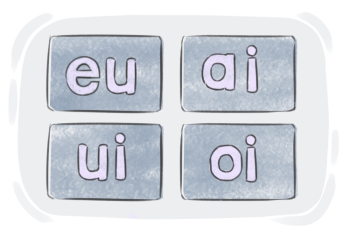
Diphthongs (los diptongos in Spanish)are formed when two vowels are used together in the same syllable. Spanish has three strong vowels and two weak vowels which can form a total of fourteen permissible diphthongs.
Types of Spanish Diphthongs
There are three types of diphthongs in Spanish, depending on the combination of vowels:
Rising Diphthongs: weak vowel + strong vowel
Falling Diphthongs: strong vowel + weak vowel
Homogeneous Diphthongs: weak vowel + weak vowel
Rising Diphthongs
When a weak vowel (/i/ or /u/) is followed by a strong vowel (/a/, /e/, or /o/), a rising diphthong is formed. In many of these diphthongs, the weak vowel changes into a gliding semivowel (/j/ and /w/). Here are some examples:
ia → hacia → /a.sja/ (LatAm) /a.θja/ (Sp.)
toward
ie → tierra → /tje.ra/
land
io → radio → /ra.djo/
radio
ua → cuadro → /kwa.ðɾo/
square
ue → puerta → /pweɾ.ta/
door
uo → antiguo → /an.ti.ɡwo/
old
Falling Diphthongs
When a strong vowel (/a/, /e/, or /o/) is followed by a weak vowel (/i/ or /u/), the result is a falling diphthong. Here are some examples of falling diphthongs in Spanish:
ai → aire → /ai.ɾe/
air
au → causa → /kau.sa/
cause
ei → peine → /pei.ne/
comb
eu → deuda → /deu.da/
debt
oi → coincidir → /koin.θi.diɾ/ (Sp.) /koin.si.diɾ/ (LatAm)
coincide
ou (rare) → bou → /bou/
trawler
Homogeneous Diphthongs
When two weak vowels (/i/ and /u/) are used together, a homogeneous diphthong is formed. As you can see in the examples below, the first vowel is typically pronounced as a gliding semi-vowel.
iu → viuda → /bju.da/
widow
ui → ruido → /rwi.do/
noise
Diphthong Hiatus
When the weak vowel in the diphthong is stressed, the diphthong breaks and two separate syllables are formed. Here are some examples:
oír → /o.iɾ/
to heir
frío → /fɾi.o/
cold
país → /pa.is/
country
tía → /ti.a/
aunt
sonríe → /son.ɾi.e/
(he/she) smiles
reír → /re.iɾ/
laugh
actúa → /ak.tu.a/
(he/she) acts
ahúma → /a.u.ma/
(he/she) smokes
continúo → /kon.ti.nu.o/
(I) continue
rehúso → /re.u.so/
(I) refuse
Comments
(0)Recommended

