
Ciencias Básicas - Meteorología y el sistema solar
Estudia los términos relacionados con las capas atmosféricas, el movimiento planetario, los meteoros, los meteoritos y los planetas del sistema solar.
Revisión
Tarjetas de memoria
Ortografía
Cuestionario
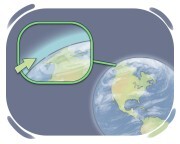
the layer of gases surrounding a planet, held in place by gravity

atmósfera

a part of planet where the air, land, and water are suitable for all the living things to exist on
biosfera
La biosfera se ve afectada por los cambios en el clima y los patrones meteorológicos.
the atmospheric layer above the troposphere, where temperature generally increases with altitude and the ozone layer is situated
estratosfera, capa estratosférica
La estabilidad del aire en la estratosfera limita la convección vertical y la turbulencia, proporcionando una región atmosférica relativamente tranquila.
the atmospheric layer above the mesosphere, where temperatures increase with altitude and it extends to the exosphere
termósfera, capa térmica
A pesar de las altas temperaturas en la termosfera, la densidad de moléculas es extremadamente baja.
the lowest layer of Earth's atmosphere, extending from the surface up to an average altitude of about 8-15 kilometers
troposfera, capa más baja de la atmósfera terrestre
La troposfera es la capa más cercana a la superficie de la Tierra y se extiende hasta la tropopausa.
a layer in the upper atmosphere containing ions and free electrons, affecting radio communication and contributing to auroras
ionosfera, capa ionizada de la atmósfera
Las señales de radio que pasan a través de la ionosfera experimentan cambios en la propagación debido a la presencia de iones y electrones libres.
the atmospheric layer above the stratosphere, where temperatures decrease with altitude and it extends up to the mesopause
mesosfera, capa mesosférica
El límite entre la mesosfera y la termosfera se conoce como mesopausa.
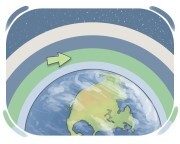
a layer of gases in the earth's atmosphere that does not let the sun's ultraviolet radiation pass through
capa de ozono
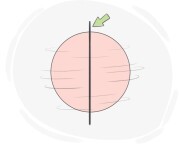
the central point or line around which an object turns
axis
La inclinación del planeta sobre su eje provoca las estaciones.
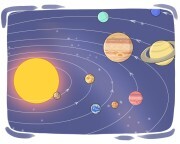
to move around a star, planet, or a large object in space
orbitar
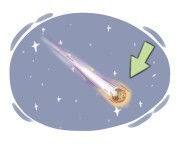
a piece of rock coming from outer space that passes through the Earth's atmosphere, producing light
meteoro
El estudio de los meteoros ayuda a los astrónomos a entender la composición de los objetos del sistema solar temprano.
a piece of rock or metal from space that has hit the surface of the earth
meteorito
El cráter de impacto fue formado por un gran meteorito que golpeó la Tierra hace millones de años.
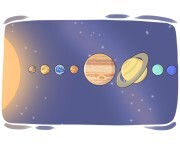
the sun and the group of planets orbiting around it, including the earth
sistema solar
Algunas lunas del sistema solar pueden tener condiciones adecuadas para la vida.
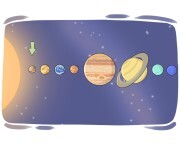
the 1st and smallest planet in the solar system which is the closest to the sun
Mercurio

the 2nd planet of the solar system located between Mercury and earth
Venus
Venus gira en dirección opuesta a la mayoría de los planetas, un fenómeno conocido como rotación retrógrada, con un día más largo que su año.
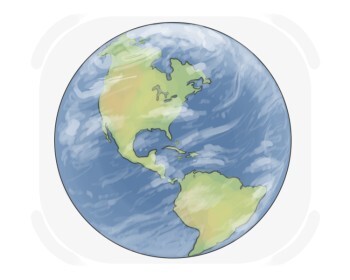
a big round mass covered in land and water, on which we all live
tierra

the 4th planet of the solar system located between earth and Jupiter
Marte
Los casquetes polares en Marte consisten en agua congelada y dióxido de carbono, fluctuando con las estaciones del planeta.
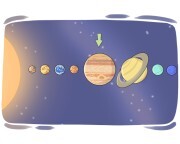
the 5th and the largest planet of the solar system located between Mars and Saturn
Júpiter
Júpiter tiene más de 300 veces la masa de la Tierra.
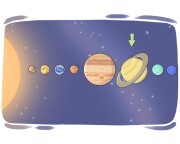
the 6th planet of the solar system located between Jupiter and Uranus, which has rings around it
Saturno
La atmósfera de Saturno es conocida por sus bandas de nubes y sistemas de tormentas, incluyendo la Gran Mancha Blanca, una tormenta masiva que ocurre periódicamente.
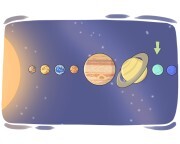
the 7th planet of the solar system with a blue-green color located between Saturn and Neptune
Urano
Urano experimenta variaciones estacionales extremas debido a su inclinación inusual, con cada polo enfrentando al Sol durante aproximadamente 42 años.
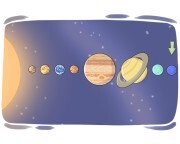
the 8th planet of the solar system with a ring of icy particles around it
Neptuno
Debido a su distancia del Sol, Neptuno recibe muy poca luz solar, lo que hace que su temperatura superficial sea extremadamente fría.
(astronomy) a dwarf planet in our solar system that orbits beyond Neptune and is smaller than the eight major planets
Plutón
