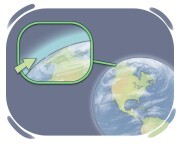
pattern

Basic Sciences - Meteorology & the Solar System

Study terms related to atmospheric layers, planetary motion, meteors, meteorites, and the planets of the solar system.

Revizuire

Fișe de studiu

Ortografie

Chestionar
Începe să înveți
Words Related to Basic Sciences
atmosphere
atmosphere
[substantiv]

the layer of gases surrounding a planet, held in place by gravity

atmosferă, strat gazos

atmosferă, strat gazos

Ex: Earth's atmosphere protects us from harmful solar radiation. 
Închide
Conectare
biosphere
biosphere
[substantiv]

a part of planet where the air, land, and water are suitable for all the living things to exist on

biosferă, sfera vieții

biosferă, sfera vieții

Ex: The biosphere includes all ecosystems on Earth. 
Închide
Conectare
stratosphere
stratosphere
[substantiv]

the atmospheric layer above the troposphere, where temperature generally increases with altitude and the ozone layer is situated

stratosferă, strat stratosferic

stratosferă, strat stratosferic

Ex: The stratosphere contains the ozone layer, crucial for absorbing and blocking harmful ultraviolet radiation. 
Închide
Conectare
thermosphere
thermosphere
[substantiv]

the atmospheric layer above the mesosphere, where temperatures increase with altitude and it extends to the exosphere

termosferă, strat termic

termosferă, strat termic

Ex: The thermosphere is where the International Space Station (ISS) and many satellites orbit the Earth. 
Închide
Conectare
troposphere
troposphere
[substantiv]

the lowest layer of Earth's atmosphere, extending from the surface up to an average altitude of about 8-15 kilometers

troposferă, stratul cel mai de jos al atmosferei terestre

troposferă, stratul cel mai de jos al atmosferei terestre

Ex: The troposphere is where most weather phenomena, such as clouds, rain, and storms, occur. 
Închide
Conectare
ionosphere
ionosphere
[substantiv]

a layer in the upper atmosphere containing ions and free electrons, affecting radio communication and contributing to auroras

ionosferă, stratul ionizat al atmosferei

ionosferă, stratul ionizat al atmosferei

Ex: The ionosphere reflects radio waves, allowing long-distance communication by bouncing signals off this atmospheric layer. 
Închide
Conectare
mesosphere
mesosphere
[substantiv]

the atmospheric layer above the stratosphere, where temperatures decrease with altitude and it extends up to the mesopause

mezosferă, strat mezosferic

mezosferă, strat mezosferic

Ex: The mesosphere is the layer where meteorites burn up upon entering the Earth's atmosphere. 
Închide
Conectare
ozone layer
ozone layer
[substantiv]

a layer of gases in the earth's atmosphere that does not let the sun's ultraviolet radiation pass through

stratul de ozon, ozonosferă
stratul de ozon, ozonosferă

Ex: The ozone layer is a region of the Earth's stratosphere that absorbs most of the sun's ultraviolet radiation. 
Închide
Conectare
axis
axis
[substantiv]

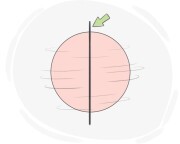
the central point or line around which an object turns

ax, pivot
ax, pivot

Ex: The Earth spins on its axis once every twenty-four hours. 
Închide
Conectare
to orbit
to orbit
[verb]

to move around a star, planet, or a large object in space

a orbita, a se învârti în jurul
a orbita, a se învârti în jurul

Ex: The moon orbits around the Earth once every 27.3 days. 
Închide
Conectare
meteor
meteor
[substantiv]

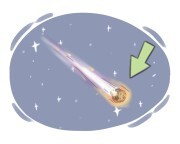
a piece of rock coming from outer space that passes through the Earth's atmosphere, producing light

meteor,  meteorit

meteor, meteorit

Ex: We saw a bright meteor streak across the sky during the meteor shower last night. 
Închide
Conectare
meteorite
meteorite
[substantiv]

a piece of rock or metal from space that has hit the surface of the earth

meteorit, aerolit
meteorit, aerolit

Ex: Scientists analyzed the composition of the meteorite that fell in the desert last month. 
Închide
Conectare
solar system
solar system
[substantiv]

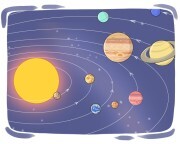
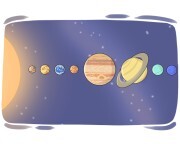
the sun and the group of planets orbiting around it, including the earth

sistem solar, sistemul solar

sistem solar, sistemul solar

Ex: Earth is one of eight planets in the solar system. 
Închide
Conectare
Mercury
Mercury
[substantiv]

the 1st and smallest planet in the solar system which is the closest to the sun

Mercur

Mercur

Ex: Mercury, the closest planet to the Sun, has surface temperatures that can reach up to 800 degrees Fahrenheit during the day. 
Închide
Conectare
Venus
Venus
[substantiv]

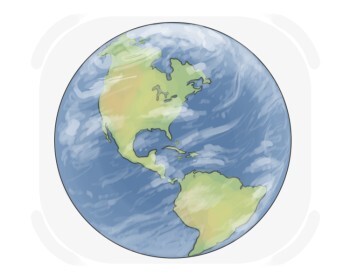
the 2nd planet of the solar system located between Mercury and earth

Venus, planeta Venus
Venus, planeta Venus

Ex: Venus, often called the "morning star" or "evening star," is the brightest natural object in the night sky after the Moon. 
Închide
Conectare
Earth
Earth
[substantiv]

a big round mass covered in land and water, on which we all live

Pământ, planeta Pământ

Pământ, planeta Pământ

Ex: The Earth has diverse ecosystems, ranging from forests to deserts. 
Închide
Conectare
Mars
Mars
[substantiv]

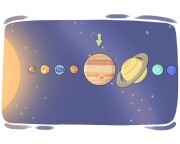
the 4th planet of the solar system located between earth and Jupiter

Marte
Marte

Ex: Mars has fascinated astronomers for centuries due to its distinct reddish hue visible from Earth. 
Închide
Conectare
Jupiter
Jupiter
[substantiv]

the 5th and the largest planet of the solar system located between Mars and Saturn

Jupiter este a cincea și cea mai mare planetă din sistemul solar,  situată între Marte și Saturn.
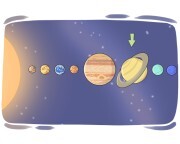
Jupiter este a cincea și cea mai mare planetă din sistemul solar, situată între Marte și Saturn.

Ex: Jupiter is the fifth planet from the sun in the solar system. 
Închide
Conectare
Saturn
Saturn
[substantiv]

the 6th planet of the solar system located between Jupiter and Uranus, which has rings around it

Saturn, planeta Saturn
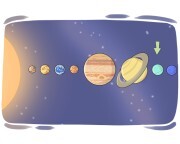
Saturn, planeta Saturn

Ex: Saturn is the second-largest planet in the solar system, after Jupiter, and has a diameter about 9 times that of Earth. 
Închide
Conectare
Uranus
Uranus
[substantiv]

the 7th planet of the solar system with a blue-green color located between Saturn and Neptune

Uranus, planeta Uranus
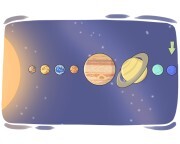
Uranus, planeta Uranus

Ex: The Voyager 2 spacecraft flew by Uranus in 1986, providing the first close-up images and data about its rings and moons. 
Închide
Conectare
Neptune
Neptune
[substantiv]

the 8th planet of the solar system with a ring of icy particles around it

Neptun, planeta Neptun

Neptun, planeta Neptun

Ex: Neptune’s vibrant blue color is due to the presence of methane in its atmosphere, which absorbs red light. 
Închide
Conectare
Pluto
Pluto
[substantiv]

(astronomy) a dwarf planet in our solar system that orbits beyond Neptune and is smaller than the eight major planets

Ex: Pluto was reclassified as a dwarf planet in 2006 by the International Astronomical Union. 
Închide
Conectare
LanGeek
Descarcă aplicația LanGeek