
Le livre Insight - Intermédiaire Supérieur - Perspective du Vocabulaire 3
Ici, vous trouverez les mots du Vocabulaire Insight 3 dans le manuel Insight Upper-Intermediate, tels que "opt in", "accumulate", "churn out", etc.
Réviser
Flashcards
formes
Orthographe
Quiz


in or through the space that separates two or more things or people

entre, au milieu de
Elle s'est assise entre ses deux meilleures amies pendant le film.

in a direction away from an enclosed or hidden space
dehors
Elle se pencha dehors pour voir la rue en dessous.
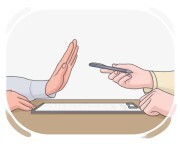
to choose not to participate in something or to not accept an offer
choisir de ne pas participer, choisir de refuser une offre
Les étudiants peuvent se désister de participer à certaines activités extrascolaires s'ils le souhaitent.
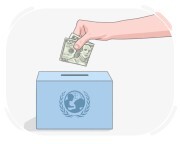
to choose to participate in something, typically by actively indicating one's willingness or consent to do so
choisir de participer, donner explicitement son accord pour participer
Pour rejoindre le programme de fidélité, les clients doivent opter pour et donner leur consentement.

to make something move through the air by quickly moving your arm and hand
lancer
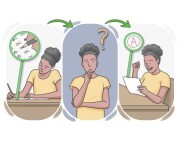
to emerge as a particular outcome
s'avérer, finir par être
L'expérience s'est avérée être une percée majeure dans la recherche médicale.

to leave a place or situation suddenly or quickly, often due to danger or dissatisfaction
déguerpir, évacuer rapidement
Se sentant mal à l'aise à la fête, Sarah a décidé de décamper sans dire au revoir.
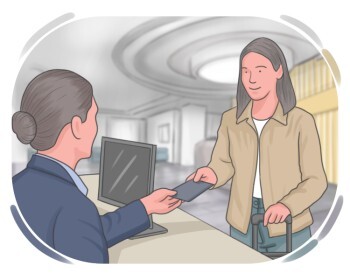
to leave a hotel after returning your room key and paying the bill
quitter l'hôtel après avoir réglé, rendre la chambre et payer avant de partir
Les invités doivent quitter l'hôtel avant 11 heures.
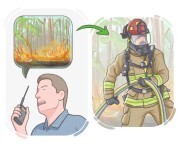
to formally request or direct someone to perform a duty or task
faire appel à quelqu'un pour une intervention, convoquer pour une tâche nécessaire
Le capitaine a fait appel à l'équipe de secours pour obtenir de l'aide.

to intentionally exclude someone or something
omettre volontairement, ne pas inclure quelqu'un ou quelque chose
Les parents ont décidé de laisser de côté leur fils adolescent dans leur processus de prise de décision, ce qui l'a rendu frustré et incompris.

to provide someone or each person in a group with something
distribuer, donner quelque chose à chaque membre d'un groupe
Le professeur distribue des feuilles de travail au début de chaque cours.

to produce something quickly and in large quantities, often with a focus on quantity over quality
produire en masse, fabriquer à la chaîne
Elle peut produire en masse plusieurs articles par semaine pour le magazine.

to conclude in a positive outcome
bien se terminer, avoir une issue positive
Malgré notre planification minutieuse, le projet n'a pas fonctionné comme prévu.

to distribute something among a group of individuals
distribuer, répartir entre un groupe
L'enseignant distribuera les manuels aux élèves au début de l'année scolaire.
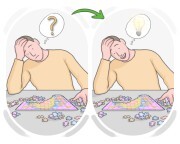
to get information about something after actively trying to do so
découvrir, obtenir des renseignements en cherchant
Savez-vous quand commence la réunion ? - Je ne suis pas sûr, mais je vais me renseigner et vous tiens au courant.

to draw a line through a word or words to show that they should be removed or ignored
barrer, tracer une ligne sur un mot
Après avoir examiné le document, l'enseignant a dit à l'élève de barrer l'équation incorrecte.

to begin doing something in order to reach a goal
se mettre en route, entreprendre
Il s'est mis en route avec détermination pour améliorer ses compétences dans la compétition à venir.
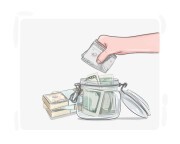
to collect an increasing amount of something over time
accumuler, amasser
to gather a large amount of money, knowledge, etc. gradually
amasser
Il a passé des décennies à amasser une vaste collection de pièces de monnaie rares du monde entier.
a person's possessions, such as clothes or other items they own
effets personnels, biens
Ses affaires étaient dispersées dans la pièce après le voyage.
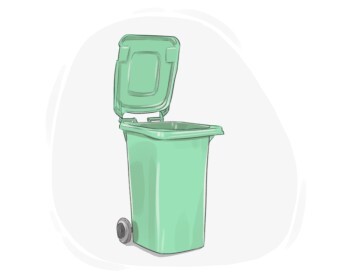
a container, usually with a lid, for putting waste in
poubelle
La poubelle de la cuisine était pleine, alors il a sorti les ordures.
a number of objects scattered around in a messy and untidy way
fouillis, fatras
Elle a nettoyé le fouillis du plan de travail de la cuisine.
![to [get] rid of {sb/sth}](https://cdn.langeek.co/photo/27628/thumb/350?type=jpeg "to [get] rid of {sb/sth}")
to put aside or remove a person or thing in order to no longer have them present or involved

a large untidy pile of things lying one on top of another
tas
things that are considered useless, worthless, or of little value, often discarded or thrown away
bric-à-brac, camelote
Le grenier était rempli de boîtes de bric-à-brac, y compris des meubles cassés et de vieux vêtements.
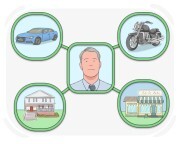
(usually plural) anything that a person has or owns at a specific time
bien, affaire

a large amount or number of something
grande quantité ou grand nombre, un tas

to get to your planned destination
arriver à
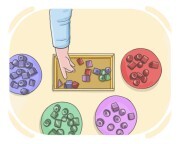
to organize items by putting them into different groups based on their characteristics or other criteria
trier, classer, ranger

to accidentally cause liquid or other material to flow or fall out of a container
renverser, répandre
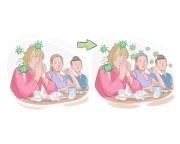
to extend or increase in influence or effect over a larger area or group of people
s’étendre, se propager, se répandre
| Le livre Insight - Intermédiaire Supérieur | |||
|---|---|---|---|
| Unité 1 - 1A | Unité 1 - 1C | Unité 1 - 1D | Unité 1 - 1E |
| Perspective du Vocabulaire 1 | Unité 2 - 2A | Unité 2 - 2C | Unité 2 - 2D |
| Unité 2 - 2E | Perspective du Vocabulaire 2 | Unité 3 - 3A | Unité 3 - 3C |
| Unité 3 - 3D | Perspective du Vocabulaire 3 | Unité 4 - 4A | Unité 4 - 4C |
| Unité 4 - 4D | Unité 4 - 4E | Perspective du Vocabulaire 4 | Unité 5 - 5A |
