

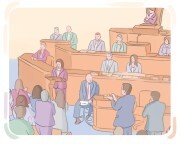
the legislative body of the United States, consisting of the Senate and the House of Representatives

Kongres, Zákonodárný sbor

the lower chamber of the U.S. Congress where elected officials make and vote on laws
Sněmovna reprezentantů, Poslanecká sněmovna
Volby do Sněmovny reprezentantů se konají každé dva roky.
a temporary group of lawmakers from both houses of Congress that resolves differences in a bill
konferenční výbor, smíšený výbor
Konferenční výbor zajišťuje, aby konečný zákon byl přijatelný pro Sněmovnu i Senát.
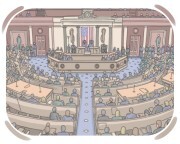
relating to the United States Congress, which makes laws and oversees the government
kongresový, vztahující se ke Kongresu

the main political party opposed to the government
opozice
(in Britain) a government minister in charge of managing what is discussed in Parliament
Vůdce sněmovny, Předseda sněmovny
Média informovala o týdenní aktualizaci Lídera Dolní sněmovny o vládních záležitostech.
(in Britain) the head of the largest party not in government, leading the Shadow Cabinet in Parliament
Vůdce opozice, Předseda opozice
Vůdce opozice činí vládu odpovědnou v parlamentních zasedáních.
a government that has fewer parliamentary seats than all other parties combined
menšinová vláda, menšinový kabinet
Menšinové vlády mohou být nestabilní a čelit hlasování o nedůvěře.
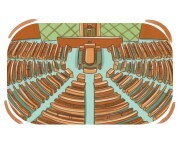
the group of elected representatives whose responsibility is to create, amend, and discuss laws or address political matters
parlament
relating to a form of government where the legislature, known as parliament, has significant control over making laws and monitoring the government
parlamentní, vztahující se k parlamentu
Parlamentní zasedání začíná úvodním projevem hlavy státu nebo vlády.

the upper chamber of the United States Congress
Senát, senát
(in the US) a building where a state's lawmakers meet to pass laws
budova státní legislativy, státní kapitol
Budova státního zákonodárného sboru je otevřena veřejnosti pro určitá slyšení a události.
the part of a parliament or legislature that usually reviews or approves laws, often called the House of Lords or the Senate
horní komora, senát
Horní komora hraje klíčovou roli při kontrole rozhodnutí vlády.
a seat or group of seats in parliament occupied by members of a particular political group
lavice, místo
seats in parliament for members who do not hold senior government or party positions
zadní lavice, zadní řady
Zadní lavice umožňuje poslancům svobodně hovořit bez výkonu funkce.
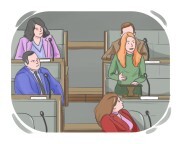
the position of a member in a committee, parliament, etc.
místo, křeslo
one of the divisions or houses within a legislative body, such as a parliament, where laws are debated and passed
komora, shromáždění
a designated area in a legislature where reporters can observe and report on proceedings
tisková galerie, tisková tribuna
Přístup do tiskové galerie je kontrolován, aby byla zajištěna řádná zpravodajská pokrytí zákonodárného sboru.
the speech delivered by a newly elected President of the United States at their swearing-in ceremony, articulating their plans for their term in office
inaugurační projev, nástupní projev
Prezidentův inaugurační projev rezonoval tématy naděje, odolnosti a závazku řešit naléhavé národní problémy.
to officially and ceremonially install someone into a position or office
inaugurovat, ustavit
Nově zvolený úředník byl ustaven v historickém obřadu.
a formal ceremony at which a person is admitted to office
inaugurace
Slavnosti inaugurace zahrnovaly průvody, koncerty a ohňostroje na oslavu nové administrativy.
the day when the President of the United States officially begins their term in office
den inaugurace, den nástupu do úřadu
Přehlídky a oslavy se konají ve Washingtonu, D.C., v den inaugurace.
