pattern

Animales - Otros Pequeños Mamíferos

En esta lección aprenderás algunas palabras en inglés sobre Otros Pequeños Mamíferos.

Revisión

Tarjetas de memoria

Ortografía

Cuestionario
Empezar a aprender
Words Related to Animals
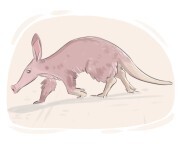
aardvark
aardvark
[Sustantivo]

a nocturnal, burrowing mammal native to Africa, with a long snout and tongue, feeding mainly on ants and termites

cerdo hormiguero
cerdo hormiguero

Ex: The zookeeper explained that the aardvark uses its long tongue to catch insects. 
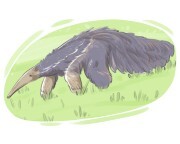
anteater
anteater
[Sustantivo]

a tropical mammal with a long tail, snout and tongue that feeds on ants or other insects

oso hormiguero
oso hormiguero

Ex: Anteaters have powerful claws for tearing open termite mounds. 
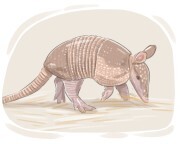
armadillo
armadillo
[Sustantivo]

a small nocturnal mammal that is covered in small bony plates and is usually found in Southern America

armadillo
armadillo

Ex: Armadillos use their strong claws to dig for food and shelter. 
bat
bat
[Sustantivo]

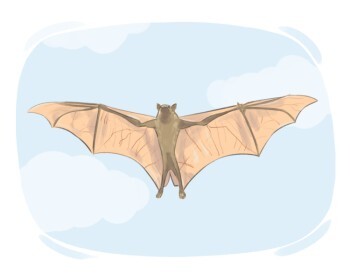
a small flying creature that comes out at night

murciélago
murciélago

Ex: Vampire bats feed on the blood of other animals, using their sharp incisors to make tiny incisions. 
binturong
binturong
[Sustantivo]

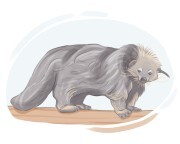
a unique arboreal mammal with a long, bushy tail, shaggy fur, and a distinctive popcorn-like scent, found in Southeast Asia

binturong, gato oso
binturong, gato oso

Ex: Visitors noticed the binturong's unusual popcorn-like scent before they saw the animal. 
flying fox
flying fox
[Sustantivo]

a large, nocturnal bat with a wingspan of up to six feet, found in various parts of the world, known for its ability to fly long distances and feed on fruit

zorro volador

zorro volador

Ex: Flying foxes can travel long distances between feeding and resting sites. 
fruit bat
fruit bat
[Sustantivo]

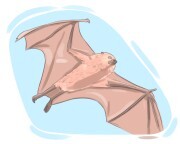
a bat that feeds on fruits and lives in tropical countries

megamurciélago
megamurciélago

Ex: The farmer covered the mango trees to keep fruit bats away. 
hedgehog
hedgehog
[Sustantivo]

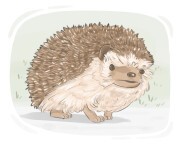
a small mammal that is active at night, which is covered with spines and can roll itself while attacked

erizo
erizo

Ex: Hedgehogs use their sharp spines to protect themselves from predators. 
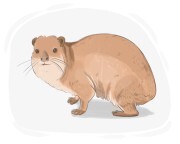
hyrax
hyrax
[Sustantivo]

a small furry mammal with a short tail and hoof-like toes that mainly eats vegetables

hyracoidea
hyracoidea

Ex: A young hyrax stayed close to the rest of the group. 
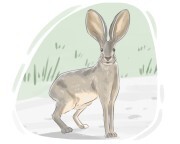
jackrabbit
jackrabbit
[Sustantivo]

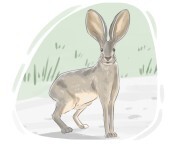
a wild mammal like a rabbit, called hare, native to open parts of the US

liebre
liebre

Ex: We spotted a jackrabbit resting in the shade of a desert shrub. 
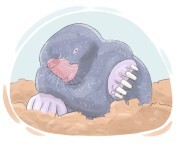
mole
mole
[Sustantivo]

a small mammal with velvety fur, tiny eyes and a long muzzle that lives underground and eats insects

topo
topo

Ex: The mole uses its powerful front feet to move quickly through the soil. 
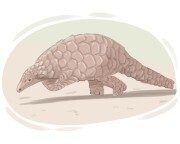
pangolin
pangolin
[Sustantivo]

a nocturnal mammal covered in hard, overlapping scales, feeding primarily on ants and termites, and capable of curling into a protective ball

pangolín
pangolín

Ex: Illegal trafficking has made the pangolin one of the most endangered mammals. 
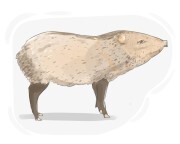
peccary
peccary
[Sustantivo]

a mid-sized nocturnal mammal that resembles a pig and has hooves, usually found through North and South America

pecarí
pecarí

Ex: The peccary uses its strong snout to search the ground for roots and fruit. 
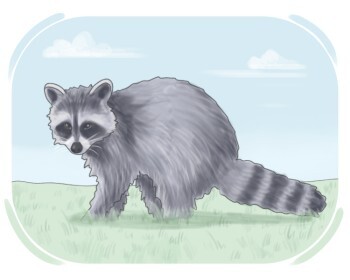
raccoon
raccoon
[Sustantivo]

a small animal with a thick tail, gray-brown fur and black marks on its face

mapache
mapache

Ex: Raccoons have nimble hands with dexterous fingers, allowing them to manipulate objects and open containers. 
shrew
shrew
[Sustantivo]

a small nocturnal mammal with long snout and tiny eyes, which feeds on insects

musaraña
musaraña

Ex: Shrews have pointed snouts and extremely fast metabolisms. 
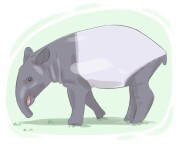
tapir
tapir
[Sustantivo]

a large herbivorous mammal with a short trunk that lives in forests of South and Central America or Southeast Asia

tapir
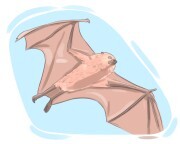
tapir

Ex: Tapirs are strong swimmers and often spend time in or near water. 
vampire bat
vampire bat
[Sustantivo]

a small winged mammal that feeds on the blood of other animals and is found in tropical regions of South America

murciélago vampiro
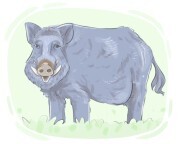
murciélago vampiro

Ex: Vampire bats make a small cut in the skin before feeding. 
wild boar
wild boar
[Sustantivo]

a wild pig with a pair of small tusks that is native to Eurasia and North Africa

jabalí
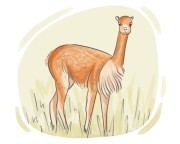
jabalí

Ex: The hikers found fresh wild boar tracks beside the muddy trail. 
vicuna
vicuna
[Sustantivo]

a small, elegant camelid species native to the high Andean regions of South America

vicuña, vicugna

vicuña, vicugna

Ex: Vicunas are smaller and more delicate than llamas. 
tenrec
tenrec
[Sustantivo]

a small insectivorous mammal species found in Madagascar and Africa, known for its diverse and unique physical adaptations

tenrec, tanrec

tenrec, tanrec

Ex: A tenrec disappeared beneath a fallen branch when it sensed movement nearby. 
star-nosed mole
star-nosed mole
[Sustantivo]

a small, fossorial mammal with a unique star-shaped nose that is covered in sensitive tentacles used for locating prey in underground environments

topo de nariz estrellada, condylura estrellada

topo de nariz estrellada, condylura estrellada

Ex: Star-nosed moles are excellent swimmers as well as skilled burrowers. 
tamandua
tamandua
[Sustantivo]

a small mammal with a slender body, long tail, and distinctive bushy coat, known for its insectivorous diet and arboreal lifestyle in Central and South America

tamandúa, oso hormiguero pequeño

tamandúa, oso hormiguero pequeño

Ex: Tamanduas spend much of their time in trees but also forage on the ground. 
mouflon
mouflon
[Sustantivo]

a wild sheep species with a distinctive appearance, including a stocky body, short legs, curved horns, and a brown to reddish-brown coat

muflón

muflón

Ex: Mouflons graze on grasses and other vegetation in mountainous areas. 
argali
argali
[Sustantivo]

the largest wild sheep species, characterized by its massive body, long curved horns, and shaggy coat

argalí, carnero salvaje asiático

argalí, carnero salvaje asiático

Ex: Argali live in open mountainous regions of Central Asia. 
urial
urial
[Sustantivo]

a wild sheep found in central Asia known for its curved horns, stocky build, and ability to adapt to harsh environments

urial, muflón de Asia central
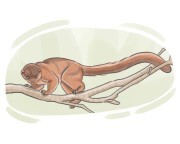
urial, muflón de Asia central

Ex: Urials are adapted to the rocky and arid landscapes of Central Asia. 
olingo
olingo
[Sustantivo]

a small mammal found in Central and South America, known for its long, bushy tail and ability to live in trees

olinguito, olinguito

olinguito, olinguito

Ex: Olingos feed on fruit, insects, and other small food items. 
false vampire
false vampire
[Sustantivo]

a large bat species found in Africa, Asia, and Australia, known for its size and echolocation abilities

falso vampiro, gran murciélago

falso vampiro, gran murciélago

Ex: False vampires are much larger than many common insect-eating bats. 
horseshoe bat
horseshoe bat
[Sustantivo]

a unique bat species known for its distinctive horseshoe-shaped noseleaf and echolocation abilities

murciélago de herradura, rinolofo

murciélago de herradura, rinolofo

Ex: The distinctive noseleaf gives the horseshoe bat its name. 
pipistrelle
pipistrelle
[Sustantivo]

a small insectivorous bat known for its agile flight, echolocation hunting abilities, and diverse diet

pipistrelo, murciélago pipistrelo
pipistrelo, murciélago pipistrelo

Ex: We watched a pipistrelle circle repeatedly around the garden lights. 
babirusa
babirusa
[Sustantivo]

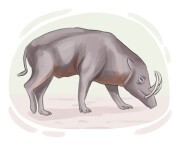
a unique species of wild pig found in Indonesia known for its long, curved tusks and distinctive appearance

babirusa, cerdo ciervo

babirusa, cerdo ciervo

Ex: A babirusa waded through the shallow water near the edge of the swamp. 
arctic hare
arctic hare
[Sustantivo]

a large hare species found in the Arctic regions of North America and Greenland

liebre ártica, liebre polar
liebre ártica, liebre polar

Ex: A group of arctic hares gathered in a sheltered area during the storm. 
coney
coney
[Sustantivo]

a small mammal known for its long ears, short tail, and burrowing behavior

conejo, conejo salvaje

conejo, conejo salvaje

Ex: A coney disappeared into the grass as soon as the dog approached. 
cottontail
cottontail
[Sustantivo]

a small mammal with a distinctive cotton-like tail, belonging to the family Leporidae, known for its agility, speed, and ability to reproduce rapidly

conejo de cola de algodón, cola de algodón

conejo de cola de algodón, cola de algodón

Ex: Cottontails are named for the white underside of their short tails. 
snowshoe hare
snowshoe hare
[Sustantivo]

a small mammal with large hind feet, seasonal fur color changes, and a rapid reproductive rate, found in North America

liebre americana, liebre de las nieves

liebre americana, liebre de las nieves

Ex: A snowshoe hare hid beneath the low branches of a spruce tree. 
tree shrew
tree shrew
[Sustantivo]

a small, arboreal mammal native to Southeast Asia with a slender body, bushy tail, and agile lifestyle

tupaya, musaraña arbórea

tupaya, musaraña arbórea

Ex: A tree shrew used its sharp claws to climb quickly through the vegetation. 
elephant shrew
elephant shrew
[Sustantivo]

a small insectivorous mammal with a long, flexible snout resembling that of an elephant

musaraña elefante, macroscelidio

musaraña elefante, macroscelidio

Ex: Elephant shrews are native to several parts of Africa. 
rabbit
rabbit
[Sustantivo]

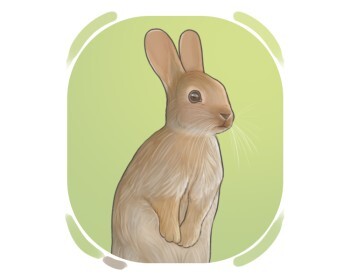
an animal that is small, eats plants, has a short tail, long ears, and soft fur

conejo
conejo

Ex: Rabbits are known for their ability to hop and jump. 
hare
hare
[Sustantivo]

a rabbit-like animal with long legs and ears, which can run very fast

liebre

liebre

Ex: In the early morning light, a family of hares emerged from their burrow, eager to forage for food. 
springhare
springhare
[Sustantivo]

a nocturnal, herbivorous mammal species found in Africa, known for their powerful hind legs and unique adaptations to desert habitats

liebre saltadora, liebre de las estepas

liebre saltadora, liebre de las estepas

Ex: Springhares spend the daytime resting in underground burrows. 
LanGeek
Descargar la aplicación LanGeek