
Politique - Autoritarisme & Troubles politiques
Réviser
Flashcards
Orthographe
Quiz


a political system that invests all the power and authority on a single prominent organization

centralisme, centralisation
Le centralisme du régime était évident dans son contrôle strict de toutes les fonctions administratives.
someone who supports the concentration of power and authority in a central government
centraliste, centralisateur
Les centralistes se sont opposés à la proposition d'accorder plus de pouvoirs aux autorités régionales.
a political system in which a small group of high-powered people control a country or organization
oligarchie
Le système politique du pays a évolué vers une oligarchie, avec une élite riche contrôlant les processus clés de prise de décision.
the principle or system of unlimited and unchecked governmental power
absolutisme
L'absolutisme conduit souvent à la centralisation de l'autorité.
a cruel ruler with absolute power
despote
Le despote a gouverné le pays d'une main de fer, réprimant toute forme de dissidence.
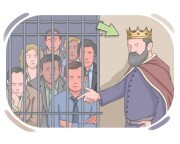
a ruler that has total power over a state, particularly a ruler who gained power through force
dictateur, dictatrice

a form of government where power is concentrated in the hands of a single individual or a small group, often with absolute authority, without the consent of the people
dictature
Une dictature peut réprimer l'opposition politique par la violence ou la censure.
a ruler or leader who has absolute power and uses it in a cruel and oppressive way, without any regard for the rights or well-being of others
tyran, despote
Son règne a été marqué par la brutalité, et il était largement reconnu comme un tyran.
an extreme right-wing political attitude or system characterized by a strong central government, aggressively promoting one's country or race above others, as well as prohibiting any opposition
fascisme
Le roman explore l'impact du fascisme sur les libertés individuelles et la société dans son ensemble.
a person who supports authoritarian or dictatorial political ideas
fasciste, partisan du fascisme
Les fascistes s'opposaient aux institutions démocratiques et aux libertés individuelles.
the belief that a country must have a strong military force in order to seem more powerful
militarisme
Au début du 20e siècle, le militarisme était un facteur important dans la montée vers la Première Guerre mondiale, alors que les nations investissaient massivement dans leurs forces armées et adoptaient des politiques belliqueuses.
a person who supports using military force or warlike policies
militariste, belliciste
Les militaristes influencent souvent les gouvernements pour qu'ils adoptent des politiques étrangères agressives.
favoring or emphasizing military power and aggressive policies
militariste, belliqueux
Les dirigeants militaristes ont considérablement augmenté les dépenses de défense.
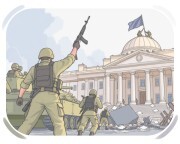
a sudden illegal seizure of government power, often involving military force
coup d'état
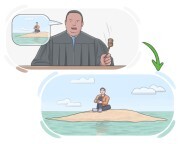
to force someone to leave their home or country and live elsewhere
exiler
the action or process of disagreeing or disobeying established authority or doctrine
dissidence
Ses écrits exprimant une dissidence contre le racisme et le sexisme institutionnalisés ont remis en question les opinions dominantes de l'époque.
someone who declares opposition to the government of one's country, knowing there is punishment for doing so
dissident, dissidente
Dans les régimes autoritaires, les dissidents doivent souvent opérer dans la clandestinité ou en exil pour éviter d'être arrêtés pour leurs activités dissidentes.
a political situation in which there is anger among the people and protests are likely
agitation, troubles
Les difficultés économiques ont conduit à une augmentation des troubles parmi la population.
a situation in which people join together to fight against those in power
soulèvement
Les médias sociaux ont aidé à organiser le soulèvement contre le gouvernement corrompu.
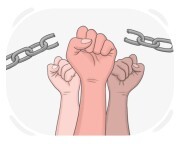
the fundamental change of power, government, etc. in a country by people, particularly involving violence
révolution
a person who supports, advocates, or takes part in a political or social revolution
révolutionnaire, insurgé
a Communist who alters Marxist theory to support a less revolutionary approach
révisionniste, réformiste
Les révisionnistes ont été critiqués pour avoir abandonné les principes marxistes traditionnels.
strongly against any political or social changes or any new ideas
réactionnaire, conservateur
Le groupe a été critiqué pour sa position réactionnaire sur les questions sociales.
a rebellion or uprising, often involving violence, by a group of people against an authority or ruling power
révolte, insurrection
La révolte des paysans a été brutalement réprimée par les autorités.
