
Política - Autoritarismo y agitación política
Revisión
Tarjetas de memoria
Ortografía
Cuestionario


a political system that invests all the power and authority on a single prominent organization

centralismo
Los defensores del centralismo creen que mejora la eficiencia al consolidar el poder.
someone who supports the concentration of power and authority in a central government
centralista, centralizador
Durante el debate, los centralistas enfatizaron políticas uniformes en todo el país.
a political system in which a small group of high-powered people control a country or organization
oligarquía
Los críticos argumentan que la oligarquía socava los principios democráticos al limitar la participación política y perpetuar la desigualdad.
the principle or system of unlimited and unchecked governmental power
absolutismo
Los críticos argumentaron que el absolutismo sofocaba la libertad de prensa.
a cruel ruler with absolute power
déspota
La crueldad del déspota no conocía límites, ya que imponía fuertes impuestos y trabajo forzado a la población.

a ruler that has total power over a state, particularly a ruler who gained power through force
dictador, déspota

a form of government where power is concentrated in the hands of a single individual or a small group, often with absolute authority, without the consent of the people
dictadura
La gente vivía con miedo bajo las estrictas leyes de la dictadura.
a ruler or leader who has absolute power and uses it in a cruel and oppressive way, without any regard for the rights or well-being of others
tirano
Las políticas opresivas del tirano dejaron a la nación en un estado de miedo y desesperación.
an extreme right-wing political attitude or system characterized by a strong central government, aggressively promoting one's country or race above others, as well as prohibiting any opposition
fascismo
Muchos historiadores estudian los factores que contribuyeron a la propagación del fascismo en Italia y Alemania.
a person who supports authoritarian or dictatorial political ideas
fascista, partidario del fascismo
El régimen fue dirigido por fascistas que suprimieron la oposición.
the belief that a country must have a strong military force in order to seem more powerful
militarismo
Los críticos del militarismo argumentan que puede llevar a una carrera armamentista, aumentar las tensiones entre países y una propensión a resolver los conflictos mediante la violencia en lugar de la diplomacia.
a person who supports using military force or warlike policies
militarista, belicista
Durante la crisis, los militaristas presionaron para un ataque preventivo.
favoring or emphasizing military power and aggressive policies
militarista, belicista
Los críticos argumentaron que una actitud militarista podría provocar un conflicto.
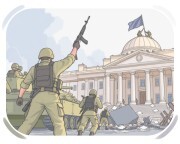
a sudden illegal seizure of government power, often involving military force
golpe de estado
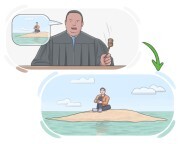
to force someone to leave their home or country and live elsewhere
exiliar
the action or process of disagreeing or disobeying established authority or doctrine
disidencia, disensión
Su disidencia tomó la forma de arte y música contracultural que transmitía mensajes anti-establishment.
someone who declares opposition to the government of one's country, knowing there is punishment for doing so
disidente
Ai Weiwei es un artista chino contemporáneo disidente que utiliza su trabajo para llamar la atención sobre problemas políticos y sociales.
a political situation in which there is anger among the people and protests are likely
disturbios
El malestar aumentó después de que se anunciaran los controvertidos resultados electorales.
a situation in which people join together to fight against those in power
levantamiento
Los historiadores debaten si el levantamiento fue una revolución o un disturbio.
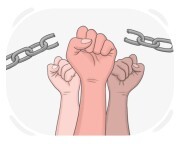
the fundamental change of power, government, etc. in a country by people, particularly involving violence
revolución
a person who supports, advocates, or takes part in a political or social revolution
revolucionario, revolucionaria
a Communist who alters Marxist theory to support a less revolutionary approach
revisionista, reformista
Los debates del partido a menudo dividían a los revolucionarios de los revisionistas.
strongly against any political or social changes or any new ideas
reaccionario
Sus comentarios reaccionarios durante el debate sorprendieron a muchos observadores.
a rebellion or uprising, often involving violence, by a group of people against an authority or ruling power
revuelta, sublevación
La historia está llena de historias de revueltas y levantamientos.
