Simple Conditional For Intermediate learners
What is the Simple Conditional Tense?
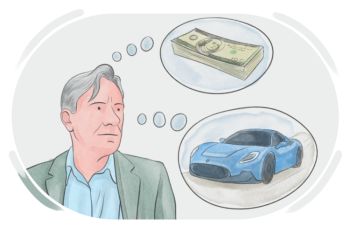
The simple conditional (condicional simple or pospretérito) is used to show what would happen or what someone would do, making assumptions about the past or hypothesizing about the present or future.
Structure
The simple conditional tense is formed by adding specific endings to the infinitive form of the verb. These endings have the same form for all types of verb infinitives. Take a look at the table and keep in mind that the "vosotros" form is only used in Spain, while Latin American Spanish uses the "ustedes" from in all contexts.
Verb ending | Examples | |
|---|---|---|
yo | -ía | hablaría, comería, viviría |
tú | -ías | hablarías, comerías, vivirías |
él / ella / usted | -ía | hablaría, comería, viviría |
nosotros/as | -íamos | hablaríamos, comeríamos, viviríamos |
vosotros/as | -íais | hablaríais, comeríais, viviríais |
ellos / ellas / ustedes | -ían | hablarían, comerían, comerían |
For example:
Viajaría contigo, pero no puedo.
I would travel with you, but I can't.
Podrías ayudarme mañana.
You could help me tomorrow.
Estudiaría mañana si tuviera tiempo.
I would study tomorrow if I had time.
Irregular Verbs
there are no completely irregular verbs in the conditional simple tense. However, verbs that have a different verb stem in the future simple tense undergo the same stem change in the simple conditional, and the verb endings are the same as the regular simple conditional verbs:
decir → dir-
hacer → har-
poder → podr-
querer → querr-
saber → sabr-
haber → habr-
salir → saldr-
tener → tendr-
Here are some example sentences:
Tendría más tiempo si no trabajara tanto.
I would have more time if I didn't work so much.
Habría más turistas si hiciera buen tiempo.
There would be more tourists if the weather were good.
Tip!
When the simple conditional is used to talk about a hypothetical scenario (like the last two examples above), a conditional sentence is formed where the dependent clause, which expresses the condition for the main clause to happen, uses the imperfect subjunctive verb form while the main clause uses the simple conditional. The order of the clauses is interchangeable in these sentences:
si + [imperfect subjunctive], [conditional simple] or [conditional simple] + si + [imperfect subjunctive]
Here are some example sentences:
Viajaría a México si tuviera dinero.
I would travel to Mexico if I had money.
Comerías mejor si cocinaras en casa.
You would eat better if you cooked at home.
Si él viniera, sería divertido.
If he came, it would be fun.
Uses
The simple conditional tense is used to talk about:
Hypothetical situations: Describes what would happen under certain conditions in the present or future.
Si tuviera dinero, viajaría por el mundo.
If I had money, I would travel the world.
Iríamos contigo si no estuviéramos ocupados.
We would go with you if we weren't busy.
Expressing possibility or conjecture in the past: Used to speculate about what might have happened.
Serían las ocho cuando llegó.
It was probably eight o'clock when he arrived.
Tendría unos treinta años en esa época.
He must have been about thirty then.
Future in the past: Refers to something that was going to happen later from a past perspective.
Dijo que llegaría pronto.
He said he would arrive soon.
Sabíamos que habría problemas.
We knew there would be problems.
Polite requests or offers: Softens commands or questions.
¿Podrías ayudarme, por favor?
Could you help me, please?
Querría una taza de café.
I would like a cup of coffee.
Quiz:
Elige la oración que está en condicional simple.
Ana viajará contigo mañana.
Ana viajó contigo ayer.
Ana viajaría contigo, pero no puede.
Ana viajaba contigo antes.
Completa la tabla con las formas correctas del condicional simple.
| pensar | decidir |
|---|---|
pensarías | |
decidiríamos | |
Completa cada oración con la forma correcta del condicional simple.
Yo
más en casa si tuviera tiempo. (cocinar)
Nosotros
más tiempo si no trabajáramos tanto. (tener)
Ellos
venir mañana. (poder)
Ella
qué hacer en esa situación. (saber)
Elige la oración que combina correctamente el condicional simple con una condición hipotética.
Si tengo dinero, viajaría a México.
Si tuviera dinero, viajaría a México.
Si tendría dinero, viajaría a México.
Si tuve dinero, viajaría a México.
Empareja cada oración con el uso del condicional simple.
Comments
(0)Recommended

