Present Progressive For Intermediate learners
What is the Present Progressive Tense?
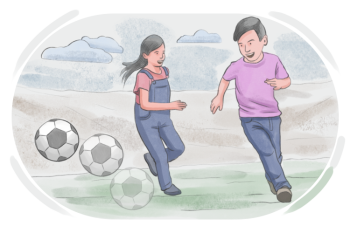
Present progressive (presente progresivo) describes an action that is in progress at the current moment.
Structure
To form the present progressive tense of any verb, the auxiliary verb "estar" is conjugated in the simple present tense, followed by the present participle form of the main verb which is invariable for all persons and numbers:
estar (present conjugation) + present participle (fixed)
Conjugation of "Estar"
"Estar" is an irregular verb in the present tense. The different forms of "estar" in the present tense are:
yo | estoy |
|---|---|
tú | estás |
él / ella / usted | está |
nosotros/as | estamos |
vosotros/as | estáis |
ellos / ellas / ustedes | están |
Formation of Present Participles
Formation of present participles differs based on the ending of the infinitive form of the verb:
For verbs that end in -ar → replace -ar with -ando: hablar → hablando
For verbs that end in -er and -ir → replace -er or -ir with -iendo: comer → comiendo, vivir → viviendo
However, some verbs have irregular present participle forms that do not follow these patterns and their formation involves changes in the verb stem. For example:
leer → leyendo
dormir → durmiendo
decir → diciendo
venir → viniendo
ir → yendo
Here are some example sentences:
Estoy hablando.
I am speaking.
Estás comiendo.
You are eating.
Está durmiendo.
He/she is sleeping.
Negation
To negate a present progressive verb, the negative marker "no" comes before the verb "estar" or the object pronoun, if there is one. For example:
Estamos estudiando. → No estamos estudiando.
We are studying. → We are not studying.
Lo estoy escribiendo. → No lo estoy escribiendo.
I'm writing it. → I'm not writing it.
Usage
The present progressive is used to talk about:
Actions happening at the moment of speaking:
Estoy escribiendo un mensaje.
I am writing a message.
Temporary ongoing situation:
Estamos trabajando en un proyecto.
We are working on a project.
Repeated action with "siempre" (expresses annoyance):
Siempre estás quejándote.
You're always complaining.
Present vs. Present Progressive
While both the present tense and the present progressive can talk about current actions, the present progressive emphasizes the ongoing nature of the action at the moment of speaking and is used when the use of the present might create ambiguity regarding the ongoing nature of the action. Compare the examples:
Estudio español.
I'm studying Spanish./I study Spanish.
Present simple - this sentence doesn't specify whether the speaker is talking about the present moment or a general process of studying a language.
Estoy estudiando español
I'm studying Spanish (right now).
Present progressive - this sentence highlights the sense of continuity of the action at the moment of speaking.
Comments
(0)Recommended

