
TCF - Niveau C2 - Idiomatic Expressions
Master advanced TCF C2 French idiomatic expressions, their figurative meanings, nuances, and contexts, and use them naturally for sophisticated, authentic expression.
Review
Flashcards
Spelling
Quiz

![[faire] froid dans le dos](https://cdn.langeek.co/photo/71149/thumb/350?type=jpeg "[faire] froid dans le dos")
provoquer une forte peur, de l'angoisse ou de l'effroi

to send shivers down someone's spine, to be chilling, to be terrifying
The images of the accident were chilling.

avoir des choses plus importantes ou plus urgentes à faire
to have bigger fish to fry, to have more important things to do, to have other priorities
The manager has more important things to do at the moment.
être dans une situation difficile ou embarrassante
to be in a fine mess, to be in trouble, to be in a difficult situation
She has been in trouble since she lost the documents.
être gravement affaibli ou en difficulté, avec peu de chances de retrouver sa force d'avant
to be in serious trouble, to be on the ropes, to be badly weakened
Their relationship has been on the ropes for months.
ne pas être aussi bon ou satisfaisant qu'on le souhaiterait
to leave much to be desired, to be unsatisfactory, to fall short
His French still leaves much to be desired.
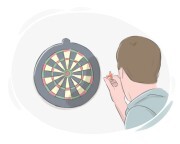
atteindre exactement son objectif ou produire l'effet attendu
to hit the mark, to hit the target, to be spot on
This advertisement hit the mark with young people.

faire un compromis en partageant les avantages ou les efforts de manière équitable
to meet halfway, to compromise, to split the difference
To avoid an argument, they decided to compromise.
en très petites quantités, progressivement
little by little, drop by drop, sparingly
The water was dripping out drop by drop.
réfléchir très intensément pour trouver une idée, une solution ou une réponse
to rack one's brains, to think hard, to puzzle over something
They racked their brains to solve this problem.
immédiatement après, dans le même élan ou la même continuité
right afterward, immediately afterward, in the process
She graduated and immediately afterward found a job.
c'est précisément là que se trouve le problème ou la difficulté
that's where the problem lies, that's the sticking point, that's where it goes wrong
He's very motivated, but that's the sticking point: he lacks experience.
![[mettre] la clé sous la porte](https://cdn.langeek.co/photo/53091/thumb/350?type=jpeg "[mettre] la clé sous la porte")
cesser définitivement son activité, généralement à cause de difficultés financières
to go out of business, to shut down, to close up shop
Many small businesses went out of business during the crisis.
être détruit, disparaître complètement ou être perdu, souvent très rapidement
to go up in smoke, to vanish, to be destroyed
Years of work went up in smoke after the computer crashed.
faire un compromis en partageant les avantages ou les efforts de manière équitable
to meet halfway, to compromise, to split the difference
To avoid an argument, they decided to compromise.
éviter de dire directement ce qu'on pense ou ce qu'on veut dire
to beat around the bush, to avoid the subject, to not get to the point
He beat around the bush for ten minutes before announcing the bad news.
![[avoir] voix au chapitre](https://cdn.langeek.co/photo/23459/thumb/350?type=jpeg "[avoir] voix au chapitre")
avoir le droit de donner son avis ou de participer à une décision
to have a say, to have a voice, to have input
In this family, the children also have a say.
se construire un avis personnel après réflexion ou en examinant les faits
to form one's own opinion, to make up one's own mind, to develop one's own opinion
Don't rely on rumors; form your own opinion.
parler ou donner des conseils sans être écouté ni avoir d'effet
to fall on deaf ears, to preach in the wilderness, to speak in vain
The teacher felt like he was preaching in the wilderness in front of an inattentive class.
affronter une difficulté directement avec courage et détermination
to take the bull by the horns, to tackle a problem head-on, to face something head-on
She decided to take the bull by the horns and resolve the conflict.
![[renvoyer] aux calendes grecques](https://cdn.langeek.co/photo/44236/thumb/350?type=jpeg "[renvoyer] aux calendes grecques")
reporter quelque chose à une date qui n'arrivera probablement jamais
to postpone indefinitely, to put off forever, to keep putting something off
He keeps putting off that decision forever.
prendre une décision radicale ou agir de façon ferme pour résoudre un problème difficile
to take drastic measures, to make a tough decision, to cut to the chase
The doctor decided to take drastic measures to save the patient.
![[faire] marche arrière](https://cdn.langeek.co/photo/72672/thumb/350?type=jpeg "[faire] marche arrière")
revenir sur une décision, une position ou une action après l'avoir prise
to back down, to reverse course, to backtrack
He had promised to resign, but he backed down at the last minute.
![[faire] boule de neige](https://cdn.langeek.co/photo/61530/thumb/350?type=jpeg "[faire] boule de neige")
prendre de plus en plus d'ampleur progressivement
to snowball, to gather momentum, to grow bigger and bigger
The rumor snowballed on social media.
agir d'une manière qui expose à la critique ou donne des raisons d'être critiqué
to lay oneself open to criticism, to invite criticism, to open oneself up to criticism
This decision is likely to invite criticism.
subir les conséquences négatives d'une faute ou d'une situation, souvent causée par d'autres
to pay the price, to take the blame, to bear the consequences
He made a mistake, but I was the one who paid the price.
