
Le livre Summit 2A - Unité 4 - Leçon 3
Ici, vous trouverez le vocabulaire de l'Unité 4 - Leçon 3 du manuel Summit 2A, comme "devenir fou", "évacuer", "hausser les épaules", etc.
Réviser
Flashcards
formes
Orthographe
Quiz

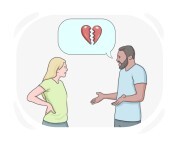
to show or make a thought, feeling, etc. known by looks, words, or actions

exprimer
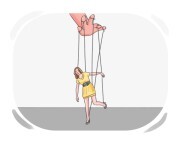
to have power over a person, company, country, etc. and to decide how things should be done
contrôler, commander
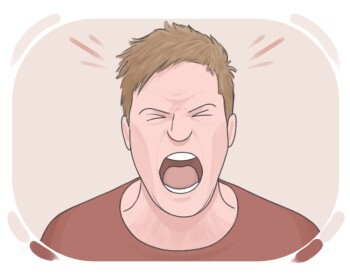
a strong feeling that we have when something bad has happened, so we might be unkind to someone or harm them
colère
![to [lose] {one's} temper](https://cdn.langeek.co/photo/60628/thumb/angry/350?type=jpeg "to [lose] {one's} temper")
to suddenly become uncontrollably angry
![to [have|throw] a fit](https://cdn.langeek.co/photo/42582/thumb/350?type=jpeg "to [have|throw] a fit")
to suddenly and uncontrollably express strong emotions, often in a negative way
to become extremely angry with someone or something
péter les plombs, sortir de ses gonds
Elle a pété les plombs en apprenant qu'ils avaient utilisé sa carte sans demander.
![to [go] ballistic](https://cdn.langeek.co/photo/51198/thumb/350?type=jpeg "to [go] ballistic")
to suddenly become extremely angry
piquer une colère noire, entrer dans une rage folle
Elle est entrée dans une rage folle en apprenant qu'ils avaient perdu ses bagages.
to fail to control one's anger
sortir de ses gonds, péter les plombs
Essaie de ne pas sortir de tes gonds avant la fin de la réunion.
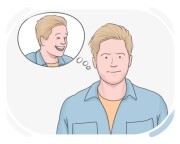
to suppress the expression of one's feelings
retenir ses émotions, retenir un rire des larmes ou une autre émotion
Il a eu du mal à retenir sa colère face à des critiques injustes.
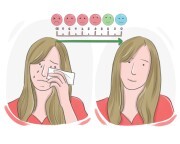
to become less angry, upset, or worried
devenir moins en colère bouleversé ou inquiet, se calmer
Il ne pouvait pas se calmer jusqu'à ce qu'il entende la bonne nouvelle.

to free oneself from tension or anxiety and be more relaxed instead
se détendre, lâcher prise
La méditation aide les individus à lâcher prise, trouvant ainsi une tranquillité intérieure.
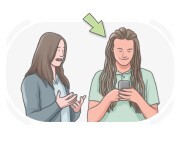
to consider something unworthy of one's attention or consideration
balayer d'un revers de main, juger quelque chose indigne d'attention
Malgré les défis, ils ont réussi à ignorer les revers et à avancer.
to get rid of one's strong feelings, particularly by talking in an angry way
to strongly express one's feelings, particularly one's anger
exprimer, décharger
L'équipe exprime ses préoccupations lors de la réunion.
