pattern

Le livre Total English - Intermédiaire - Unité 8 - Vocabulaire

Ici, vous trouverez les mots de l'Unité 8 - Vocabulaire dans le manuel Total English Intermediate, tels que "création", "ignorance", "employer", etc.

Réviser

Flashcards

formes

Orthographe

Quiz

Commencer à apprendre
Total English - Intermediate
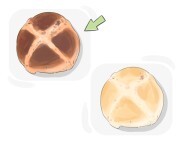
to overcook

to cook food for too long or at too high a temperature, resulting in a loss of flavor, texture, or nutritional value

trop cuire, cuire excessivement

trop cuire, cuire excessivement

Ex: She accidentally overcooked the steak, making it tough and dry. 

Elle a accidentellement trop cuit le steak, le rendant dur et sec.

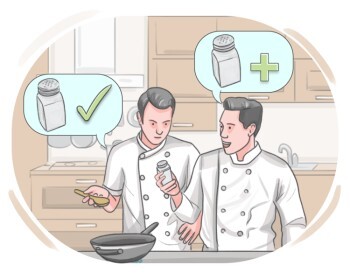
to underdevelop

to process a photographic film or print for less time than is necessary to achieve a fully developed image

sous-développer, développer insuffisamment

sous-développer, développer insuffisamment

dishonest
dishonest
[Adjectif]

not truthful or trustworthy, often engaging in immoral behavior

malhonnête

malhonnête

Ex: The salesman's dishonest tactics led to distrust among customers. 

Les tactiques malhonnêtes du vendeur ont conduit à la méfiance parmi les clients.
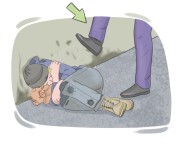
inhuman
inhuman
[Adjectif]

lacking compassion, empathy, or decency, often being cruel or brutal

inhumain

inhumain

Ex: His inhuman disregard for others' suffering was evident in his callous remarks. 

Son mépris inhumain pour la souffrance des autres était évident dans ses remarques insensibles.

creation

the act of bringing something into existence

création, œuvre

création, œuvre

Ex: His creation of the new software revolutionized the industry. 

Sa création du nouveau logiciel a révolutionné l'industrie.

civilization

a society that has developed its own culture and institutions in a particular period of time or place

civilisation

civilisation

Ex: Modern civilization relies heavily on technology and global communication. 

La civilisation moderne dépend fortement de la technologie et de la communication mondiale.

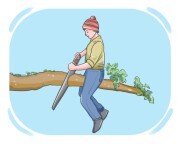
intelligence

the ability to correctly utilize thought and reason, learn from experience, or to successfully adapt to the environment

intelligence
intelligence

Ex: She demonstrated her intelligence by quickly understanding the difficult concept. 

Elle a démontré son intelligence en comprenant rapidement le concept difficile.

ignorance

the fact or state of not having the necessary information, knowledge, or understanding of something

ignorance

ignorance

Ex: The teacher worked hard to address the students' ignorance of the topic, providing extra lessons to improve their understanding. 

L'enseignant a travaillé dur pour remédier à l'ignorance des élèves sur le sujet, en proposant des cours supplémentaires pour améliorer leur compréhension.

movement

a collective of individuals united by shared beliefs or ideology, working toward general social, political, or cultural goals

mouvement

mouvement

Ex: Members of the movement gather for regular meetings. 

Les membres du mouvement se réunissent pour des réunions régulières.

darkness

the quality of having little or almost no light

obscurité

obscurité

Ex: The darkness of the night sky was pierced only by the occasional star. 

L'obscurité du ciel nocturne n'était percée que par une étoile occasionnelle.

to educate
to educate
[verbe]

to teach someone, often within a school or university setting

instruire, former

instruire, former

Ex: The university aims to educate future leaders. 

L'université vise à éduquer les futurs leaders.

to employ
to employ
[verbe]

to give work to someone and pay them

employer

employer

Ex: The company has plans to employ additional staff for their new project. 

L'entreprise a l'intention d'employer du personnel supplémentaire pour son nouveau projet.

to accommodate

to give support to someone

accueillir, soutenir

accueillir, soutenir

Ex: The local community center will accommodate families in need by offering free meals. 

Le centre communautaire local accueillera les familles dans le besoin en offrant des repas gratuits.

to treat
to treat
[verbe]

to provide medical care such as medicine or therapy to heal injuries, illnesses, or wounds and make someone better

traiter, soigner
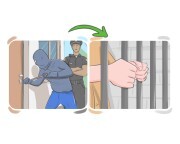
traiter, soigner

Ex: Physicians prescribe medications to treat various illnesses and infections. 

Les médecins prescrivent des médicaments pour traiter diverses maladies et infections.

to punish
to punish
[verbe]

to cause someone suffering for breaking the law or having done something they should not have

punir

punir

Ex: Parents may choose to punish their children by restricting privileges when rules are violated. 

Les parents peuvent choisir de punir leurs enfants en restreignant leurs privilèges lorsque les règles sont violées.

important
important
[Adjectif]

having a lot of value

important

important

Ex: Education is an important tool for personal and professional development. 

L'éducation est un outil important pour le développement personnel et professionnel.
independent
independent
[Adjectif]

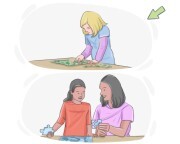
able to do things as one wants without needing help from others

indépendant

indépendant

Ex: Despite her young age, she's quite independent, managing her own finances and responsibilities. 

Malgré son jeune âge, elle est assez indépendante, gérant ses propres finances et responsabilités.

to govern
to govern
[verbe]

to regulate or control a person, course of action or event or the way something happens

régir, contrôler

régir, contrôler

Ex: Ethical principles govern the way scientists conduct their research, ensuring that it is honest and transparent. 

Les principes éthiques régissent la manière dont les scientifiques mènent leurs recherches, garantissant qu'elle est honnête et transparente.

different
different
[Adjectif]

not like another thing or person in form, quality, nature, etc.

différent

différent

Ex: She studied different subjects in school, from math to history. 

Elle a étudié différentes matières à l'école, des mathématiques à l'histoire.

LanGeek
Télécharger l'application LanGeek