
Vocabulaire pour l'IELTS Academic (Score 8-9) - Catastrophes
Ici, vous apprendrez quelques mots anglais liés aux catastrophes qui sont nécessaires pour l'examen académique IELTS.
Réviser
Flashcards
Orthographe
Quiz


an event causing great and often sudden damage, distress, or destruction

calamité
Une série d'ouragans a apporté la calamité aux communautés côtières, provoquant des inondations et des destructions généralisées.
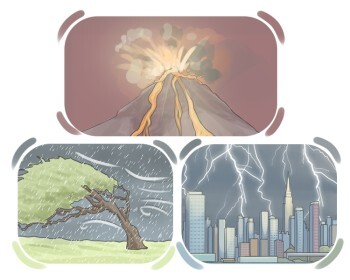
a sudden, violent natural disaster that drastically alters the earth's landscape
cataclysme
Les scientifiques pointent vers un impact d'astéroïde ou de comète comme la théorie principale du cataclysme qui a anéanti les dinosaures.
action that breeds severe damage or destruction
ravage, dévastation
Les ravages de l'ouragan le long de la côte ont entraîné des inondations généralisées et une perte de propriété.
an extremely intense and destructive fire
incendie
Les pompiers de plusieurs villes ont uni leurs forces pour combattre le conflagration qui menaçait d'engloutir tout le quartier.
a cause of widespread suffering or affliction
fléau, calamité
Les tremblements de terre ont été un fléau historique pour les communautés situées le long des limites des plaques tectoniques.
a smaller earthquake or tremor that follows the main shock of a seismic event
réplique, secousse secondaire
Les intervenants d'urgence sont restés en état d'alerte élevée, prêts à faire face aux répliques potentielles et à leurs conséquences.
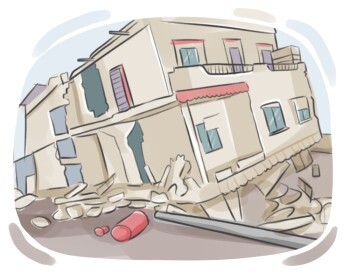
an earthquake caused by underground movement or volcanic activity
tremblement de terre, séisme
Les sismologues ont enregistré une série de tremblements de terre dans le point chaud sismique, indiquant une activité tectonique en cours.
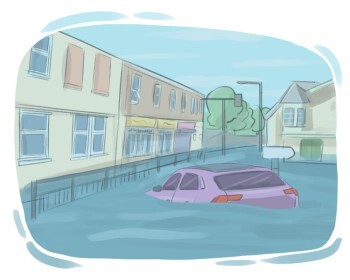
the overflow of normally dry land by rising water
déluge
Des villages entiers ont été emportés par le déluge qui a suivi la tempête.
the action of rescuing a ship, its crew, or its cargo from a shipwreck, fire, or similar disaster
sauvetage, récupération
Le sauvetage du navire a sauvé des vies et du matériel précieux.
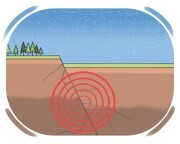
the point on the surface of the earth vertically above the focus of an earthquake where its effects are felt most strongly
épicentre
Les équipes de secours ont concentré leurs efforts sur l'épicentre, où l'impact de la catastrophe naturelle était le plus sévère.
a tornado occurring over a body of water, characterized by a funnel-shaped cloud filled with water droplets or spray
trombe marine, trombe d'eau
Les marins ont rencontré une trombe marine au large des côtes, ce qui les a incités à modifier leur cap pour éviter le vortex tourbillonnant.
| Vocabulaire pour l'IELTS Academic (Score 8-9) | |||
|---|---|---|---|
| Guerre | Mesure | Émotions | Voyage et Migration |
| Météo | Pollution | Catastrophes | Animaux |
| Nourriture et Boissons | Adverbes de manière | ||
