pattern

Liste de Mots Niveau B2 - Langage Corporel

Ici, vous apprendrez quelques mots anglais sur les actions corporelles, tels que "battre", "applaudir", "traîner", etc., préparés pour les apprenants de niveau B2.

Réviser

Flashcards

formes

Orthographe

Quiz
Commencer à apprendre
CEFR B2 Vocabulary
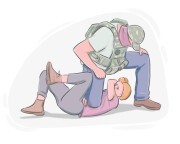
to beat
to beat
[verbe]

to strike someone repeatedly, usually causing physical harm or injury

battre, frapper
battre, frapper

Ex: The police officer was accused of beating the suspect during the arrest. 

L'officier de police a été accusé d'avoir frappé le suspect lors de l'arrestation.

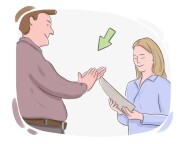
to clap
to clap
[verbe]

to strike the palms of one's hands together forcefully, usually to show appreciation or to attract attention

frapper dans ses mains

frapper dans ses mains

Ex: Children clapped with glee as the magician pulled a rabbit out of the hat. 

Les enfants applaudirent avec joie lorsque le magicien sortit un lapin de son chapeau.
to drag
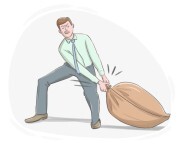
to drag
[verbe]

to pull something with effort along a surface

traîner

traîner

Ex: The tractor easily drags the heavy logs through the forest. 

Le tracteur tire facilement les lourdes bûches à travers la forêt.

to grab
to grab
[verbe]

to take someone or something suddenly or violently

saisir, agripper

saisir, agripper

Ex: The lifeguard grabbed the struggling swimmer by the arm and pulled him to safety from the strong current. 

Le sauveteur a attrapé le nageur en difficulté par le bras et l'a tiré en sécurité loin du courant puissant.

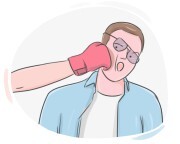
to punch
to punch
[verbe]

to beat someone or something with a closed fist quickly and forcefully

donner un coup de poing à

donner un coup de poing à

Ex: The boxer aimed to punch his opponent in the face to gain the upper hand. 

Le boxeur visait à frapper son adversaire au visage pour prendre l'avantage.

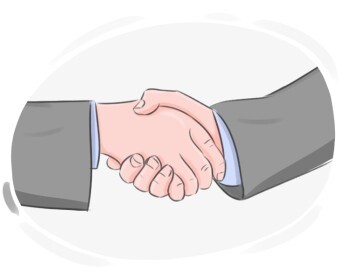
to shake
to shake
[verbe]

to take someone's hand and move it up and down, mainly for greeting

serrer la main
serrer la main

Ex: The two business partners shook hands, sealing the deal on their collaboration. 

Les deux partenaires commerciaux se sont serré la main, scellant ainsi leur accord de collaboration.

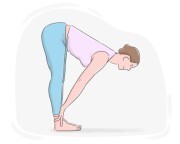
to bend
to bend
[verbe]

to move the upper part of the body downward

se pencher, se baisser
se pencher, se baisser

Ex: I had to bend at the knees to reach the low shelf. 

J'ai dû me plier au niveau des genoux pour atteindre l'étagère basse.

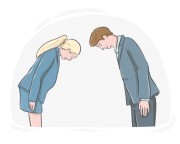
to bow
to bow
[verbe]

to bend the head or move the upper half of the body forward to show respect or as a way of greeting

faire une révérence

faire une révérence

Ex: Upon receiving the prestigious award, the actor bowed to acknowledge the audience's applause. 

En recevant le prestigieux prix, l'acteur s'est incliné pour saluer les applaudissements du public.

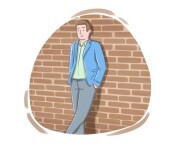
to lean
to lean
[verbe]

to bend from a straight position typically to rest the body against something for support

pencher
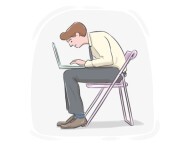
pencher

Ex: The construction worker took a break and leaned on the scaffolding, surveying the progress of the building. 

Le travailleur de la construction a pris une pause et s'est appuyé sur l'échafaudage, examinant les progrès du bâtiment.

to slouch
to slouch
[verbe]

to adopt a drooping, slumped, or lazy posture

avoir le dos rond, être voûté

avoir le dos rond, être voûté

Ex: The tired worker slouched against the wall. 

Le travailleur fatigué s'affalait contre le mur.
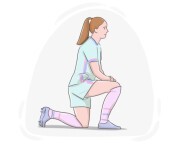
to kneel
to kneel
[verbe]

to support the weight of the body on a knee or both knees

s'agenouiller

s'agenouiller

Ex: As a sign of chivalry, the knight would kneel before the king to pledge allegiance. 

En signe de chevalerie, le chevalier s'agenouillait devant le roi pour prêter allégeance.
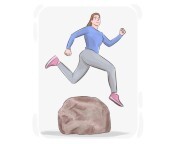
to leap
to leap
[verbe]

to jump very high or over a long distance

bondir, sauter

bondir, sauter

Ex: In the ballet performance, the dancer leaped across the stage, showcasing extraordinary grace and strength. 

Dans le spectacle de ballet, le danseur a bondi à travers la scène, démontrant une grâce et une force extraordinaires.

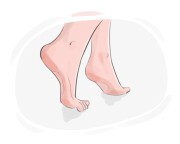
to tiptoe
to tiptoe
[verbe]

to walk slowly and carefully on one's toes

se déplacer sur la pointe des pieds, se déplacer sans faire de bruit

se déplacer sur la pointe des pieds, se déplacer sans faire de bruit

Ex: The cat tiptoed silently through the room, stalking a small insect. 

Le chat marcha sur la pointe des pieds silencieusement à travers la pièce, traquant un petit insecte.
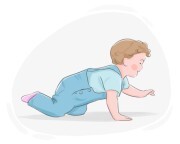
to crawl
to crawl
[verbe]

to move slowly with the body near the ground or on the hands and knees

marcher à quatre pattes, ramper
marcher à quatre pattes, ramper

Ex: As the hikers reached the steep slope, they had to crawl on their hands and knees to navigate the challenging terrain. 

Alors que les randonneurs atteignaient la pente raide, ils ont dû ramper sur leurs mains et leurs genoux pour naviguer sur le terrain difficile.

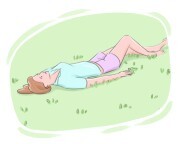
to lie down

to put one's body in a flat position in order to sleep or rest

s'allonger

s'allonger

Ex: The doctor advised her to lie down and rest after her surgery. 

Le médecin lui a conseillé de s'allonger et de se reposer après son opération.
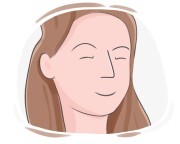
to blink
to blink
[verbe]

to open and close the eyes quickly and for a brief moment

cligner des yeux

cligner des yeux

Ex: He had to blink several times to adjust to the sudden darkness. 

Il a dû cligner des yeux plusieurs fois pour s'adapter à l'obscurité soudaine.

to gaze
to gaze
[verbe]

to look at someone or something without blinking or moving the eyes

fixer, contempler
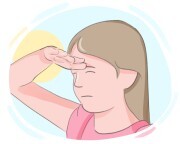
fixer, contempler

Ex: The couple sat by the beach, gazing at the sunset painting the sky in vibrant hues. 

Le couple s'est assis près de la plage, contemplant le coucher de soleil qui peignait le ciel de couleurs vibrantes.

to squint
to squint
[verbe]

to look with eyes half-opened when hit by light, or as a sign of suspicion, etc.

loucher

loucher

Ex: The detective squinted at the unfamiliar figure in the dimly lit alley. 

Le détective plissa les yeux en regardant la silhouette inconnue dans l'allée faiblement éclairée.
to stare
to stare
[verbe]

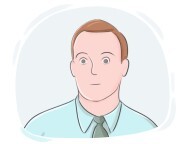
to look at someone or something without moving the eyes or blinking, usually for a while, and often without showing any expression

fixer (du regard), regarder fixement

fixer (du regard), regarder fixement

Ex: She stares at her computer screen for long hours during work. 

Elle fixe son écran d'ordinateur pendant de longues heures pendant le travail.

to wink
to wink
[verbe]

to quickly open and close one eye as a sign of affection or to indicate something is a secret or a joke

cligner de l’œil

cligner de l’œil

Ex: The comedian on stage would often wink at the audience after delivering a clever punchline. 

Le comédien sur scène clignait souvent de l'œil au public après avoir livré une réplique intelligente.
to chuckle
to chuckle
[verbe]

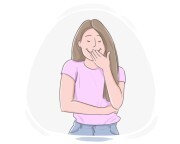
to laugh quietly and with closed lips

glousser

glousser

Ex: She couldn't help but chuckle when she heard the amusing anecdote. 

Elle ne pouvait s'empêcher de ricaner quand elle a entendu l'anecdote amusante.

to giggle
to giggle
[verbe]

to laugh in a light, silly, or often uncontrollable way as a result of nervousness or embarrassment

glousser, rire bêtement, rire sottement

glousser, rire bêtement, rire sottement

Ex: She tried to hide her embarrassment but ended up giggling nervously. 

Elle a essayé de cacher son embarras mais a fini par glousser nerveusement.
to smirk
to smirk
[verbe]

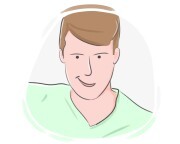
to give a half-smile, often displaying satisfaction, superiority, or amusement

sourire d’un air suffisant

sourire d’un air suffisant

Ex: Upon hearing the sarcastic comment, she couldn't help but smirk knowingly. 

En entendant le commentaire sarcastique, elle ne put s'empêcher de sourire narquoisement.
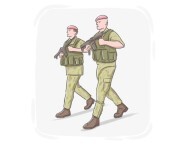
to march
to march
[verbe]

to walk firmly with regular steps

défiler
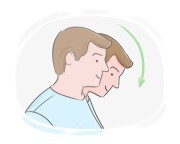
défiler

Ex: In military training, recruits are taught to march in unison to foster discipline and teamwork. 

Dans l'entraînement militaire, les recrues apprennent à marcher à l'unisson pour favoriser la discipline et le travail d'équipe.

to nod
to nod
[verbe]

to move one's head up and down as a sign of agreement, understanding, or greeting

hocher la tête, faire oui de la tête
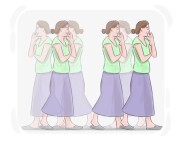
hocher la tête, faire oui de la tête

Ex: She nodded in agreement with his statement. 

Elle hocher la tête en signe d'accord avec sa déclaration.

to pace
to pace
[verbe]

to walk back and forth in a small area at a fixed speed, often due to anxiety or being deep in thought

arpenter
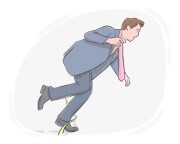
arpenter

Ex: Frustrated by the delay, she began to pace around the train platform. 

Frustrée par le retard, elle commença à arpenter le quai de la gare.

to trip
to trip
[verbe]

to slip or hit something with the foot accidentally that makes one fall or lose balance momentarily

faire trébucher

faire trébucher

Ex: Hiking in the woods, he tripped over a tree root hidden beneath the fallen leaves. 

En randonnée dans les bois, il a trébuché sur une racine d'arbre cachée sous les feuilles mortes.

to [give] {sb} bunny ears

to make one's fingers V-shaped and put them behind a person's head as a way of joking, particularly when taking a photograph

faire des oreilles de lapin, faire un V derrière la tête

faire des oreilles de lapin, faire un V derrière la tête

Ex: Stop giving Dad bunny ears; we need one normal picture. 

Arrête de faire des oreilles de lapin à papa ; il nous faut une photo normale.
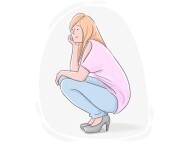
to crouch
to crouch
[verbe]

to sit on one's calves and move the chest close to one's knees

s'accroupir, se tapir

s'accroupir, se tapir

Ex: She crouches down to pick up the fallen papers from the floor. 

Elle s'accroupit pour ramasser les papiers tombés par terre.
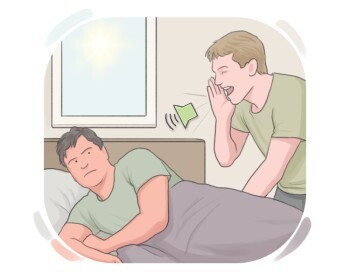
to wake
to wake
[verbe]

to become conscious again after sleeping

se réveiller

se réveiller

Ex: Parents often check on their children when they wake in the middle of the night. 

Les parents vérifient souvent leurs enfants lorsqu'ils se réveillent au milieu de la nuit.

LanGeek
Télécharger l'application LanGeek