

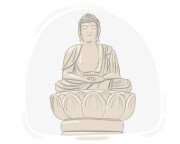
an Indian religion based on the teachings of Siddhartha Gautama, whose followers worship in temples

budism, religia budistă
Budismul învață Patru adevăruri nobile ca parte fundamentală a doctrinei sale.

related to the religion, culture, or people of Buddhism
budist, legat de budism
Meditația este o practică comună printre călugării budisti.
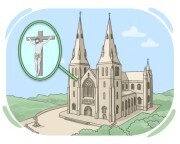
related to or belonging to the Western branch of the Christian Church that is led by the Pope
catolic, legat de Biserica Catolică
the faith and practices associated with the branch of Christianity led by the Pope, including rituals, and moral teachings followed by its members
catolicism, credința catolică
Papa este considerat cea mai înaltă autoritate în catolicism, oferind îndrumare spirituală milioanelor de credincioși din întreaga lume.
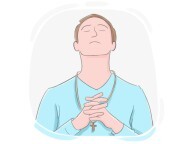
relating to or characteristic of the religion of Christianity
creștin, creștină

the religion based on the life and teachings of Jesus Christ
creștinism, religia creștină
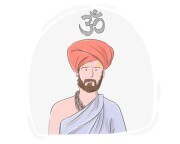
of or relating to, or supportive of, the religion of Hinduism
hinduist, hindus
Festivalurile hinduse sunt sărbătorite cu muzică și dans.
a major religion in South Asia, Sri Lanka, and Nepal, involving the worship of many gods
Hinduism, Hinduism
Hinduismul învață respectul pentru toate ființele vii.
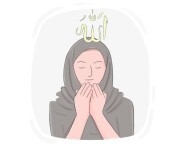
the religion of the Muslims, which was established by Muhammad whose holy book is called the Quran
Islam
Islamul este una dintre principalele religii ale lumii, cu milioane de adepți în întreaga lume.
related to the religion, culture, or people of Islam
islamic, musulman
Moscheea este un loc de închinare islamică.
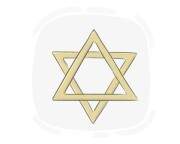
related to the religion, culture, or people of Judaism
evreiesc, legat de iudaism
Sederul de Paște este o tradiție evreiască sărbătorită de familii din întreaga lume.
the religion of Jewish people that is monotheistic
iudaism, religia evreiască
Iudaismul învață închinarea la un singur Dumnezeu.
relating to Islam or to people who follow Islam
musulman, islamic
related to the beliefs, practices, or traditions that are in accordance with the teachings and customs of the Eastern Orthodox Church
ortodox, legat de Biserica Ortodoxă
Biserica ortodoxă din sat ține servicii liturgice tradiționale în fiecare duminică.
relating to Protestantism, Protestants, or their churches
protestant, protestantă
a branch of Christianity that separated from the Roman Catholic Church during the Reformation
protestantism, protestantismul
Protestantismul pune accentul pe credință și scriptură.
relating to the Baptist denomination of Christianity
baptist, referitor la bapțiști
Ei frecventează o biserică baptistă în fiecare duminică.
the third person of the Christian Trinity, also called the Holy Spirit
Duhul Sfânt, Sfânt Duh
Creștinii cred că Duhul Sfânt îi călăuzește și îi inspiră.
uncertainty or lack of commitment regarding the existence of deities or the ability to know and comprehend the nature of ultimate reality
agnosticism, agnosticismul
Agnosticismul este marcat de o recunoaștere umilă că existența lui Dumnezeu sau a adevărurilor spirituale este incertă și dincolo de înțelegerea umană definitivă.

the belief that rejects the existence of God or a higher power
ateism, necredința în existența lui Dumnezeu
A discutat deschis despre ateismul său cu prietenii săi.
relating to the belief that God or gods do not exist
ateist, ateu
El urmează o filosofie ateistă.
referring to a Christian group emphasizing the significance of the Bible and salvation through faith
evanghelic
Predicatorul evanghelic a ținut o predică pasionată congregației sale.
a philosophical theory asserting that all of reality is fundamentally unified and derived from a single substance or principle
monism, teoria monistă
Monismul materialist susține că totul din univers este în cele din urmă compus din materie fizică.

the doctrine that separates the state from religious associations
secularism, separarea bisericii de stat
Secularismul este un principiu de bază în constituția țării.
the belief that the human spirit or soul can survive after death and communicate with the living
spiritism, spiritualism
Era fascinată de spiritism și participa regulat la seanse.
the quality of relating to the human spirit or religious matters rather than material things
spiritualitate, viață spirituală
Meditația poate îmbunătăți un simț al spiritualității.
the belief in the existence of one or more gods or deities
teism, credința în existența unuia sau a mai multor zei
Filosofia lui este înrădăcinată în teism, crezând într-o putere superioară.
(in Christianity) the concept of God as Father, Son, and Holy Spirit
Treiime, Sfânta Treime
Pastorul a explicat conceptul Treimii în timpul predicii.
the execution of Jesus by being nailed to a cross
răstignire, crucificare
Creștinii își amintesc răstignirea pe Vinerea Mare.
(in Hinduism and Buddhism) a spiritual state beyond the cycle of rebirth, marked by the end of desire, suffering, and individual consciousness
nirvana, iluminarea
Călugărul și-a dedicat viața atingerii nirvanei.

to rescue someone from their sins
răscumpăra, salva
Credincioșii găsesc mângâiere în credința că credința îi poate răscumpăra de păcatele trecute.
the belief that after someone’s death, their spirit comes back to life in the form of a new body, especially in Buddhism and Hinduism
reîncarnare, renastere
Mulți oameni cred în reîncarnare ca un ciclu de renaștere.
the return to life of Christ on the third day after his death on the cross, according to the New Testament
înviere, renastere
Creștinii sărbătoresc învierea lui Isus Hristos în Duminica Paștelui, comemorând victoria Sa asupra morții și păcatului.
(Christian theology) the deliverance from sin and its consequences, believed to be brought about by faith in Christ
mântuire, răscumpărare
a transformative 16th-century movement challenging and reforming practices within Christianity, leading to the establishment of Protestant denominations
reformă, Reforma Protestantă
Reforma, declanșată de Nouăzeci și cinci de teze ale lui Martin Luther, a pus la îndoială și a redefinit practicile religioase în creștinism.
