
Basic Sciences - Matter & Wave Properties
Study terms related to material properties, changes of state, light behaviour, wave characteristics, electromagnetic radiation, and wave types.
Review
Flashcards
Spelling
Quiz
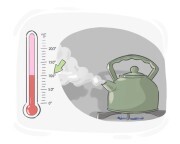
the temperature at which a liquid starts boiling

the temperature at which liquid becomes solid

(physics) matter consisting of elementary particles that are the antiparticles of those of regular matter
(physics) the ability of a material to transmit heat, electricity, or sound
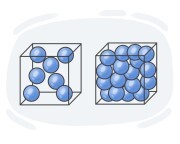
(physics) the mass of a substance or object per unit of volume
(physics) the measure of how much a material expands or contracts when its temperature changes by one degree
the ability to go back to the original form after being stretched
the measure of a fluid's resistance to flow, indicating its thickness or stickiness
having the ability to return to its original shape or position after being stretched or compressed
capable of being stretched or drawn out without breaking
to reduce the size or volume of something by applying pressure or force
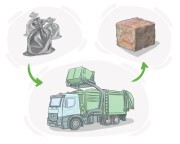
to reduce the volume or size of something by applying pressure, squeezing, or condensing it
to change from a gaseous state to a liquid state

to transform from a liquid or flexible state into a stable, firm, or compact form
to take in heat, light, sound, radiation, or another form of energy
a fundamental particle of light that carries electromagnetic energy and exhibits both particle-like and wave-like properties
the bending of the wave's path as it passes from one medium to another; caused by a change in its speed or direction
the bending, spreading, and interference of waves as they encounter obstacles or pass through narrow openings, often observed in the behavior of light, sound, or other waves
(physics) the bouncing back of a wave, such as light or sound, when it hits a surface
(physics) an oscillating movement by which energy is transferred without the transport of matter, such as light and sound

the distance between a point on a wave of energy and a similar point on the next wave
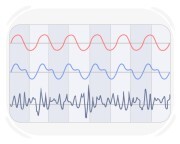
the specific number of waves that pass a point every second
the range of electromagnetic radiation arranged according to wavelength or frequency
(physics) the maximum distance a vibrating material, sound wave, etc. such as a pendulum travels from its first position
(physics) the back-and-forth motion of an object between two end points
relating to electromagnetic radiation with wavelengths longer than visible light but shorter than radio waves, often used in night vision, heat detection, and remote control technology
relating to electromagnetic radiation with shorter wavelengths than those of visible light but longer than X-rays
a device that produces a narrow, intense beam of coherent electromagnetic radiation, usually light
(physics) a wave in which the vibrations occur at right angles to the direction the wave travels
(physics) a wave in which the vibrations move back and forth along the same direction the wave travels
unwanted signals or electrical activity that disrupt or distort the transmission or reception of information
