Imperfect Past For Intermediate learners
What is the Past Imperfect Tense?
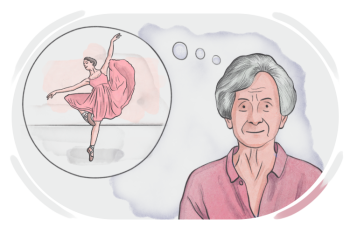
The past imperfect (pretérito imperfecto) expresses past actions without clear beginning or end, habitual actions in the past, or background descriptions. It focuses on what was happening, what used to happen, or what things were like, not on completed events.
Conjugation
Depending on the ending of the infinitive, imperfect verbs conjugate differently to reflect the person and number of the subject. Take a look at the conjugation table and keep in mind that the "vosotros" form is only used in Spain, and Latin American Spanish uses the "ustedes" form in all contexts.
-ar verbs | -er/-ir verbs | |
|---|---|---|
yo | -aba | -ía |
tú | -abas | -ías |
él/ella/usted | -aba | -ía |
nosotros/as | -ábamos | -íamos |
vosotros/as | -abais | -íais |
ellos/ellas/ustedes | -aban | -ían |
For example:
hablar → hablaba, hablabas, hablaba, hablábamos, hablabais, hablaban
comer → comía, comías, comía, comíamos, comíais, comían
vivir → vivía, vivías, vivía, vivíamos, vivíais, vivían
Irregular Verbs
Only three verbs do not follow the normal pattern and have special forms in the imperfect. These are:
ir | ser | ver | |
|---|---|---|---|
yo | iba | era | veía |
tú | ibas | eras | veías |
él/ella/usted | iba | era | veía |
nosotros/as | íbamos | éramos | veíamos |
vosotros/as | ibais | erais | veíais |
ellos/ellas/ustedes | iban | eran | veían |
Negation
To negate verbs in the imperfect tense, the negative marker "no" is added before the verb or object/reflexive pronoun. For example:
Comíamos juntos. → No comíamos juntos.
We used to eat together. → We didn't use to eat together.
Se veíamos todos los dias. → No se veíamos todos los dias.
We watched it everyday. → We didn't watch it everyday.
Uses
The indicative imperfect tense is used to talk about:
Habitual or repeated past actions: Describes what someone used to do regularly.
De niño, jugaba con mis amigos.
As a child, I used to play with my friends.
Siempre comíamos juntos los domingos.
We always ate together on Sundays.
Ongoing actions interrupted by another: An action in progress (imperfect) when another (past simple) action occurred.
Leía cuando sonó el teléfono.
I was reading when the phone rang.
Dormía cuando me llamaste.
I was sleeping when you called me.
Descriptions in the past: Describes time, date, weather, age, or situations in the past.
Era de noche y llovía.
It was night and it was raining.
Tenía veinte años y vivía solo.
He/she was twenty and lived alone.
Mental states or feelings in the past: Used for descriptions of thoughts, beliefs, desires, or emotions in the past.
Pensaba que era buena idea.
I thought it was a good idea.
Sentía mucha tristeza.
I felt very sad.
Politeness or indirect speech: Used in formal or softened requests, often with verbs like querer, poder, deber.
Quería preguntarle algo.
I wanted to ask you something.
Podía ayudarle si quería.
I could help you if you wanted.
Imperfect vs. Past Simple
While the Spanish past simple tense (pretérito perfecto simple) is used for completed actions with a definite start and finish time, the imperfect is used for actions or events without a specific time frame, typically those that were habitual or ongoing in the past. The imperfect and past simple can be used together in the same sentence where the imperfect describes an ongoing, background action which was interrupted by another, one-time action in the past simple tense. Compare the example:
Siempre comíamos juntos.
We always ate together.
Habitual action, imperfect
Comimos juntos ayer.
We ate together yesterday.
Singular, completed action, past simple
Leía cuando entró.
I was reading when he/she entered.
The first verb shows the ongoing action (imperfect) which was interrupted by the second verb (past simple).
Quiz:
Comments
(0)Recommended

