
Ciencias Básicas - Química
Estudia términos relacionados con la composición química, compuestos, soluciones, ácidos, bases, propiedades de los materiales y procesos de laboratorio.
Revisión
Tarjetas de memoria
Ortografía
Cuestionario
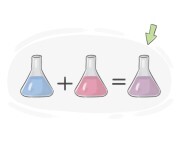
(chemistry) a substance used in or produced by a reaction that changes atoms or molecules

producto químico
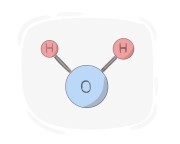
the parts or elements that something consists of and the way they are combined
composición
a pure substance formed from two or more chemical elements chemically bonded in fixed proportions
compuesto

derived from, produced by, or relating to living organisms
orgánico
describing chemical compounds that do not contain carbon-hydrogen bonds and are typically derived from minerals or non-living matter
inorgánico
Los ácidos inorgánicos como el ácido sulfúrico son esenciales en los procesos de fabricación química.
a liquid that is capable of dissolving another substance
disolvente
El agua es el solvente universal, capaz de disolver más sustancias como la sal y el azúcar que cualquier otro líquido.
a substance that is dissolved in a solvent, resulting in a solution
soluto, sustancia disuelta
La disolución de dióxido de carbono (CO2) en los refrescos es un ejemplo de un soluto gaseoso en un solvente líquido.
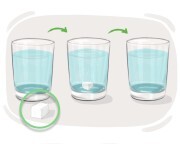
(of a substance) able to break up and disperse within a fluid
soluble
La sal se disocia en iones cuando se disuelve, lo que la hace completamente soluble en soluciones acuáticas.
unable to be dissolved, especially in a liquid
insoluble, indisoluble
El residuo insoluble se asentó en el fondo del recipiente.
a mixture of different liquids
disolución, solución
each of two or more forms of the same element that contain equal numbers of protons but different numbers of neutrons in their nuclei, leading to variation in atomic mass
isótopo
El uranio-235 y el uranio-238 son isótopos del uranio, que desempeñan roles cruciales en las reacciones de fisión nuclear.
a combination of two or more metals, creating a metal that is usually stronger or more resistant
aleación
El acero inoxidable, una aleación de hierro, cromo y otros elementos, es altamente resistente a la corrosión y se utiliza en una amplia gama de aplicaciones.
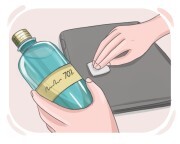
a compound with a hydroxyl group (-OH) attached to a carbon atom, widely used as solvents, fuels, and in pharmaceutical and chemical synthesis
alcohol, etanol
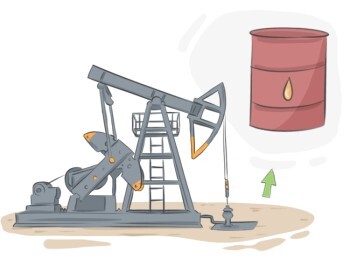
(chemistry) a dark liquid from underground, made of hydrocarbons, used to make fuel and plastic
petróleo
(chemistry) a compound made when the hydrogen in an acid is replaced by a metal or a metal-like group
sal
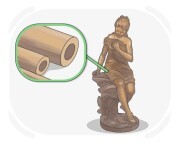
a hard alloy consisting mainly of copper and tin
bronce
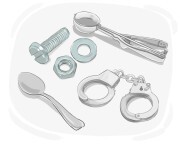
a type of hard metal that is made of a mixture of iron and carbon, used in construction of buildings, vehicles, etc.
acero, metal duro
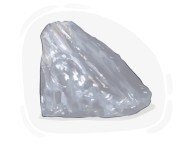
(chemistry) a soft, gray-black form of carbon used as a lubricant and as a moderator in nuclear reactors
grafito
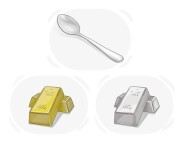
a usually solid and hard substance that heat and electricity can move through, such as gold, iron, etc.
metal

made of or resembling metal
metálico, metalizado
El robot futurista fue construido con componentes metálicos, lo que lo hace duradero y resistente.
(chemistry) a salt or ester of sulfurous acid used as a preservative in foods and wines
sulfito
a numerical measure of how acidic or basic a solution is, based on hydrogen-ion activity
pH, potencial de hidrógeno
any water-soluble compound that can turn litmus blue and reacts with an acid to form a salt and water
álcali
El químico midió cuidadosamente el álcali para evitar una reacción violenta.
(chemistry) a substance that can accept protons, donate electrons, or release hydroxide ions in aqueous solution
base
a water-soluble chemical substance that contains Hydrogen and has a sour taste or corrosive feature with a PH less than 7
ácido
the level of acid in a substance, often measured by a pH below 7
acidez, nivel de acidez
Un nivel de pH por debajo de 7 indica una acidez alta en una solución.
(chemistry) able to act as either an acid or a base depending on the conditions
anfótero, anfotérico
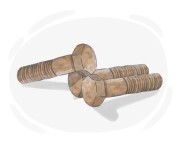
the gradual destruction of materials by chemical reaction, usually of metals
corrosión
La corrosión ocurre cuando el metal reacciona con el oxígeno en el aire.
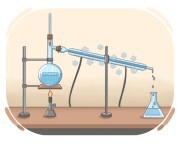
to heat a liquid and turn it into gas then cool it and make it liquid again in order to purify it
destilar
Durante el taller, destilaron aceites fragantes de flores frescas.
a fundamental unit in chemistry that represents the amount of substance containing as many entities (atoms, molecules) as there are in 12 grams of carbon-12
mol, cantidad de sustancia
(chemistry) to become separated from the solvent in a solid form
precipitar
El experimento consistió en mezclar dos soluciones para observar si un sólido se precipitaría fuera de la reacción.
having a tendency to change rapidly and unpredictably, often characterized by fluctuations or instability
volátil
Los científicos estudiaron el comportamiento de los líquidos volátiles en diferentes entornos.
a solution containing a weak acid and its conjugate base, or a weak base and its conjugate acid, which maintains a stable pH when small amounts of acid or base are added
amortiguador, solución amortiguadora
Los farmacéuticos preparan amortiguadores para garantizar la estabilidad de los medicamentos durante el almacenamiento.
a solution of ammonia gas dissolved in water, commonly called aqueous ammonia
amoníaco acuoso,agua amoniacal
El químico preparó una solución diluida de amoniaco para la reacción.
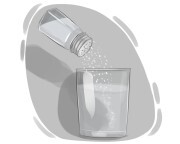
to become incorporated into a liquid and form a solution
disolverse
