
Anglais et Connaissances du Monde pour l'ACT - Mouvement
Apprenez le vocabulaire ACT lié au mouvement, y compris la direction, la vitesse, le déplacement, les voyages, les changements de position et les différentes façons dont les objets ou les forces se déplacent.
Réviser
Flashcards
formes
Orthographe
Quiz

to move in a rhythmic or repetitive pattern that rises and falls

fluctuer
Les hautes herbes dans le champ oscillaient gracieusement à chaque rafale de vent.
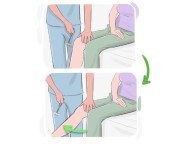
to make a sudden, brief, and involuntary movement
tressaillir, avoir un tic
Alors que le bébé dormait, ses petits doigts tressaillaient occasionnellement.
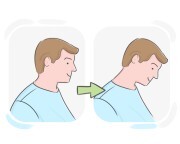
to incline or lean in a particular direction
incliner, pencher
Hier soir, l'image sur le mur pencha légèrement après que quelqu'un l'ait accidentellement heurtée.
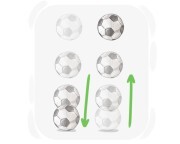
to bounce back after hitting a surface
rebondir, faire un rebond
Le joueur de tennis a frappé un coup puissant, et la balle a rebondi sur le filet.
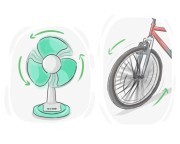
to rotate around a central point or axis
pivoter, tourner autour d'un point central
Pendant la tempête, les pales du moulin à vent pivotaient rapidement.
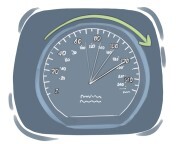
to make a vehicle, machine or object move more quickly
accélérer
L'ingénieur a réglé finement le moteur pour accélérer la bande transporteuse.

to move around among people at a social gathering and talk to different individuals
circuler, se mêler
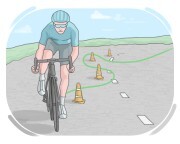
to strategically navigate or direct a vehicle, object, or oneself through a series of planned movements
manœuvrer
Le capitaine a habilement manœuvré le navire à travers le chenal étroit.
to move quickly and lightly from somewhere or something to another
voltiger, papillonner
Les souvenirs de son enfance voltigent dans son esprit comme des ombres fugaces.
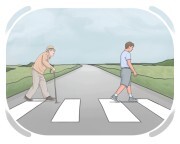
to move across or through a particular area, often with the intention of reaching a destination or following a specific course
suivre, parcourir
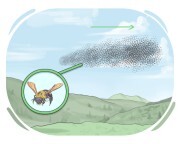
to gather or travel to a place in large, dense groups
essaimer, affluer
Les journalistes essaiment autour de la célébrité à la première du film.
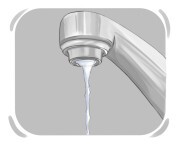
to slowly leak or pass through small openings
s'infiltrer, suinter
L'huile s'infiltrait du moteur sur le sol du garage.
to surpass, exceed, or move faster than someone or something
dépasser, surpasser
Dans la course, le sprinteur a réussi à distancer tous les concurrents et à remporter la victoire.
to slowly leak or pass through small openings
suinter, s'écouler lentement
Le sang suintait de la blessure, tachant le bandage.
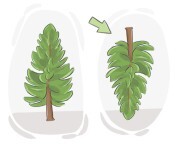
to flip or reverse the position or arrangement of something
retourner
Pour voir le message caché, vous devez inverser la carte.
to move swiftly and smoothly across a surface or through the air, often in a broad or wide-ranging motion
balayer, passer en balayant
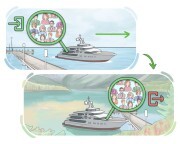
to convey or move people or items back and forth between locations
transporter, faire la navette
Le ferry transporte les passagers à travers la rivière tout au long de la journée.
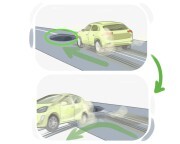
to cause something to depart from an established course
dévier
L'obstacle inattendu sur la route a dévié le conducteur de l'itinéraire prévu.
to carry or move something heavy or inconvenient with considerable effort
charrier, transporter
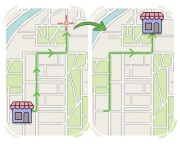
to uproot or relocate someone or something
transplanter, déplacer
L'administration a choisi de transplanter plusieurs enseignants vers la nouvelle filiale.
to meet or cross another path, line, etc. at a particular point
se couper, se croiser
Leurs opinions se sont croisées pendant la discussion, conduisant à un accord.
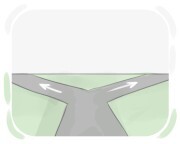
to move apart and continue in another direction
diverger, s’écarter, bifurquer, se séparer
À la bifurcation de la route, les deux voies divergèrent, menant à des destinations distinctes.
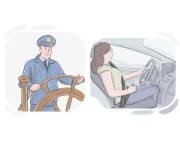
to control the direction in which a vehicle, boat, or other moving object travels
conduire, piloter, barrer, gouverner, diriger, guider
(of a river, trail, etc.) to follow along a curvy or indirect path
serpenter, faire des méandres
Le ruisseau serpente doucement à travers la prairie, offrant une toile de fond apaisante à la nature environnante.
to lower or cause to move downward in position
abaisser, affaisser
Les pluies prolongées peuvent abaisser le niveau de l'eau dans les rivières et les réservoirs.
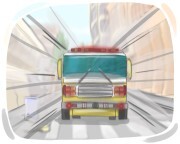
to move with speed and intensity
filer, dévaler
Course contre la montre, les secours se précipitèrent vers le lieu de l'accident.
to transfer liquid through a tube, usually by gravity or differences in pressure
siphonner, transvaser
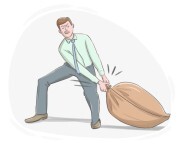
to transport or haul something heavy or cumbersome with effort
transporter, trimballer
Les ouvriers du bâtiment ont dû transporter des équipements lourds jusqu'au dernier étage du bâtiment en rénovation.
to move or be drawn towards a center of gravity or mass, influenced by gravitational attraction
graviter, être attiré par la gravité
La lune gravite vers la Terre, en orbite autour d'elle dans une trajectoire prévisible.
to move in a loose, uncontrolled, or erratic manner
se débattre, gigoter
Le cerf-volant a commencé à flotter dans le vent fort, ce qui rendait difficile pour l'enfant de le contrôler.
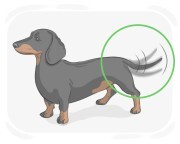
to move repeatedly from side to side, often in a rhythmic or playful manner
remuer, agiter
Elle a agité espièglement son doigt vers l'enfant turbulent, signalant un avertissement.
to move in a slow, heavy, and awkward manner, often due to the size or weight of the body or object being carried
se déplacer lourdement, avancer péniblement
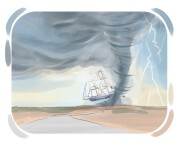
to move in a twisting or whirling motion, creating a pattern of circular or spiral motion
tourbillonner, virevolter
Les couleurs de peinture tourbillonnent ensemble sur la palette alors que l'artiste se prépare à créer.
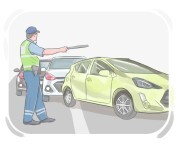
to change direction or take a different course
dévier
sudden, quick, and irregular motions characterized by abrupt starts and stops
saccadé, brusque
Les gestes saccadés du danseur transmettaient un sentiment de nervosité et de tension.
marked by sudden, involuntary, and jerky muscular contractions or spasms
convulsif
Ses convulsions spasmodiques rendaient difficile la tenue des objets.
(of the voice or body) shaking in a slight, fragile manner, often due to nerves, fear, age or illness
tremblant
Les pas tremblants du vieil homme trahissaient sa fragilité.
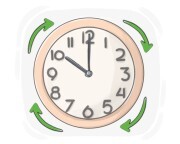
moving or turning in the same direction as the hands of a clock
horaire, dans le sens des aiguilles d'une montre
Elle a serré le couvercle du bocal avec un mouvement dans le sens des aiguilles d'une montre.
(physics) the curved or straight path that a moving object follows through space
trajectoire
the act or process of advancing or moving forward in a gradual or orderly manner
progression
La progression de la chenille à travers la feuille était lente et délibérée.
the amount of energy or particles passing through per unit area per unit time
flux, débit
En physique, la densité de flux mesure la quantité de champ magnétique traversant une surface.
the action or process of driving or propelling an object forward through a medium, typically involving the generation of thrust or force
propulsion
Les fusées dépendent de la combustion pour la propulsion, expulsant des gaz pour générer une poussée.
a rapid and sudden drop from the sky
plongeon, descente en piqué
Lors du spectacle aérien, le pilote de voltige a effectué un piqué audacieux au-dessus de la foule.
| Anglais et Connaissances du Monde pour l'ACT | |||
|---|---|---|---|
| Mouvement | Mouvement Humain | Placement | |
