
Cambridge IELTS 19 - Académique - Test 4 - Écoute - Partie 2 (1)
Apprenez le vocabulaire de la première partie du Cambridge IELTS 19 Academic, Test 4 Listening Part 2, avec des mots et expressions utiles de cette section.
Réviser
Flashcards
formes
Orthographe
Quiz

a person who runs for exercise, enjoyment, or competition

coureur, coureuse
a group of individuals who come together based on shared interests, hobbies, activities, or objectives
club, cercle

to make a new interest or hobby a regular part of one's life
se mettre à, adopter une nouvelle activité
La famille a pris l'habitude de faire de la randonnée comme activité du week-end.

a set of planned actions or steps to be followed in order to achieve specific goals or complete a task
programme, plan
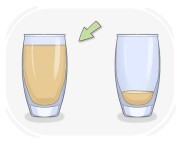
to become more powerful, intense, or larger in quantity
s'intensifier, augmenter
La confiance a tendance à s'accumuler lorsque vous atteignez de petits objectifs.
![to [take] part](https://cdn.langeek.co/photo/60819/thumb/350?type=jpeg "to [take] part")
to participate in something, such as an event or activity
to understand something such as an explanation, story, or the meaning of something
comprendre, suivre
to encourage or influence someone, or oneself, to work harder
pousser, encourager
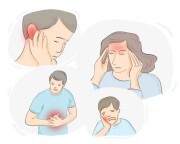
to have an illness or disease
souffrir
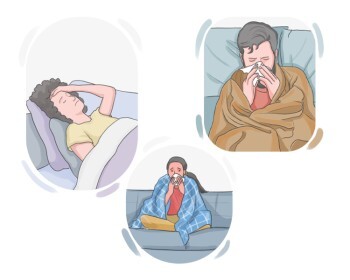
a medical problem, such as a disorder, illness, etc.
maladie, problème
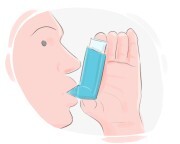
a disease that causes shortness of breath and difficulty in breathing
asthme
Les symptômes de l'asthme comprennent une respiration sifflante, une toux, une oppression thoracique et un essoufflement.
to design something for a particular audience or market
viser, cibler
La nouvelle campagne publicitaire est clairement conçue pour les jeunes adultes qui aiment les activités de plein air.
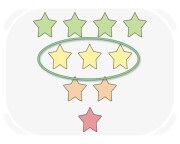
a standard level that is considered to be ordinary or usual
moyenne
the condition of being physically healthy, strong, and able to perform physical activity
forme physique, forme

related to or involving only one certain thing
spécifique
being connected either logically or causally or by shared characteristics
en rapport avec, lié à

(usually plural) a set of things that allow someone to achieve their goal or live comfortably
besoin
a small, unspecified number of things or people, usually two or a few
quelques, deux ou trois

a helpful suggestion or a piece of advice
conseil, astuce
(of a person) lacking training or experience in a particular field or activity
nouveau, inexpérimenté
physically feeling relaxed and not feeling pain, stress, fear, etc.
à l'aise
Elle avait l'air à l'aise dans le hamac, profitant de la brise légère.

to measure how long an event, action, or someone performing an action takes
chronométrer, minuter
![to [get|take|keep] {one's} mind off {sth}](https://cdn.langeek.co/photo/46354/thumb/350?type=jpeg "to [get|take|keep] {one's} mind off {sth}")
to distract someone's attention or thoughts away from something, typically something stressful, worrisome, or unpleasant
se changer les idées, se distraire de quelque chose
Regarder une comédie l'a aidée à se changer les idées après la mauvaise nouvelle.
a regular or recurring pattern in the timing of events, activities, or changes
rythme, cadence
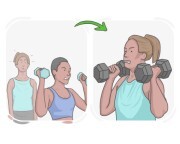
having a strong desire to win or succeed
compétitif, ambitieux
Sa nature compétitive l'a poussé à exceller sur le plan académique, en cherchant toujours à obtenir les meilleures notes.
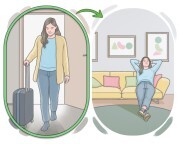
only a short time ago
venir de, venir juste de, justement
Le soleil vient juste de sortir de derrière les nuages.
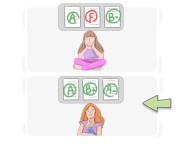
following the same course of action or behavior over time
constant, cohérent, régulier
Le régime d'entraînement constant de l'athlète a conduit à des améliorations notables de la performance.
many times or habitually
régulièrement, fréquemment
Il se porte régulièrement volontaire au refuge pour animaux.

to postpone an appointment or arrangement
reporter, repousser, décaler
Elle a reporté le rendez-vous à la semaine prochaine en raison d'engagements personnels.
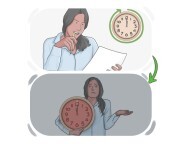
to be without or to not have enough of something that is needed or desirable
manquer de
to surpass someone or something in development, achievement, or advancement
dépasser, surpasser
La jeune athlète a laissé derrière ses coéquipiers pendant la course, démontrant sa vitesse et son endurance exceptionnelles.
having a pleasing or agreeable nature
bienvenu, agréable

to go someplace with another person
accompagner
Le groupe va au musée. Tu devrais venir avec nous.
![to {not} [look] back](https://cdn.langeek.co/photo/47230/thumb/350?type=jpeg "to {not} [look] back")
to have no desire or intention to return to past circumstances
ne rien regretter, ne pas regretter l'avant
Il a quitté ce travail toxique et ne l'a pas regretté une seconde.
someone who feels active, alert, and works best early in the day
lève-tôt, matinal
Elle est une personne du matin qui aime commencer sa journée au lever du soleil.
a small amount or short experience of something given as a sample to let someone try it
échantillon, avant-goût
Le cours offre un aperçu de la vie dans le domaine médical.
