
Cambridge IELTS 19 - Académico - Prueba 4 - Comprensión Auditiva - Parte 2 (1)
Aprende vocabulario de la primera parte del Cambridge IELTS 19 Academic, Test 4 Listening Part 2, con palabras y expresiones útiles de esta sección.
Revisión
Tarjetas de memoria
formas
Ortografía
Cuestionario

a person who runs for exercise, enjoyment, or competition

corredor, corredora
a group of individuals who come together based on shared interests, hobbies, activities, or objectives
club, círculo
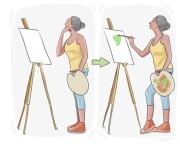
to make a new interest or hobby a regular part of one's life
aficionarse a, empezar a practicar
Deberíamos adoptar una rutina de ejercicios para un estilo de vida más saludable.

a set of planned actions or steps to be followed in order to achieve specific goals or complete a task
programa, plan
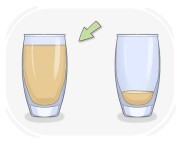
to become more powerful, intense, or larger in quantity
aumentar, intensificarse
La presión puede acumularse en un sistema cerrado si no se libera adecuadamente.
![to [take] part](https://cdn.langeek.co/photo/60819/thumb/350?type=jpeg "to [take] part")
to participate in something, such as an event or activity
to understand something such as an explanation, story, or the meaning of something
entender
to encourage or influence someone, or oneself, to work harder
empujar, animar
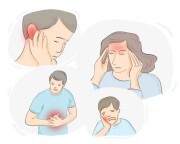
to have an illness or disease
sufrir
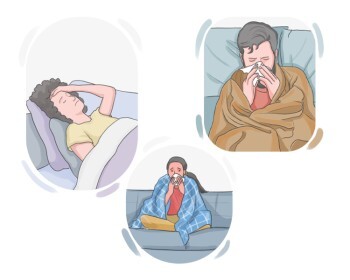
a medical problem, such as a disorder, illness, etc.
afección, enfermedad
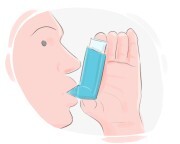
a disease that causes shortness of breath and difficulty in breathing
asma
Los ataques de asma pueden ser provocados por alérgenos, infecciones respiratorias, ejercicio o estrés.
to design something for a particular audience or market
dirigirse a, apuntar a
La línea de moda está dirigida a clientes de alta gama que valoran el lujo y la exclusividad.
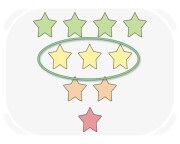
a standard level that is considered to be ordinary or usual
promedio, media
the condition of being physically healthy, strong, and able to perform physical activity
buena forma

related to or involving only one certain thing
específico
being connected either logically or causally or by shared characteristics
relacionado con, vinculado a

(usually plural) a set of things that allow someone to achieve their goal or live comfortably
necesidad
a small, unspecified number of things or people, usually two or a few
un par, algunos

a helpful suggestion or a piece of advice
consejo
(of a person) lacking training or experience in a particular field or activity
nuevo, inexperto
physically feeling relaxed and not feeling pain, stress, fear, etc.
cómodo
Después de un baño caliente, se sintió cómodo y listo para dormir.

to measure how long an event, action, or someone performing an action takes
cronometrar, medir el tiempo
![to [get|take|keep] {one's} mind off {sth}](https://cdn.langeek.co/photo/46354/thumb/350?type=jpeg "to [get|take|keep] {one's} mind off {sth}")
to distract someone's attention or thoughts away from something, typically something stressful, worrisome, or unpleasant
distraerse de algo, quitarse algo de la cabeza
Se mantuvo ocupado en el jardín para quitarse el dolor de la cabeza.
a regular or recurring pattern in the timing of events, activities, or changes
ritmo, cadencia
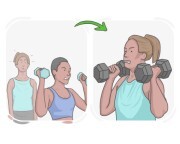
having a strong desire to win or succeed
competitivo, ambicioso
A pesar del ambiente amistoso, el jugador competitivo estaba decidido a salir victorioso en cada partido.
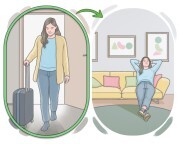
only a short time ago
justo, ahora mismo
Acabo justo de terminar de leer el libro.
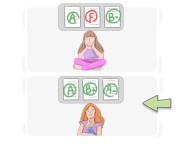
following the same course of action or behavior over time
constante
Su constante amabilidad hacia los demás le valió la reputación de ser un amigo confiable.
many times or habitually
regularmente, frecuentemente
Ella regularmente se olvida de cerrar con llave la puerta principal.

to postpone an appointment or arrangement
posponer, aplazar
Debido a la lluvia, el concierto al aire libre fue pospuesto.
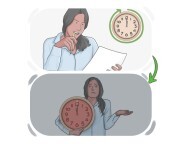
to be without or to not have enough of something that is needed or desirable
faltar
to surpass someone or something in development, achievement, or advancement
superar, dejar atrás
El crecimiento económico de la región dejó atrás a muchos países vecinos, creando una disparidad en los niveles de vida.
having a pleasing or agreeable nature
bienvenido
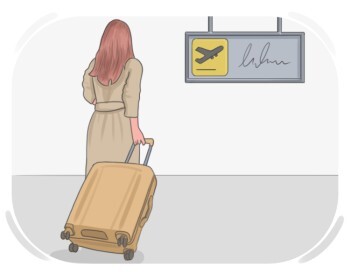
to go someplace with another person
venir
Nos vamos de viaje por carretera este fin de semana. ¿Quieres venir con nosotros?
![to {not} [look] back](https://cdn.langeek.co/photo/47230/thumb/350?type=jpeg "to {not} [look] back")
to have no desire or intention to return to past circumstances
no volver la vista atrás, no echar de menos lo de antes
Cuando descubrieron la banca online, no echaron de menos lo de antes.
someone who feels active, alert, and works best early in the day
madrugador, persona matutina
Una persona matutina generalmente se siente más enérgica antes de la hora del almuerzo.
a small amount or short experience of something given as a sample to let someone try it
muestra, adelanto
El concierto incluyó una muestra de canciones del nuevo álbum.
