
Wiskunde en Logica SAT - Causaliteit en Intentionaliteit

Here you will learn some English words related to causality and intentionality, such as "impulse", "elicit", "bane", etc. that you will need to ace your SATs.

review-disable

Herzien

flashcard-disable

Flashcards

spelling-disable

Spelling

quiz-disable

Quiz

Begin met leren
Wiskunde en Logica SAT
to precipitate [werkwoord]

اجرا کردن

versnellen

Ex: The company 's hasty expansion plans may precipitate financial difficulties .

De overhaaste uitbreidingsplannen van het bedrijf kunnen financiële problemen verhaasten.
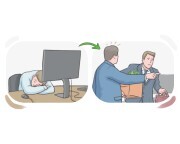
to catalyze [werkwoord]
اجرا کردن

katalyseren

Ex: Innovation in education can catalyze improvements in student engagement and learning outcomes .

Innovatie in het onderwijs kan verbeteringen in studentenbetrokkenheid en leerresultaten versnellen.

to prompt [werkwoord]
اجرا کردن

aansporen

Ex: The unexpected resignation of the CEO prompted a reevaluation of the company 's leadership structure .

Het onverwachte ontslag van de CEO leidde tot een herevaluatie van de leiderschapsstructuur van het bedrijf.

to invoke [werkwoord]
اجرا کردن

oproepen

Ex: The announcement of the policy changes invoked a wave of protests across the city .

De aankondiging van het beleid heeft een golf van protesten door de stad uitgelokt.

to underlie [werkwoord]
اجرا کردن

ten grondslag liggen aan

Ex: A commitment to excellence underlies the company 's global success .

Een toewijding aan uitmuntendheid ligt ten grondslag aan het wereldwijde succes van het bedrijf.

to pose [werkwoord]
اجرا کردن

vormen

Ex: The cybersecurity breach posed a serious threat to the confidentiality of sensitive information .

De inbreuk op de cyberbeveiliging vormde een ernstige bedreiging voor de vertrouwelijkheid van gevoelige informatie.

to exert [werkwoord]
اجرا کردن

uitoefenen

Ex: Large corporations often exert a significant influence on market trends .

Grote bedrijven oefenen vaak een aanzienlijke invloed uit op markttrends.

to elicit [werkwoord]
اجرا کردن

opwekken

Ex: The teacher used thought-provoking prompts to elicit insightful responses from the students .

De leraar gebruikte thought-provoking prompts om uit te lokken diepgaande reacties van de studenten.

to stem [werkwoord]
اجرا کردن

voortkomen

Ex:

De verkeersopstoppingen in het centrum stammen grotendeels uit de lopende bouwprojecten en wegafsluitingen.

to incur [werkwoord]
اجرا کردن

oplopen

Ex: Failure to pay bills on time may incur additional fees and penalties .

Het niet tijdig betalen van rekeningen kan extra kosten en boetes met zich meebrengen.

to animate [werkwoord]
اجرا کردن

animeren

Ex: The lively music animated the festival , creating an atmosphere of celebration .

De levendige muziek levendigde het festival op en creëerde een sfeer van viering.

to spearhead [werkwoord]
اجرا کردن

aanvoeren

Ex: The captain was assigned to spearhead the rescue mission in the disaster-stricken area .

De kapitein werd toegewezen om de reddingsmissie in het rampgebied te leiden.

to necessitate [werkwoord]
اجرا کردن

vereisen

Ex: His medical condition necessitated frequent visits to the doctor for monitoring .

Zijn medische toestand vereiste frequente bezoeken aan de arts voor monitoring.

to incite [werkwoord]
اجرا کردن

aanzetten

Ex: The speaker is currently inciting the audience to reflect on societal issues .

De spreker hitst het publiek momenteel op om na te denken over maatschappelijke kwesties.

causality [zelfstandig naamwoord]
اجرا کردن

causaliteit

Ex: Establishing causality in social sciences often involves complex statistical analysis .

Het vaststellen van causaliteit in de sociale wetenschappen houdt vaak complexe statistische analyse in.

stimulus [zelfstandig naamwoord]
اجرا کردن

prikkel

Ex: Teachers often use interactive and engaging stimuli , like educational games or hands-on activities , to stimulate interest and enhance the learning experience in the classroom .

Leraren gebruiken vaak interactieve en boeiende stimuli, zoals educatieve spellen of praktische activiteiten, om interesse te stimuleren en de leerervaring in de klas te verbeteren.

foundation [zelfstandig naamwoord]
اجرا کردن

fundament

Ex: A strong moral foundation is essential for building a cohesive and ethical community .

Een sterke morele basis is essentieel voor het opbouwen van een samenhangende en ethische gemeenschap.

premise [zelfstandig naamwoord]
اجرا کردن

premisse

Ex: The film 's plot relies on the premise that time travel is possible and can alter past events .

Het plot van de film berust op het uitgangspunt dat tijdreizen mogelijk is en gebeurtenissen in het verleden kan veranderen.

outcome [zelfstandig naamwoord]
اجرا کردن

uitkomst

Ex: Poor planning resulted in a negative outcome for the project , causing delays and budget overruns .

Slechte planning resulteerde in een negatief resultaat voor het project, wat vertragingen en budgetoverschrijdingen veroorzaakte.

bane [zelfstandig naamwoord]
اجرا کردن

plaag

Ex: The faulty wiring became the bane of the renovation project .

De defecte bedrading werd de plaag van het renovatieproject.

grassroots [bijvoeglijk naamwoord]
اجرا کردن

basis

Ex:

Haar grassroots-aanpak zorgde ervoor dat het project aan de fundamentele behoeften van de gemeenschap voldeed.

indicative [bijvoeglijk naamwoord]
اجرا کردن

indicatief

Ex: The dark clouds gathering overhead were indicative of an approaching storm .

De donkere wolken die zich boven ons verzamelden, waren indicatief voor een naderende storm.

conducive [bijvoeglijk naamwoord]
اجرا کردن

bevorderlijk

Ex: The supportive atmosphere in the classroom was conducive to learning .

De ondersteunende sfeer in de klas was bevorderlijk voor het leren.

unintended [bijvoeglijk naamwoord]
اجرا کردن

onbedoeld

Ex: The joke had an unintended effect , causing offense to some audience members .

De grap had een onbedoeld effect en beledigde sommige leden van het publiek.

involuntarily [bijwoord]
اجرا کردن

onvrijwillig

Ex: I smiled involuntarily at the memory of our childhood mischief .

Ik glimlachte onwillekeurig bij de herinnering aan onze kinderstreken.

deliberately [bijwoord]
اجرا کردن

opzettelijk

Ex: She deliberately left the door unlocked to let him in .

Ze heeft de deur opzettelijk niet op slot gedaan om hem binnen te laten.

inadvertently [bijwoord]
اجرا کردن

onopzettelijk

Ex: The website was inadvertently taken offline during the update .

De website werd per ongeluk offline gehaald tijdens de update.

readily [bijwoord]
اجرا کردن

graag

Ex: They readily acknowledged their mistake and apologized .

Ze hebben hun fout grif erkend en excuses aangeboden.

unwittingly [bijwoord]
اجرا کردن

onbewust

Ex: The tourists unwittingly crossed into restricted territory .

De toeristen zijn onbewust een beperkt gebied binnengegaan.

unthinkingly [bijwoord]
اجرا کردن

onbedachtzaam

Ex: They unthinkingly repeated the rumor , spreading misinformation throughout the office .

Ze herhaalden onbedachtzaam het gerucht en verspreidden desinformatie door het hele kantoor.

purposely [bijwoord]
اجرا کردن

opzettelijk

Ex: The artist purposely used bright colors to create a cheerful mood .

De kunstenaar gebruikte opzettelijk felle kleuren om een vrolijke sfeer te creëren.

wilfully [bijwoord]
اجرا کردن

opzettelijk

Ex: They wilfully neglected their duties , leading to a decline in productivity .

Ze hebben opzettelijk hun plichten verwaarloosd, wat leidde tot een daling van de productiviteit.

impulse [zelfstandig naamwoord]
اجرا کردن

impuls

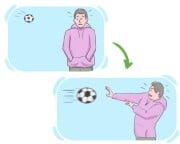
Ex: The sudden impulse to travel led them to book a last-minute flight .

De plotselinge impuls om te reizen leidde ertoe dat ze een last-minute vlucht boekten.

volition [zelfstandig naamwoord]
اجرا کردن

wilskracht

Ex: He acted according to his own volition , refusing to be influenced by others ' opinions .

Hij handelde naar eigen wil, weigerend zich te laten beïnvloeden door de meningen van anderen.

resistance [zelfstandig naamwoord]
اجرا کردن

the act of opposing or refusing to accept something one disapproves of or disagrees with

Ex: His resistance to authority often caused conflict at work .
reluctant [bijvoeglijk naamwoord]
اجرا کردن

terughoudend

Ex: The company was reluctant to invest in new technology due to concerns about cost and implementation .

Het bedrijf was terughoudend om te investeren in nieuwe technologie vanwege zorgen over kosten en implementatie.

purposeful [bijvoeglijk naamwoord]
اجرا کردن

doelbewust

Ex: The speaker 's purposeful delivery captivated the audience 's attention throughout the presentation .

De doelgerichte voordracht van de spreker boeide de aandacht van het publiek gedurende de hele presentatie.

spontaneous [bijvoeglijk naamwoord]
اجرا کردن

spontaan

Ex: The couple ’s spontaneous weekend getaway turned into one of the best trips they ’d ever taken .

De spontane weekenduitje van het stel veranderde in een van de beste reizen die ze ooit hadden gemaakt.

senseless [bijvoeglijk naamwoord]
اجرا کردن

zinloos

Ex: The senseless killing of innocent civilians left everyone in disbelief .

De zinloze moord op onschuldige burgers liet iedereen ongelovig achter.