
pattern

Basic Sciences - Molecules & Matter

Study terms related to atomic structure, subatomic particles, ions, chemical bonds, molecular properties, and states of matter.

Przegląd

Fiszki

Pisownia

Test
Zacznij naukę
Words Related to Basic Sciences
covalent
covalent
[przymiotnik]

(chemistry) describing a chemical bond formed by atoms sharing pairs of electrons

Ex: Water molecules are held together by covalent bonds between hydrogen and oxygen. 
ion
ion
[Rzeczownik]

a particle with a net electric charge due to loss or gain of one or more electrons

jon, naładowana cząstka

jon, naładowana cząstka

Ex: Sodium ions (Na⁺) and chloride ions (Cl⁻) combine to form table salt. 
ionic
ionic
[przymiotnik]

(chemistry) relating to or involving ions, which are atoms or molecules with an electric charge
liquid
liquid
[Rzeczownik]

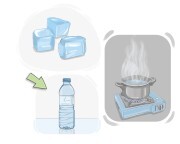
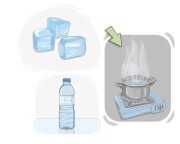
the state of a substance that is without shape and can flow easily

ciecz, płyn
ciecz, płyn

Ex: The chemist poured the liquid into a beaker for analysis. 
gas
gas
[Rzeczownik]

the state of a substance that is neither solid nor liquid

gaz

gaz

Ex: The gas in the balloon expanded as it was heated by the sun. 
molecule
molecule
[Rzeczownik]

the smallest structure of a substance consisting of a group of atoms

cząsteczka

cząsteczka

Ex: Molecules are made up of two or more atoms bonded together. 
molecular
molecular
[przymiotnik]

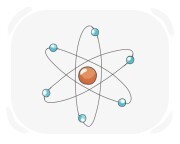
consisting of or relating to molecules, which are groups of atoms bonded together

cząsteczkowy, odnoszący się do cząsteczek
cząsteczkowy, odnoszący się do cząsteczek

Ex: Molecular bonding determines the arrangement of atoms in a compound. 
atomic
atomic
[przymiotnik]

related to atoms, the smallest units of matter, including their structure, properties, and interactions

atomowy

atomowy

Ex: The atomic structure of an element includes its nucleus, composed of protons and neutrons, surrounded by electrons. 
atomic number
atomic number
[Rzeczownik]

(chemistry) the number of protons in the nucleus of an atom, which determines its place on the periodic table

Ex: Carbon has an atomic number of 6 because it contains six protons. 
electron
electron
[Rzeczownik]

a small particle in an atom with negative charge

elektron, mała cząstka w atomie o ujemnym ładunku

elektron, mała cząstka w atomie o ujemnym ładunku

Ex: Electrons flow through wires to create electric current. 
neutron
neutron
[Rzeczownik]

a small particle with no charge present in atoms

neutron, cząstka obojętna

neutron, cząstka obojętna

Ex: Neutrons act as "glue" in the nucleus, preventing proton repulsion. 
proton
proton
[Rzeczownik]

a small positively charged particle present in atoms

proton

proton

Ex: The number of protons in an atom defines its atomic number. 
nucleus
nucleus
[Rzeczownik]

the dense, positively charged core of an atom, made up of protons and neutrons and containing most of the atom's mass

jądro, jądro atomowe

jądro, jądro atomowe

Ex: The nucleus contains nearly all the mass of an atom. 
particle
particle
[Rzeczownik]

(physics) any of the smallest units that energy or matter consists of, such as electrons, atoms, molecules, etc.

cząstka

cząstka

Ex: Electrons are fundamental particles with a negative electric charge. 
anion
anion
[Rzeczownik]

(chemistry) an ion that carries a negative electric charge

Ex: The anion moved toward the positive electrode during electrolysis. 
cation
cation
[Rzeczownik]

(chemistry) an ion that carries a positive electric charge
Ex: The cation moved toward the negative electrode during electrolysis. 
bond
bond
[Rzeczownik]

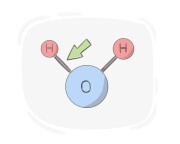
a link that holds atoms or ions together in any molecule or crystal

wiązanie, połączenie
wiązanie, połączenie

Ex: The covalent bond between the hydrogen and oxygen atoms forms a water molecule. 
solid
solid
[Rzeczownik]

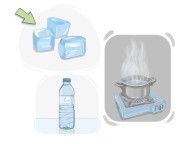
a substance that is firm and has a certain shape, not like gas or liquid

ciało stałe, substancja stała

ciało stałe, substancja stała

Ex: Ice is a solid that maintains its shape until it melts. 
suspension
suspension
[Rzeczownik]

(chemistry) a mixture where tiny solid particles float throughout a liquid or gas

atomic mass
atomic mass
[Rzeczownik]

the weighted average mass of an atom of an element, taking into account the masses of all its naturally occurring isotopes

masa atomowa, ciężar atomowy

masa atomowa, ciężar atomowy

Ex: The atomic mass of carbon is approximately 12.01 because it averages the masses of carbon-12 and carbon-13 isotopes. 
mass number
mass number
[Rzeczownik]

the total number of protons and neutrons in the nucleus of an atom

liczba masowa, liczba nukleonów

liczba masowa, liczba nukleonów

Ex: The mass number of carbon-12 is 12, as it has 6 protons and 6 neutrons. 
metallic bond
metallic bond
[Rzeczownik]

(chemistry) a bond where electrons move freely among many metal atoms, allowing electrical conduction

Ex: The metallic bond in copper allows electricity to flow through wires easily. 
hydrogen bond
hydrogen bond
[Rzeczownik]

(chemistry) a weak attraction between a hydrogen atom in one molecule and an electronegative atom like oxygen or nitrogen in another

Ex: Hydrogen bonds between water molecules give water its surface tension. 
LanGeek
Pobierz aplikację LanGeek
