ea In American English
'ea' as a digraph has five sounds that we are going to talk about here.
Digraphs are a set of two letters that stand together and produce a new sound.
Digraph | ea |
|---|---|
Name | ea (pronounced /ˈiː ˈeɪ /) |
Common Sound(s) | /i:/, /ɛ/, /iə/, /ɪ/, /ɜ/, /ə/, /eɪ/, /iæ/ |

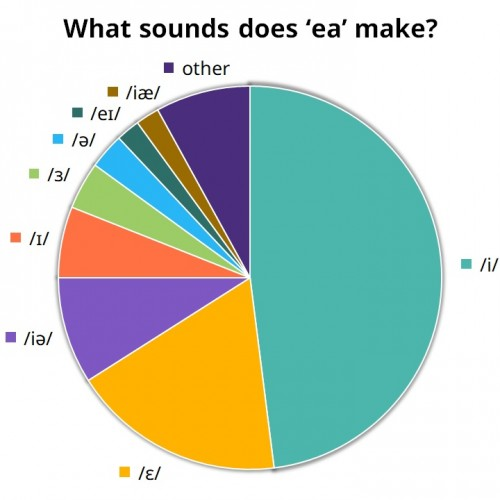
The Digraph 'ea'
Sound 1: /i:/
'ea' in the middle or at the end of words sounds /i:/:
pea /piː/
seat /siːt/
teacher /ˈtiːtʃər/
dream /dɹiːm/
Sound 2: /ɛ/
The second most common sound 'ea' produces is /ɛ/:
bread /bɹɛd/
head /ˈhɛd/
health /hɛlθ/
stead /stɛd/
Sound 3: /iə/
'ea' also sounds /iə/:
idea /aɪˈdiːə/
theater /θiːət̬ɚ/
real /ˈɹiːəl/
nuclear /ˈn(j)ukliər/
Sound 4: /ɪ/
'ea' sounds /ɪ/, too:
appear /əˈpɪr/
shear /ʃɪr/
dear /dɪɹ/
Sound 5: /ɜ/
'ea' also produces the sound /ɜ/:
early /ˈɜɹli/
learn /lɜɹn/
earn /ɜɹn/
Sound 6: /ə/
'ea' makes the /ə/ sound in unstressed syllables:
pageant /ˈpædʒənt/
Sound 7: /eɪ/
'ea' also sounds /eɪ/:
break /breɪk/
steak /steɪk/
Sound 8: /iæ/
There are also instances where 'ea' sounds /iæ/:
caveat /ˈkæviæt/
reaction /ɹiˈækʃən/
Comments
(0)
Recommended

