pattern

Business and Finance - Economy

Study terms related to economic systems, markets, trade, taxation, inflation, public finance, financial crises, and global institutions.

Review

Flashcards

Spelling

Quiz

Start learning
Words Related to Business and Finance
economics
economics
[noun]

the study of how money, goods, and resources are produced, distributed, and used in a country or society

Ex: He decided to study economics to understand how markets work. 
Close
Sign in
economist
economist
[noun]

a professional who studies and analyzes economic theories, trends, and data to provide insights into economic issues

Ex: The economist predicted a downturn in the housing market based on current economic indicators. 
Close
Sign in
capitalism

an economic and political system in which industry, businesses, and properties belong to the private sector rather than the government

Ex: Capitalism is an economic system where private individuals and businesses own the means of production and operate for profit. 
Close
Sign in
collapse
collapse
[noun]

a sudden decrease in something's value, such as a price or stock

Ex: The financial collapse led to widespread panic among investors. 
Close
Sign in
to crash
to crash
[Verb]

(economics) to lose value suddenly and significantly
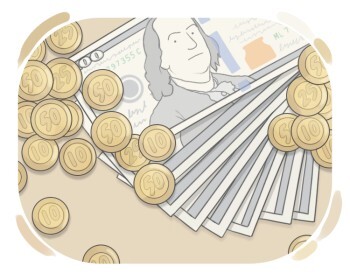
Ex: The stock market crashed, wiping out billions in a matter of hours. 
Close
Sign in
currency
currency
[noun]

the type or system of money that is used by a country

Ex: The euro is the official currency of many countries in the European Union. 
Close
Sign in
depression

a time of little economic activity and high unemployment, which lasts for a long time

Ex: The Great Depression of the 1930s saw widespread unemployment and severe economic hardship. 
Close
Sign in
recession
recession
[noun]

a hard time in a country's economy characterized by a reduction in employment, production, and trade

Ex: During the recession, many businesses were forced to close, leading to widespread job losses. 
Close
Sign in
downturn
downturn
[noun]

a drop in market and business activities

Ex: The global pandemic caused a severe economic downturn, affecting businesses worldwide. 
Close
Sign in
free market

an economic system that is not operated by the government rather by free competition and supply and demand

Ex: In a free market economy, prices are determined by supply and demand rather than government intervention. 
Close
Sign in
free trade

a system of international trading in which there are no restrictions or taxes on goods bought or sold

Ex: Many economists argue that free trade agreements promote economic growth by reducing barriers to international commerce. 
Close
Sign in
fair trade

the set of principles that support producers in developing countries by making sure that international labor laws are observed

Close
Sign in
global economy

the interconnected economies of all countries viewed as a single unified system

Ex: The global economy grew by 3% last year despite supply chain disruptions. 
Close
Sign in
income tax

a tax paid to the government each year by a business or an individual based on their income

Close
Sign in
inflation
inflation
[noun]

the ongoing increase in the general price level of goods and services in an economy over a period of time

Ex: High inflation reduces the purchasing power of consumers. 
Close
Sign in
deflation
deflation
[noun]

(economics) a decrease in the amount of money in an economy, resulting in falling or unchanged prices

Ex: The central bank fears deflation and is cutting interest rates to stimulate spending. 
Close
Sign in
monopoly
monopoly
[noun]

a situation in which one organization or entity exclusively controls the production, distribution, or trade of a product or service, making other rivals unable to compete

Ex: Many indie bookstores face challenges in a landscape dominated by the monopoly of major online retailers. 
Close
Sign in
national debt

the total amount of money owed by a national government, excluding debts of individuals, businesses, or local governments

Ex: The national debt exceeded $30 trillion for the first time this year. 
Close
Sign in
portfolio
portfolio
[noun]

a group of shares that a person or organization owns

Ex: She diversified her investment portfolio to include stocks, bonds, and real estate. 
Close
Sign in
private sector

the part of the economy that is run by private individuals or companies, rather than the government, and aims to make a profit

Ex: Many people work in the private sector, including employees in businesses and corporations. 
Close
Sign in
public sector

the part of the economy that is controlled and funded by the government, providing services like healthcare, education, and transportation

Ex: Many people work in the public sector, including teachers and police officers. 
Close
Sign in
public spending

the total amount of money spent by a government on public services and infrastructure

Ex: Public spending on healthcare increased significantly this fiscal year. 
Close
Sign in
reserve
reserve
[noun]

something kept back or saved for future use or a special purpose

Close
Sign in
stock exchange

a place in which shares and stocks are traded

Ex: The New York Stock Exchange is one of the largest and most influential stock exchanges in the world. 
Close
Sign in
stock market

the business of trading and exchanging shares of different companies

Ex: The stock market experienced a significant drop today, causing investors to worry about their portfolios. 
Close
Sign in
supply and demand

‌the relationship between the amount of goods or services that are available and the amount that people want to buy, especially when this controls prices

Close
Sign in
tariff
tariff
[noun]

a tax paid on goods imported or exported

Ex: The government imposed a tariff on imported steel to protect domestic producers. 
Close
Sign in
tax
tax
[noun]

a sum of money that has to be paid, based on one's income, to the government so it can provide people with different kinds of public services

Ex: April 15th is the deadline for filing income tax returns in the United States. 
Close
Sign in
to quote
to quote
[Verb]

to estimate how much money something will cost

Ex: The contractor quoted us $10,000 for the kitchen renovation. 
Close
Sign in
black market

the illegal purchase and selling of goods in high price, ofen in an unreasonable price

Ex: The government’s strict import regulations led to the rise of a black market for electronics, where consumers were willing to pay double the retail price for the latest gadgets. 
Close
Sign in
bubble
bubble
[noun]

a rapid trend of increase in prices that eventually leads to a collapse

Ex: The housing bubble of the mid-2000s led to a catastrophic collapse in real estate prices and triggered the global financial crisis. 
Close
Sign in
fiscal
fiscal
[Adjective]

relating to government revenue or public money, especially taxes

Ex: The government faces challenges in balancing fiscal priorities while addressing social needs. 
Close
Sign in
liquidity
liquidity
[noun]

financial assets in the form of money or able to be easily converted into money

Ex: The company maintained high liquidity to cover unexpected expenses. 
Close
Sign in
International Monetary Fund

a UN agency that promotes international monetary cooperation and exchange rate stability

Ex: The IMF provided a $5 billion loan to stabilize the country's currency. 
Close
Sign in
World Bank

a UN agency that provides loans and financial assistance to developing countries

Ex: The World Bank funded a major infrastructure project in East Africa. 
Close
Sign in
LanGeek
Download LanGeek app