Cambridge IELTS 18 - Academic - Test 1 - Listening - Part 1

Here you can find the vocabulary from Test 1 - Listening - Part 1 in the Cambridge IELTS 18 - Academic coursebook, to help you prepare for your IELTS exam.

review-disable

review

flashcard-disable

flashcard

spelling-disable

spelling

quiz-disable

quiz

start-learning
Cambridge IELTS 18 - Academic
survey [noun]

a collection of opinions or experiences from a specific group, typically gathered via questions

Ex: The survey results showed strong support for the policy .

a system or method for carrying people or goods from a place to another by trains, cars, etc.

Ex: The government invested in improving transport infrastructure to reduce traffic congestion .

used to introduce the first and essential point or reason when presenting a series of statements

Ex: First of all , let ’s review what went wrong in the last project .
to take [verb]

to require a specific person or thing in order to function, happen, or be done

Ex: She did n't take much convincing to join the adventurous road trip with her friends .

the exact day, month, and year when a person was born

Ex: Her passport shows her date of birth as July 5 , 1990 .
postcode [noun]

a special code made up of letters and numbers that helps the postman find exactly where a person lives so they can deliver the letters and packages to the right place

Ex: He double-checked the postcode to make sure it was correct before mailing the letter .
though [adverb]

used to introduce a statement that makes the previous one less strong and somewhat surprising

Ex:

the system of transport including buses, trains, etc. that are available for everyone to use, provided by the government or by companies

Ex: Many cities have invested in improving their public transport systems to make them more accessible to residents .
shopping [noun]

the commodities purchased from stores

to purchase goods or products, typically while visiting stores or shopping destinations

Ex:
main [adjective]

having the highest level of significance or central importance

Ex: His main responsibility as a project manager is to ensure deadlines are met .
checkup [noun]

a complete medical examination of the body to see if there are any health issues

Ex: It 's important to have a regular checkup to maintain optimal health .

the part of the city where the main businesses and shops are located
Ex: The park is located in the heart of the city center .
age [noun]

(usually plural) a very long period of time

Ex: The speech went on for an age and bored everyone .
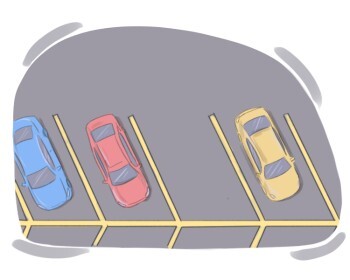
parking [noun]

an area designated for vehicles to be temporarily stationed

Ex: She paid for parking at the automated kiosk before heading to the concert .
convenient [adjective]

favorable or well-suited for a specific purpose or situation

Ex: It was convenient that the train arrived just as I reached the station .
journey [noun]

the act of travelling between two or more places, especially when there is a long distance between them

Ex: She documented her solo journey through Europe in a travel journal , capturing memories and experiences along the way .
satisfied [adjective]

content with a result or outcome

Ex: She was satisfied with the outcome of the meeting , as her concerns were addressed .

a statement that conveys one's dissatisfaction
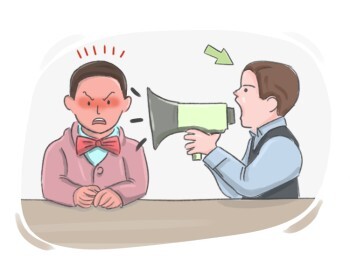
Ex: He voiced his complaint about the noise levels in the apartment complex , which had been disturbing his peace at night .
still [adverb]

despite what has been said or done

Ex:
annoying [adjective]

causing slight anger

Ex: Dealing with annoying telemarketing calls during dinner became a regular annoyance .

a list or chart that shows the departure and arrival times of trains, buses, airplanes, etc.

Ex: He missed his train because he did n’t look at the timetable carefully .

to think or believe that something is possible or true, without being sure
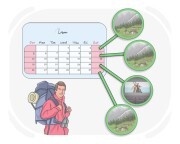
Ex: I suppose the project will be completed on time if everyone stays on track .
mainly [adverb]

most often or in most cases

Ex: His hobbies mainly revolve around painting and playing the piano .

to pay attention and become aware of a particular thing or person

Ex: Did you notice the new employee in our department ?

used to show that nothing more needs to be said or done

Ex: That 's it , you can all leave now .
to rent [verb]

to pay someone to use something such as a car, house, etc. for a period of time

Ex: She will rent a flat until she finds a house to buy .
keen [adjective]

having a strong enthusiasm, desire, or excitement for something or someone
Ex: He was n’t too keen on attending the party , so he stayed in .
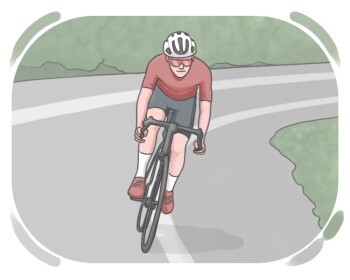
cycling [noun]

the sport or activity of riding a bicycle

Ex: The annual cycling event attracted participants from all over the country .

a change in water, air, etc. that makes it harmful or dangerous

Ex: Due to the severe pollution , many species of birds no longer visit the area .
flat [noun]

a place with a few rooms in which people live, normally part of a building with other such places on each floor
Ex:
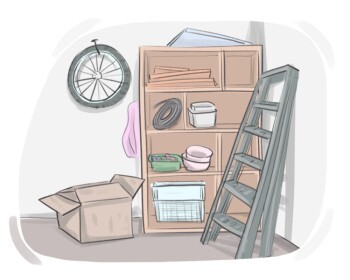
storage [noun]

a location, facility or container designed for keeping things safe, secure and organized for future use

Ex: This closet offers ample storage for clothes and shoes .
hall [noun]

a passage that is inside a house or building with rooms on both side

Ex: The children were playing in the hall , running from one room to another .
cost [noun]

an amount we pay to buy, do, or make something

Ex: She was surprised by the low cost of the shoes .

the number of times an event recurs in a unit of time

Ex: The frequency of the train service varies during the holiday season .
to own [verb]

to have something as for ourselves

Ex: Last year , he successfully owned a vintage car that he had restored .
lack [noun]

the absence or insufficiency of something, often implying a deficiency or shortage

Ex: The team 's lack of preparation led to their defeat .
Cambridge IELTS 18 - Academic
Test 1 - Listening - Part 1 Test 1 - Listening - Part 2 (1) Test 1 - Listening - Part 2 (2) Test 1 - Listening - Part 3 (1)
Test 1 - Listening - Part 3 (2) Test 1 - Listening - Part 4 (1) Test 1 - Listening - Part 4 (2) Test 1 - Reading - Passage 1 (1)
Test 1 - Reading - Passage 1 (2) Test 1 - Reading - Passage 2 (1) Test 1 - Reading - Passage 2 (2) Test 1 - Reading - Passage 3 (1)
Test 1 - Reading - Passage 3 (2) Test 2 - Listening - Part 1 Test 2 - Listening - Part 2 (1) Test 2 - Listening - Part 2 (2)
Test 2 - Listening - Part 3 (1) Test 2 - Listening - Part 3 (2) Test 2 - Listening - Part 4 Test 2 - Reading - Passage 1 (1)
Test 2 - Reading - Passage 1 (2) Test 2 - Reading - Passage 1 (3) Test 2 - Reading - Passage 2 (1) Test 2 - Reading - Passage 2 (2)
Test 2 - Reading - Passage 2 (3) Test 2 - Reading - Passage 3 (1) Test 2 - Reading - Passage 3 (2) Test 2 - Reading - Passage 3 (3)
Test 3 - Listening - Part 1 Test 3 - Listening - Part 2 Test 3 - Listening - Part 3 Test 3 - Listening - Part 4
Test 3 - Reading - Passage 1 (1) Test 3 - Reading - Passage 1 (2) Test 3 - Reading - Passage 2 (1) Test 3 - Reading - Passage 2 (2)
Test 3 - Reading - Passage 3 (1) Test 3 - Reading - Passage 3 (2) Test 4 - Listening - Part 1 Test 4 - Listening - Part 2
Test 4 - Listening - Part 3 Test 4 - Listening - Part 4 Test 4 - Reading - Passage 1 (1) Test 4 - Reading - Passage 1 (2)
Test 4 - Reading - Passage 2 (1) Test 4 - Reading - Passage 2 (2) Test 4 - Reading - Passage 3 (1) Test 4 - Reading - Passage 3 (2)