Reported Speech For Intermediate learners
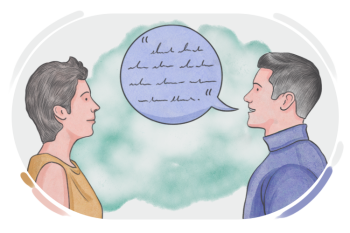
What is Indirect Speech?
Indirect (reported) speech (estilo indirecto) in Spanish is used to report what someone said without quoting them directly. It usually involves backshifting tenses, changing pronouns, and adjusting time and place expressions.
Structure
To form indirect sentences, a reporting verb like decir, explicar, afirmar, anunciar, etc. is used in the main clause and the reported speech is added after the complementizer "que." The structure is as follows:
main clause (reporting verb) + que + reported clause
For example:
Direct: Juan dice, "Estoy cansado."
Juan says, "I'm tired"
Indirect: Juan dice que está cansado.
Juan says that he's tired.
As you can see in this example, forming the reported clause involves changes compared to the directly quoted speech.
Present → Imperfect
"Trabajo mucho." → Dijo que trabajaba mucho.
"I work a lot" → He/she said that he/she worked a lot.
Past simple → Past perfect
"He comido." → Dijo que había comido.
I have eaten. → He/she said that he/she had eaten.
"Iré mañana." → Dijo que iría mañana.
I'll go tomorrow. → He/she said he/she would go tomorrow.
"No hagas eso." → Me dijo que no lo hiciera.
Don't do that. → He/she told me not to do it.
If the verb in the reported clause is in the imperfect, past perfect, conditional, or subjunctive tenses, its tense remains unchanged; however, it must still undergo changes to reflect the change in person (see below).
Changes in Pronouns
When the reporter is not the same person as the original speaker, pronouns shift accordingly. This applies to subject, object, reflexive, and possessive pronouns.
yo → él/ella
"Yo tengo hambre." → Dijo que él/ella tenía hambre.
"I'm hungry." → He/she said he/she was hungry.
subject pronoun
tú/usted → yo
"Te llamo mañana." → Dijo que me llamaría al día siguiente.
"I'll call you tomorrow." → He/she said he/she would call me the next day.
object pronoun
nosotros → ellos
"Nos vemos cada día." → Dijeron que se veían cada día.
"We see each other every day." → They said that they saw each other every day.
reflexive pronoun
ustedes → nosotros
"Ustedes deben llegar temprano." → Dijo que nosotros debíamos llegar temprano.
"You must arrive early." → He/she said that we must arrive early.
él/ella/ellos/ellas → no change
"Él está enfermo." → Dijo que él estaba enfermo.
"He is sick." → He/she said that he was sick.
When the changed pronoun is the subject of the verb, these changes in the grammatical person of the pronoun naturally affect the verb conjugation as well, as you can see in the examples.
Changes in Place and Time Indicators
Time expressions refer to the original moment of speaking in the direct quote. So, in indirect speech, they are adjusted relative to the moment of reporting. Additionally, place expressions undergo changes because the physical location of the speaker changes. Take a look at the table:
Direct speech | Indirect speech |
|---|---|
hoy | ese día |
mañana | al día siguiente/ al próximo día |
ayer | el día anterior |
anoche | la noche anterior |
ahora | entonces |
aquí / ahí | allí |
este/a | ese/a / aquel/aquella |
Here are some examples:
"Te veo hoy." → Dijo que me veía ese día.
I see you today → He/she said he/she saw me that day.
"Vendré mañana." → Dijo que vendría al día siguiente.
I will come tomorrow. → He/she said he/she would come the next day.
"Ven aquí." → Dijo que fuera allí.
Come here → He told me to go there.
Indirect Questions
Indirect questions are those embedded within another clause. They do not take question marks and do not require inversion of subject and verb. The changes discussed so far apply to indirect questions as well. Take a look at the examples:
¿Qué quieres? → Dime qué quieres.
What do you want? → Tell me what you want.
present tense, no change in tense
"¿Dónde estás?" → Me preguntó dónde estaba.
Where are you? → He asked me where I was.
present tense to imperfect and second person to first-person
If the direct question is a closed question without an interrogative word, "si" is added to introduce the indirect question:
¿Hay entradas disponsibles? → Quiero saber si hay entradas disponibles.
Are there any tickets available? → I want to know if there are any tickets available.
¿Me puedes ayudar? → Me preguntó si podía ayudarlo.
Can you help me? → He asked me if I could help him.
"¿Vendrás mañana?" → Preguntó si vendría al día siguiente.
Will you come tomorrow? → He asked if I would come the next day.
Quiz:
Elige la forma correcta en estilo indirecto.
Directo: Clara dice: "Necesito ayuda."
Clara dice que necesitaba ayuda.
Clara dice que necesita ayuda.
Clara dijo que necesita ayuda.
Clara dice que necesitaría ayuda.
Cambia las oraciones al estilo indirecto.
Pedro dijo: "Vivo cerca." → Pedro dijo que
cerca.
Los niños dijeron: "Estamos cansados." → Los niños dijeron que
cansados.
"Estoy aquí." → Dijo que
.
"Terminé el trabajo anoche." → Dijo que
el trabajo
.
Completa la tabla con el pronombre correcto en el estilo indirecto.
yo | / |
nosotros | |
te | |
mi |
Elige la opción correcta en estilo indirecto.
Directo: Laura dijo: "Te enviaré el archivo mañana."
Laura dijo que te enviaría el archivo mañana.
Laura dijo que me enviaría el archivo al día siguiente.
Laura dijo que me envió el archivo al día siguiente.
Laura dijo que me enviaba el archivo mañana.
Convierte las preguntas directas en preguntas indirectas.
¿Qué necesitas? → Me preguntó
.
¿Hay café? → Preguntó
.
Comments
(0)Recommended

