Tiere - The Anatomy of Birds
Hier lernen Sie einige Wörter im Zusammenhang mit der Anatomie von Vögeln auf Englisch, wie "Kralle", "Schnabel" und "Flügel".
Überprüfen
Lernkarten
Rechtschreibung
Quiz
any of the two parts of the body of a bird, insect, etc. used for flying

Flügel, Schwinge
Insekten wie Bienen und Libellen haben durchsichtige Flügel.
a membrane that connects the toes of certain aquatic birds, such as ducks and coots, enabling them to swim with greater ease

Schwimmhaut, Zehenmembran
a colorful and usually red lobe that hangs from the head or neck of a bird

Kehllappen, bunter Lappen
the rectum or external opening in some animals, such as a fish, bird, etc., through which waste is passed

Kloake, Afteröffnung
a pointed extension of bone that grows from the leg or foot and is used for defense, mating rituals, or establishing dominance within a social group

Sporn, Knochenauswuchs
the outermost part of a bird's wing that includes the primary feathers and contributes to the bird's flight maneuverability and stability

Flügelspitze, Flügelende
a decorative and frilled collar-like structure made of feathers or hair that encircles the neck of a bird

Halskrause, Kragen
the lower or upper part of a bird's beak

Mandibel, unterer oder oberer Teil eines Vogelschnabels
the muscular part of a bird's digestive system with thick walls that grinds the food for a better digestion

Magenmuskel, Muskelmagen
a prominent feature exhibited by some birds on their heads, consisting of feathers, fur, or skin

Haube, Kamm
Biologen stellten fest, dass der Kamm des Kasuars aus einem zähen, keratinhaltigen Material besteht.
a fleshy, often brightly colored, crest located on top of the head of certain bird species

Kamm, Haube
a visible ring, band, or marking encircling the neck or throat area of an animal

Halsband, Kragen
Die farbenfrohe Halskrause der Schlange warnte Raubtiere, Abstand zu halten.
a fleshy, comb-like growth on top of the head of certain domestic roosters and other bird species

Hahnenkamm, Kamm
the part of an animal's body corresponding to the human chest

Brust, Brustfleisch
Die Brust der Henne war mit weichen Federn bedeckt.
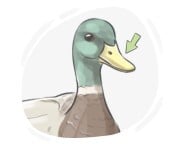
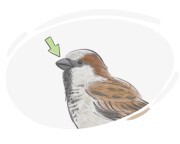
the projecting mouthpart of a bird used for feeding or preening

Schnabel, Rüssel
Der Schnabel eines Kolibris ist schlank und geeignet, um Nektar zu erreichen.
the hard or pointed part of a bird's mouth

Schnabel, Vogelschnabel
Die Ente tauchte ihren Schnabel ins Wasser, um nach Nahrung zu suchen.
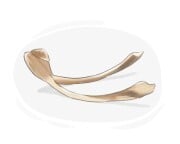
a Y-shaped bone between the neck and breast of a bird

Gabelbein, Wunschknochen
Sie machten einen Wunsch und zogen den Wunschknochen auseinander, in der Hoffnung auf Glück.
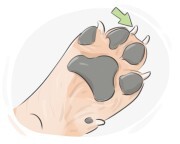
a sharp and curved nail on the toe of an animal or a bird

Klaue, Kralle
Die Krallen des Bären hinterließen tiefe Spuren in der Rinde des Baumes.
the long erectile feather or hair in the neck area of some birds and mammals such as dogs

Nackenfeder, Nackenhaar
a pouch in birds and some other animals used to store and soften food before digestion

Kropf, Magen
Der Kropf schwillt an, wenn das Tier frisst.
the region of feathers covering the upper back, shoulders, and base of the wings

Mantel, Rückengefieder
a type of small, fluffy feather that covers the base of a bird's larger flight feathers, providing insulation and helping to streamline the bird's wing shape

Deckfeder, Tektrizfeder
the feathers on the underside of a bird's wing, which can have distinctive patterns and colors that are often visible in flight

Unterflügelfeder, Feder unter dem Flügel
the small feathers on a bird's wing that cover the larger feathers and help the bird fly better

kleine Deckfedern, Deckfedern
a feather that covers the base of a wing or tail feather, aiding flight and insulation

Deckfeder, Bedeckungsfeder
Die Deckfedern des Raubvogels waren glänzend und intakt.
a feather on the wing that helps with stability and maneuverability during flight. It's located between the flight feathers and the bird's body

Tertialfeder, Stabilisierungsfeder
the main and longest feathers on a bird's wing that help it fly

Handschwingen, Primärfedern
Während der Mauser verliert ein Vogel seine alten Schwungfedern und ersetzt sie.
the lower part of the leg, located between the shank and the foot, providing support and flexibility for perching and walking

Tarsus, unterer Teil des Beins
a line of color that goes across or behind the eye of a bird, making the bird's eye and facial features more noticeable

Augenstreifen, Augenlinie
a glandular organ found in the digestive system of birds that functions in the initial breakdown of food before it enters the stomach

Proventrikulus, Drüsenmagen