
Cambridge English: CAE (C1 Advanced) - Influence Sociale et Stratégies
Apprenez le vocabulaire avancé de l'expression orale et écrite (CAE) pour l'influence sociale et les stratégies, y compris la persuasion, la pression, la négociation, la manipulation, l'encouragement et l'influence sur les décisions ou le comportement.
Réviser
Flashcards
formes
Orthographe
Quiz
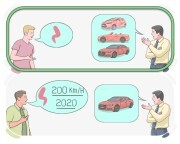
to mention something without directly talking about it in detail

faire allusion à
L'orateur a habilement fait allusion à des événements historiques pour faire un point sur les problèmes politiques actuels.

to give a hint, signal, or prompt to a performer to act, speak, or continue
signaler
Elle a été cue lorsqu'elle a oublié une partie de son discours.
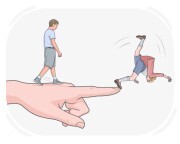
to cause someone to believe something that is not true, typically by lying or omitting important information
induire en erreur, tromper
La publicité a trompé les consommateurs en exagérant les avantages du produit.
to achieve a state of harmony by managing different aspects or priorities effectively
to argue or disagree with someone over something
ne pas être d'accord avec
to try to make someone do something in a forceful or persistent manner
exhorter, presser
to successfully communicate a message or idea to someone in a way that they understand or accept it
faire passer le message à, se faire comprendre de
Je n’arrivais pas à me faire comprendre par elle.

to make something seem less important or serious than it actually is
faire paraître quelque chose moins important ou grave qu'il ne l'est, minimiser l'importance ou la gravité de quelque chose
Il minimise son implication dans la charité, préférant l'anonymat.
a joke or reference understood only by a specific group, often based on shared experiences or knowledge
blague interne, private joke
Parmi le groupe d'amis, il y avait de nombreuses blagues privées provenant de souvenirs et d'expériences partagés, ce qui les rapprochait davantage.
to exaggerate the importance, danger, or emotional impact of something
faire un drame, dramatiser
Il a tendance à dramatiser les petites erreurs.
a casual conversation where people share recent news, updates, or experiences to stay informed about each other's lives
une mise à jour, un rattrapage
J'ai eu un charmant rattrapage avec mon cousin pendant le déjeuner.
to make a point unmistakably clear by stressing it, providing proof, or using examples
enfoncer le clou, donner beaucoup de poids
to make someone react in a certain way or reveal information
provoquer
Son histoire sincère était destinée à suscite la sympathie et la compréhension du public.
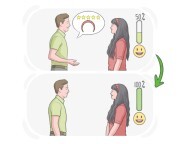
a comment on a person's looks, behavior, achievements, etc. that expresses one's admiration or praise for them
compliment
Elle a rougi sous le compliment sur sa voix chantée.
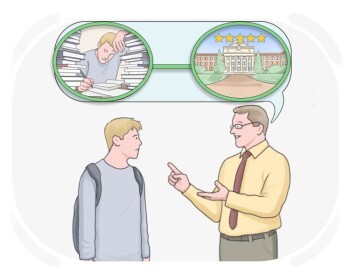
to advise someone to follow a particular course of action
recommander
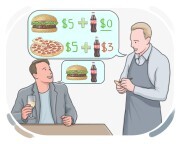
to make someone do something specific, often by offering something attractive
inciter à faire
Le doux arôme des biscuits en train de cuire m'a attiré dans la cuisine.
to be allowed or able to take part in making decisions or influencing something

to be eager to hear what a person wants to say
être tout ouïe, écouter avec grand intérêt
Si tu as un meilleur plan, nous sommes tout ouïe.

a movement of the hands, face, or body used to express an idea, feeling, or intention
geste, mouvement
to provide proof, show, or be a sign of something, often based on observation or analysis
indiquer, révéler
to present or bring forward a question, issue, or topic for consideration or discussion
poser, soumettre
a skillful or distinctive way of expressing something in words
tournure de phrase, expression habile
Son tour de phrase humoristique a allégé la discussion sérieuse.
a remark or opinion that has been used so much that it is not effective anymore
cliché
Le style d'écriture de l'auteur a été critiqué pour son recours à des clichés plutôt qu'à des idées originales.
support, approval, or resources given to a person, organization, plan, or activity
soutien, appui
an unpleasant, yet truthful information someone reveals or points out about one
une vérité qui fait mal sur soi, une vérité difficile à entendre
L'évaluation contenait quelques vérités difficiles à entendre sur ma façon de gérer l'équipe.
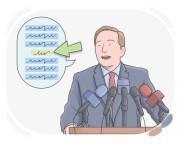
to emphasize, highlight, or draw attention to certain features or aspects of something
souligner, amplifier
L'orateur a gesticulé de manière dramatique pour accentuer les points clés pendant la présentation.
helpful feedback intended to improve performance, work, or behavior, rather than just point out faults
critique constructive, retour constructif
Il a offert des critiques constructives sur mon style d'écriture.
to express disapproval or disagreement, especially formally or in a discussion
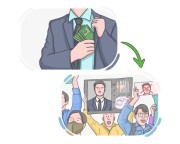
to publicly express one's disapproval of something or someone
dénoncer, condamner
La communauté internationale a dénoncé l'utilisation d'armes chimiques dans le conflit.
to express something verbally and openly, especially a feeling, opinion, etc.
exprimer
