
Vocabulaire Avancé pour le GRE - Changement, Cause et Effet
Ici, vous apprendrez quelques mots anglais sur le changement, la cause et l'effet, tels que "baleful", "trifling", "constrict", etc. qui sont nécessaires pour l'examen GRE.
Réviser
Flashcards
formes
Orthographe
Quiz


able to bring about dangerous or destructive consequences

maléfique
Les conséquences funestes de l'ignorance des réglementations de sécurité sont devenues claires après l'accident.
possessing the quality of being the most important or basic part of something
capital, de grande importance
La règle cardinale du club est de respecter tous les membres, car elle forme la base de leur communauté.
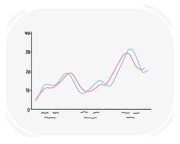
simultaneously occurring with something else as it is either related to it or an outcome of it
concomitant
La révolution industrielle et ses innovations concomitantes ont changé le visage du monde.
producing results that are contrary to what was intended
contre-productif, contre-productive
Sauter le petit-déjeuner avant un grand examen s'est avéré contre-productif, car cela a affecté sa concentration.
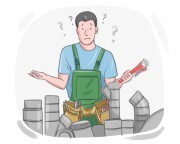
of no determination, competence, or strength
inefficace
Elle s'est sentie frustrée par la réponse inefficace de l'équipe concernant le problème urgent.
not relevant or significant to the current situation, discussion, etc.
sans importance, insignifiant, pas la question
Le comité a conclu que l'écart dans le rapport budgétaire était sans importance et ne nécessitait pas d'enquête plus approfondie.
just beginning to take shape
incomplet, inachevé
Le mouvement était inchoatif, alimenté par la passion mais manquant de direction.
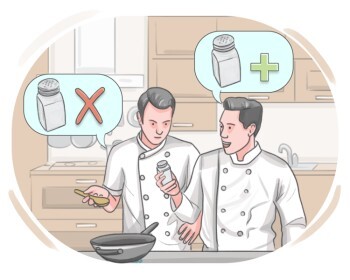
lacking significance or importance
sans importance, sans conséquence
Les petites fautes d'orthographe dans le rapport étaient insignifiantes et n'ont pas affecté son message global.

lasting for only a brief period
éphémère, fugace
Le sentiment éphémère d'excitation s'est rapidement estompé alors que la réalité s'installait.
without any value or importance
insignifiant, insignifiante
La dispute sur la couleur du logo semblait futile dans le contexte des objectifs plus larges de l'entreprise.
capable of easily being molded or shaped into taking another form
plastique
extraordinary and serving as a warning or sign of future events, often suggesting something bad or threatening
de mauvais augure, de mauvais présage
Le silence soudain dans la pièce était mauvais augure, suggérant que quelque chose d'important était sur le point d'être révélé.
referring or relating to a past event
rétroactif, rétroactive
Il a écrit une analyse rétrospective de la performance de l'entreprise au cours de la dernière décennie.
to make a person or thing seem more important or impressive than they actually are
agrandir
La biographie a grandi les contributions de l'auteur à la littérature.
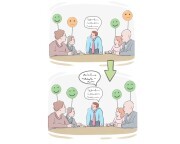
to end or lessen a person's anger by giving in to their demands
apaiser
La communication constante apaisait continuellement les préoccupations du client.
to take away from something's effect, value, size, power, or amount
atténuer
Le médicament a été prescrit pour atténuer la gravité de ses symptômes d'allergie.

to have a rapid development or growth
éclore, bourgeonner
Avec une demande accrue, l'entreprise en ligne a commencé à prospérer, atteignant de nouveaux clients.
to restrict the things someone can or wants to do
étouffer
Les contraintes financières limitaient leur capacité à voyager et à explorer de nouvelles destinations.
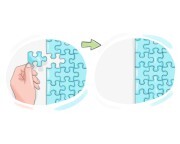
to end by coming to a climactic point
aboutir à
Leurs années de dur labeur ont culminé dans la publication de leur recherche.
to stop a person from doing what they initially intended
détourner
Les amis et la famille ont essayé de le détourner de ses habitudes autodestructrices.
to raise someone or something to a higher rank or better position
élever
Son dévouement et son travail acharné ont finalement élevé à un rôle de leadership au sein de l'organisation.
to encourage or provoke something, especially trouble or conflict
fomenter
Ils ont essayé de fomenter une rébellion contre le gouvernement.
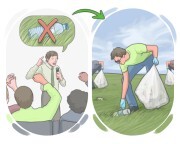
to push someone into taking action, particularly by evoking a strong emotion in them
galvaniser
Après plusieurs années médiocres, le nouvel entraîneur a vraiment galvanisé l'équipe avec son style de leadership énergique.
to help someone feel relaxed and calm or to help them fall asleep
bercer
La musique était conçue pour bercer les auditeurs dans un état paisible.
to grow in strength, size, intensity, etc.
croître
Leur amitié croissait à mesure qu'ils passaient plus de temps ensemble.
to incorrectly state what or who created or caused something
attribuer à tort
Elle a réalisé plus tard qu'elle avait mal attribué le tableau à un autre artiste.
to be widely common, applied, or recognized
prévaloir, avoir cours
to move back and forth in a regular rhythm between two or more states, positions, or opinions
osciller
Sarah s'est retrouvée à osciller entre le soutien des droits liés aux armes à feu et des lois plus strictes, incapable de prendre parti de manière concluante dans ce débat houleux.

to cause a person or thing to come across as less significant
ombrager, assombrir
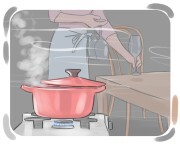
to expand to every part of a thing
se répandre
Le parfum de lavande impregna la pièce après qu'elle eut allumé les bougies parfumées.
to cause something to increase rapidly in number or size
proliférer
Le succès de la startup a commencé à proliférer l'intérêt pour des modèles commerciaux similaires.
to forcefully bring the development or growth of something that is troubling to an end
étouffer, réprimer
Elle travaille à étouffer le mécontentement croissant au sein de l'équipe.
to take something or someone's position or place, particularly due to being more effective or up-to-date
remplacer
Ce traitement médical a été largement remplacé par des thérapies modernes plus efficaces.
a thing that reduces the chances of someone doing something because it makes them aware of its difficulties or consequences
moyen de dissuasion, dissuasif, dissuasive
Les longues peines de prison sont destinées à être un désincitatif contre les crimes graves.
the moment in which a situation or life is at its lowest or worst
point le plus bas
Les profits de l'entreprise ont atteint leur nadir pendant la crise financière.
someone or something that comes before another of the same type, acting as a sign of what will come next
précurseur
Ses premières œuvres étaient considérées comme un précurseur de son art ultérieur, plus mature.
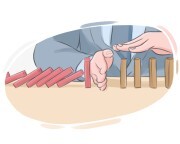
to keep something bad under control in order to prevent deterioration or to slow down its spread or development
arrêter, freiner, contenir
(of roads, paths, lines, etc.) to lead toward a point that connects them
converger
Les sentiers de randonnée convergent près du sommet de la montagne.
the situation or condition that is currently at hand
statu quo
Il est satisfait du statu quo et ne voit pas la nécessité d'une réforme immédiate.
to help reduce the severity of an unpleasant feeling
calmer
Boire une tasse de thé a aidé à apaiser son mal de gorge.
the highest point that a certain celestial body reaches, directly above an observer
zénith
Le satellite était positionné au zénith de son orbite au-dessus de l'observateur.
